

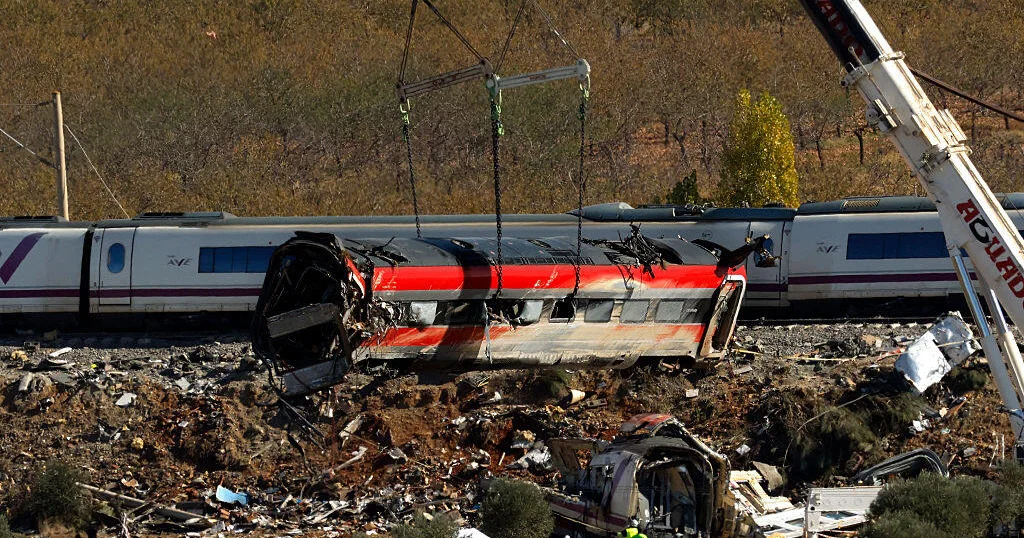

A tragic train collision in Spain has resulted in the loss of at least 69 lives, among them four United States citizens. The accident occurred on October 28 in Urda, Toledo, when a high-speed train collided with another that had come to a stop, leading to significant injuries and fatalities. Officials and authorities are now investigating the causes of the crash, with initial findings pointing to issues of traffic control and safety compliance.
| Article Subheadings |
|---|
| 1) Overview of the Incident and Casualties |
| 2) Details of the Collision and Injuries |
| 3) Government and Union Response |
| 4) Historical Context of Train Safety in Spain |
| 5) Ongoing Investigations and Future Measures |
Overview of the Incident and Casualties
On the morning of October 28, 2023, a fatal train accident took place in Urda, located in the province of Toledo, Spain. Reports from the Center for Integrated Data, the legal body handling the identification of victims, indicated that the tragedy resulted in at least 69 confirmed deaths, including four American citizens. The casualty list also includes individuals from various countries: one each from Canada, Japan, Argentina, Mexico, Tunisia, and the Czech Republic. With more than 500 passengers aboard the two trains involved, officials are working to identify those still unaccounted for, including two Australians and one Japanese citizen.
Details of the Collision and Injuries
The collision occurred when a high-speed train, operated by the state-owned RENFE, failed to stop before crashing into a privately-operated IRYO train that was stationary on the tracks. The collision caused two cars of the IRYO train to derail, while the RENFE train was reportedly traveling between 100 and 125 mph at the moment of impact. Authorities stated that a total of 58 passengers sustained injuries, escalating the urgency for medical assistance. The local and national emergency services were promptly mobilized, and survivors were transported to nearby hospitals for treatment and care.
Government and Union Response
In the wake of the tragedy, Spain’s Transport Minister, Óscar Puente, attributed the crash partially to poor judgment by traffic controllers. He emphasized that negligence played a role in not ensuring that the IRYO train had adequate signals to warn of incoming traffic. However, labor unions have countered this narrative by highlighting the deteriorating working conditions that have increasingly put passenger safety at risk. Complaints regarding a shortage of traffic controllers managing growing workloads have emerged, suggesting systemic issues that need urgent attention.
Historical Context of Train Safety in Spain
Spain’s high-speed rail network, known as one of the largest and most successful in the world, has boasted a commendable safety record for over three decades. Until this year, it had seen no fatal accidents since going into operation. The recent incidents, including a previous crash along the same Madrid-Seville line in January, which claimed 46 lives, have raised critical questions about safety protocols and administrative oversight. The apparent lack of fatalities for many years has led to complacency in safety measures, and these recent events serve as a stark reminder of the potential dangers present in high-speed rail travel.
Ongoing Investigations and Future Measures
As investigations continue into the causes of the recent disaster, independent teams have begun preliminary assessments. They project that the current findings will lead to widespread scrutiny of train operations and signal management throughout the entire rail system. Authorities plan to evaluate existing protocols and make recommendations for improved safety measures that mitigate such risks in the future. Furthermore, the implications of these crashes may incite regulatory changes that affect both public sentiment and operational practices in rail transport across Spain.
| No. | Key Points |
|---|---|
| 1 | The tragic train collision in Toledo resulted in 69 fatalities, including American and international victims. |
| 2 | Emergency services responded rapidly, treating over 50 additional injuries sustained during the crash. |
| 3 | Transport Minister blamed traffic control errors while unions highlighted deteriorating safety conditions. |
| 4 | Spain’s high-speed rail system, known for its success and safety, faces scrutiny following two significant accidents this year. |
| 5 | Ongoing investigations may lead to changes in regulations aimed at increasing train safety moving forward. |
Summary
The recent train collision in Toledo, Spain has not only resulted in significant loss of life but has also raised critical concerns regarding the operational safety of the country’s rail network. With numerous fatalities spanning across multiple nationalities, the incident highlights the need for urgent reforms in traffic management and train operations to avert similar tragedies in the future. As investigations unfold, accountability will be paramount to restoring faith in public transportation systems.
Frequently Asked Questions
Question: How many casualties were reported in the train collision?
At least 69 individuals lost their lives in the collision, with several more injured, including four United States citizens and people from various other countries.
Question: What caused the train collision?
Initial investigations suggest that a traffic controller’s poor judgment contributed to the collision, indicating systemic issues within the railway’s operational protocols.
Question: What are the implications for Spain’s high-speed rail safety?
This incident may lead to comprehensive assessments of safety protocols, potential regulatory changes, and increased scrutiny of train operations to ensure passenger safety is prioritized.
