

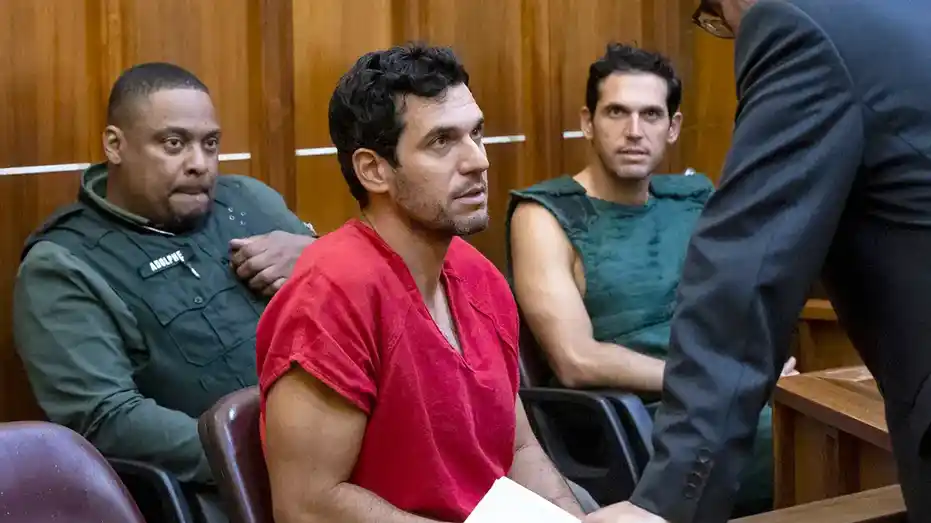

Independent journalists have denied allegations that they accepted money to provide favorable coverage of the sex-trafficking trial involving the Alexander brothers. Tal Alexander, 40, and his twin brothers, Oren Alexander and Alon Alexander, were convicted in March and sentenced to 30 years in prison on Oct. 27, 2026. The brothers were found guilty of conspiracy to commit sex crimes, including offenses involving minors. They now also face civil litigation from women who say they were victims.
The allegations concern writers who published material during the federal proceedings and whose work included perspectives favorable to the defense. One journalist acknowledged that the brothers’ publicist helped subsidize coverage costs but denied receiving editorial instructions. The publicist said he sought reporting that would present the defense’s perspective amid largely negative coverage.
Article Subheadings
| 1) | Coverage payment allegations emerge |
| 2) | Journalists deny editorial influence |
| 3) | Publicist describes the defense strategy |
| 4) | Convictions followed years of allegations |
| 5) | Sentences and civil cases remain in focus |
Coverage payment allegations emerge
The allegations involve independent writers who covered the brothers’ federal trial. A report alleged that Daniel Mael was paid $15,000 for sympathetic posts and that publisher Frank Parlato received $10,000 for similar writing. Both men denied that their work was directed by the defendants or their representatives. The claims arose after the brothers were convicted and sentenced in New York in 2026.
The issue is whether financial support for trial coverage affected the independence of reporting. Daniel Mael declined to discuss the details of his agreement with publicist Juda Engelmayer, but said the arrangement involved subsidizing part of the cost of covering the case.
Journalists deny editorial influence
Daniel Mael said no one requested favorable coverage, dictated his wording or exercised editorial control. He said he wrote about his own conclusions and maintained that his reporting was independent and accurate, despite financial support connected to the brothers’ publicist.
“No one requested favorable coverage, no one dictated a single word, and no one exercised the slightest editorial influence over my reporting.”
Frank Parlato also said he had never spoken with the brothers and that no one reviewed his stories before publication. He said his reporting relied on court records and was written while the defendants were presumed innocent. Daniel Mael rejected any suggestion that he attacked the motives of women who testified for the prosecution.
Publicist describes the defense strategy
Juda Engelmayer, who represented the brothers publicly, said he contacted independent journalists because the case had received extensive and overwhelmingly negative attention. He said his goal was to ensure that the defense’s perspective was heard and to encourage questions that had not been widely addressed elsewhere.
The arrangement did not, according to the journalists, involve advance approval of stories or requirements that the coverage favor the brothers. Some of the published reporting included evidence that harmed the defense. In one trial update, Daniel Mael described a text message attributed to Alon Alexander referring to having “taken down a 17 year old” as potentially among the most damaging evidence presented.
Convictions followed years of allegations
The brothers grew up in a wealthy Miami family and built prominent careers in real estate and private security. Oren Alexander and Tal Alexander sold luxury properties in New York, Miami, Aspen and other markets, while Alon Alexander worked as an executive at the family’s Miami-based security company.
Prosecutors said the brothers used wealth, travel, luxury accommodations and access to influential social circles to meet and isolate women. The government alleged that women were identified through dating applications, clubs, parties and promoters, then drugged and sexually assaulted, sometimes by multiple men. Prosecutors said some attacks were recorded. Eleven women testified at trial, while more than 70 women reportedly came forward with similar accounts.
Sentences and civil cases remain in focus
On Oct. 27, 2026, each brother received a 30-year prison sentence and 10 years of supervised release. The court also imposed fines of $300,000 on Alon Alexander and Oren Alexander, and $350,000 on Tal Alexander. Prosecutors had sought life imprisonment, while the defense requested the 15-year minimum sentence.
The brothers denied drugging, raping or trafficking anyone at sentencing, although they expressed regret about past behavior. Three women are pursuing civil cases against the brothers. Their criminal convictions have therefore not ended the broader legal disputes or the scrutiny of how the case was publicly presented.
Key Points
| Number | Key Point |
|---|---|
| 1 | Two independent journalists denied that payment influenced their reporting. |
| 2 | The brothers were convicted and sentenced to 30 years each. |
| 3 | Eleven women testified, and prosecutors cited more than 70 similar accounts. |
| 4 | Three women are pursuing related civil litigation. |
Summary
The dispute over paid trial coverage adds a media and ethics dimension to a case that resulted in lengthy prison sentences for the Alexander brothers. The journalists involved say financial assistance did not compromise their independence, while the publicist says he sought to broaden coverage of the defense. Regardless of the reporting dispute, the criminal convictions and ongoing civil claims continue to define the legal consequences of the brothers’ conduct.
Frequently Asked Questions
Who are the Alexander brothers?
Tal Alexander, Oren Alexander and Alon Alexander are three brothers from a wealthy Miami family. Oren and Tal worked in luxury real estate, while Alon worked in private security.
What are the journalists accused of doing?
They were accused of accepting payment to publish favorable coverage during the brothers’ sex-trafficking trial. The journalists denied that anyone controlled their reporting or required them to support the defense.
What sentences did the brothers receive?
Each brother was sentenced to 30 years in prison and 10 years of supervised release on Oct. 27, 2026. The court also imposed individual fines.
