

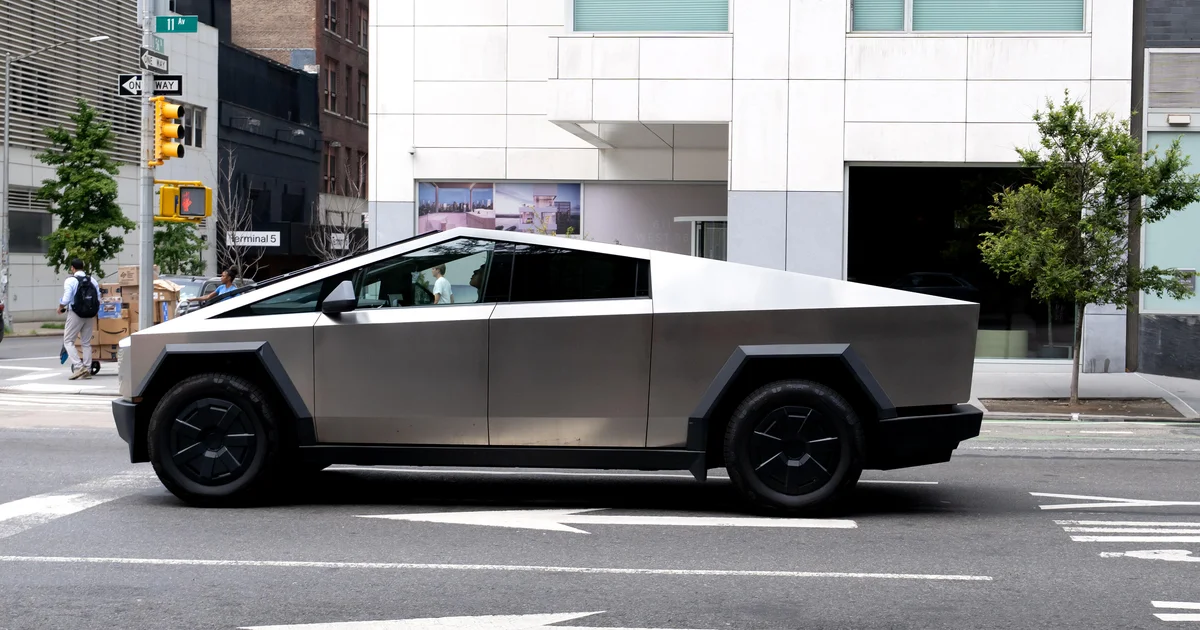

In a significant development for the electric vehicle market, Tesla has announced the winding down of production for its much-anticipated Cybertruck at its Texas factory by mid-2027. This decision, declared by CEO Elon Musk via the social media platform X, is part of a broader strategy aimed at increasing production for its upcoming Cybercab—a self-driving taxi. Although Tesla continues to maintain a strong position in the electric vehicle sector, sales for the Cybertruck have fallen short of expectations, prompting analysts to deem this move necessary as the company pivots towards new innovations.
| Article Subheadings |
|---|
| 1) Tesla Announces End of Cybertruck Production |
| 2) Analysis of Low Demand and Pricing Challenges |
| 3) The Transition to Cybercab Production |
| 4) Tesla’s Position in the Electric Vehicle Market |
| 5) Future Prospects for Tesla and Potential Changes |
Tesla Announces End of Cybertruck Production
On Friday, Elon Musk revealed that Tesla will cease production of its Cybertruck at its Texas facility by mid-2027. This announcement came via a post on X, where Musk indicated that the decision was made in light of the company’s plans to redirect effort towards increasing its Cybercab production. Tesla’s Cybertruck, which first made headlines in 2019 for its unique design and ambitious features, is now facing an uncertain future as the company made clear its intent to pivot towards new vehicle models.
The announcement comes amid declining demand for the Cybertruck, which has been further affected by quality control issues and recalls for various components, raising concerns among consumers and investors alike. Musk mentioned that this decision is not merely a response to current market conditions but part of a broader strategy to innovate and stay ahead in the rapidly evolving electric vehicle space.
Analysis of Low Demand and Pricing Challenges
According to analysts, the Cybertruck has struggled to meet sales expectations, which has led to its decommissioning. Dan Ives, a Wall Street analyst, noted in a recent email communication that the vehicle’s high price and decreasing demand sent signals that the Cybertruck was not on a sustainable path. Since its launch, Tesla reported sales of just 20,237 units in 2025, a stark decline from 38,965 units the previous year. This disappointing performance fell significantly short of Musk’s earlier projections of 250,000 annual sales, a sign that consumer interest may be waning.
Additionally, the initial base price of the Cybertruck was set at $60,990, contributing to accessibility challenges for many potential buyers. Interest in electric vehicles remains high, but consumers increasingly gravitate towards models with better pricing or features, especially as Tesla’s more affordable Model Y and Model 3 continue to outperform the Cybertruck in sales.
The Transition to Cybercab Production
Tesla is now shifting its focus away from the Cybertruck production towards its innovative Cybercab, a vehicle that exemplifies Tesla’s efforts in advanced automation and self-driving technology. The Cybercab, which lacks conventional controls like a steering wheel and pedals, represents a foundational leap towards the future of autonomous transportation. In 2024, Tesla unveiled this new two-seat vehicle, and production began in April at the Texas plant, coinciding with the launch of service in Austin in September.
The move to prioritize the Cybercab aligns with Musk’s vision for Tesla as more than just a car manufacturer; he aims to establish it as a leader in the emerging market of autonomous ride-hailing services. Analysts believe that this transition signals a strategic pivot for Tesla and positions the company to capitalize on the anticipated demand for robotic and automated transportation solutions in the coming years.
Tesla’s Position in the Electric Vehicle Market
Despite setbacks with the Cybertruck, Tesla remains a dominant force in the electric vehicle industry, with the majority of its sales driven by the highly successful Model Y and Model 3. According to Cox Automotive data, these vehicles have maintained consumer interest and contributed significantly to Tesla’s market share. This success stands in stark contrast to the Cybertruck’s lackluster sales, further emphasizing the need for Tesla to re-evaluate its product lineup to stay competitive.
In recent days, Tesla’s stock experienced a notable rise of 4.7%, signaling investor optimism regarding Musk’s announcement and potential future revenue from the Cybercab initiative. Analysts believe that by shifting toward more innovative offerings, Tesla could solidify its leadership in the electric vehicle market amidst growing competition from other manufacturers.
Future Prospects for Tesla and Potential Changes
Looking ahead, analysts are speculating about potential shifts in Tesla’s structure, including the possibility of Elon Musk seeking a merger or acquisition with his aerospace company, SpaceX. Such a move could provide Tesla with enhanced computing capabilities and financial resources to bolster its production capabilities and research endeavors. Dan Ives mentioned that this development could create a new synergy to capitalize on the growing demand for electric and autonomous vehicle technologies.
While it remains uncertain what the ultimate implications of this announcement will be for Tesla’s overall strategy and market presence, the transition away from Cybertruck production toward an emphasis on the Cybercab could signal a new era for the company. How this shift resonates with consumers and investors alike will be a critical topic to follow as Tesla navigates the complexities of the evolving automotive landscape.
| No. | Key Points |
|---|---|
| 1 | Tesla will cease Cybertruck production by mid-2027 to focus on Cybercab development. |
| 2 | Sales of the Cybertruck have consistently fallen short of expectations. |
| 3 | The shift in focus aligns with Musk’s vision of leading in autonomous vehicle technology. |
| 4 | Tesla’s remaining offerings, such as Model Y and Model 3, continue to dominate sales in the EV market. |
| 5 | Speculation exists about a potential merger between Tesla and SpaceX for future growth. |
Summary
In conclusion, Tesla’s decision to end Cybertruck production marks a pivotal transition for the company as it diverts its focus towards the next generation of automotive technology with its Cybercab. As sales for the Cybertruck have waned, this strategic shift emphasizes Tesla’s adaptability and commitment to innovation. As the electric vehicle landscape continues to evolve, how the company navigates these changes will be crucial in securing its future in an increasingly competitive market.
Frequently Asked Questions
Question: What led to the discontinuation of Cybertruck production?
The discontinuation of Cybertruck production is primarily due to low sales and high production costs. Tesla aims to pivot towards enhancing production of the Cybercab, Tesla’s self-driving taxi.
Question: What is the Cybercab?
The Cybercab is a new two-seat vehicle from Tesla that operates without a steering wheel or pedals, designed to be fully autonomous and geared towards ride-hailing services.
Question: What are Tesla’s best-selling models?
Tesla’s best-selling models currently are the Model Y and Model 3, which have consistently generated significant sales compared to the Cybertruck.
