

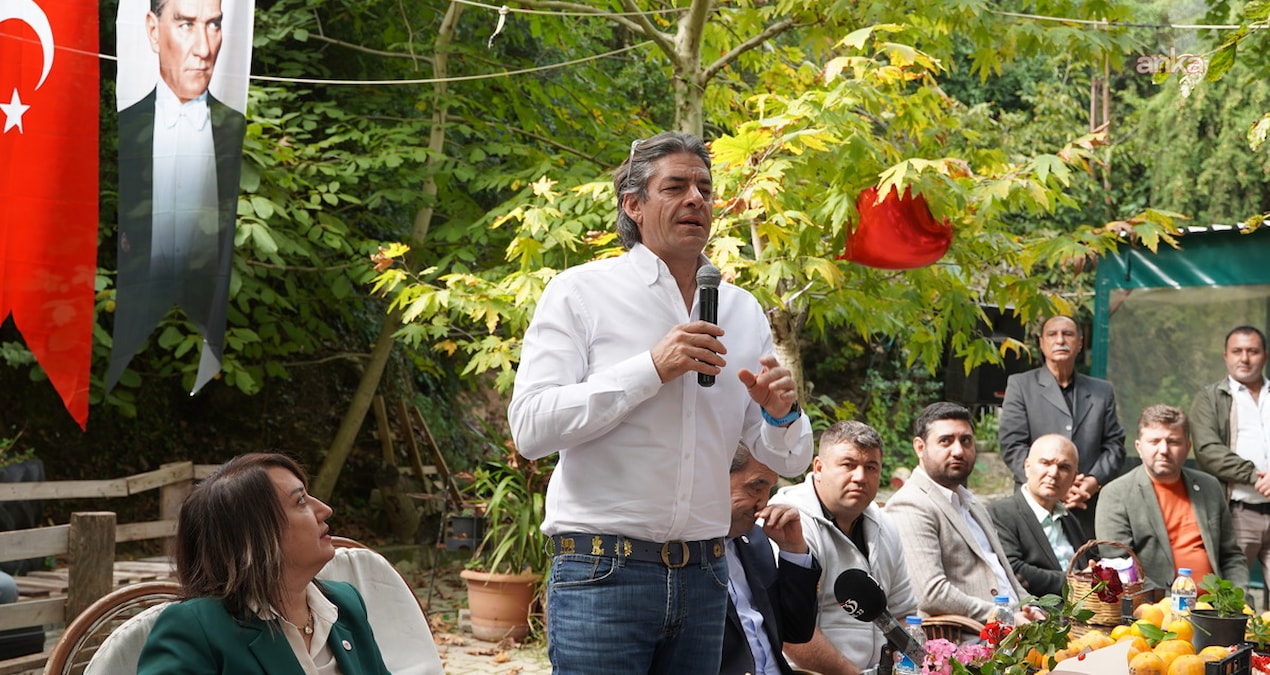

In a recent visit to Mersin, Sancar Solakoğlu, the Chairman of the NEW Party Agricultural Policies Board, met with local producers to discuss critical issues impacting the agricultural sector. With alarming discrepancies between producers’ prices and market rates, particularly for lemons, Solakoğlu voiced his concerns about the economic struggles facing farmers. His two-day field program highlighted the plight of various fruit growers, leading to a broader discussion on the necessary reforms in government agricultural policies.
| Article Subheadings |
|---|
| 1) Economic Disparities in Lemon Pricing |
| 2) Shift from Traditional Crops to Avocado |
| 3) Call for Urgent Policy Reforms |
| 4) Criticism of Agricultural Oversight |
| 5) Demands for Government Action and Elections |
Economic Disparities in Lemon Pricing
During his visit, Sancar Solakoğlu observed a stark contrast between the price at which producers sell lemons and the retail price. While early lemons are priced at only 1 lira at the source, consumers are facing prices as high as 43 lira on market shelves. This situation raises significant questions about the distribution chain and market practices that allow such markups, suggesting a lack of fair compensation for farmers.
Solakoğlu’s reference to the pricing structure in Spain provided a comparative lens through which to analyze local agricultural inefficiencies. In Spain, the producer receives 21.5 lira per branch, suggesting that a more equitable system could exist. “While the Spanish producer can make a profit,” Solakoğlu remarked, highlighting his concern for Turkish producers who struggle to lay claim to their rightful earnings due to imbalanced pricing structures. The implications of these realities point to systemic issues within the agricultural market.
Shift from Traditional Crops to Avocado
In Erdemli, a local producer outlined a troubling decision: to uproot 20-year-old lemon trees to cultivate avocados as an alternative. This decision is driven by economic necessity, illustrating the dire circumstances that farmers face in contemporary agricultural markets. With the escalation of operational costs—particularly fertilizer and labor—traditional crops may not sustain a profitable return for farmers.
The shift towards alternative crops like avocado signifies a potential adaptation strategy for producers. However, it also points to a worrying trend that traditional farming practices could be abandoned, leading to a loss of agricultural diversity. Solakoğlu emphasized the need to reassess such drastic changes brought on by economic pressures, suggesting sustainable practices must be revitalized to retain farmers within traditional farming methods.
Call for Urgent Policy Reforms
Addressing the broader landscape of the agricultural sector, Solakoğlu highlighted not only pricing disparities but also increasing operational costs. He indicated that farmers are either unable to sell their products or forced to dispose of them at a loss, compounding the existing financial strains. This situation alienates farmers, potentially endangering productive agricultural lands and food security.
“This order, which leaves the producer alone with debt, costs, and despair, must be changed urgently,” Solakoğlu urged, calling for the government to provide concrete support for basic agricultural inputs. Additionally, he advocated for the establishment of effective purchasing and marketing policies to curtail the disparities between farm gate prices and those faced by consumers. This structural change is essential for strengthening farmer viability while promoting agricultural sustainability.
Criticism of Agricultural Oversight
Solakoğlu’s criticism did not stop at market inefficiencies; he also directed sharp words towards the Ministry of Agriculture and Forestry. According to Solakoğlu, the Ministry is out of touch with the urgent challenges faced by the farming community. He stated, “The Ministry of Agriculture is sleeping, it does not even care,” emphasizing that the current state of affairs is unacceptable for a nation relying heavily on its agricultural sector.
The lack of responsiveness from agricultural authorities is seen as detrimental to both producers and consumers, putting pressure on the need for decisive reforms. In a country that should prioritize its agricultural policy, Solakoğlu’s claims echo a broader sentiment that current leadership is failing to adequately address the challenges facing the sector.
Demands for Government Action and Elections
With mounting frustrations, Solakoğlu made a striking call for accountability, imploring the government to resign and to initiate early elections. In his view, the administration must be compelled to address the agricultural crisis head-on and restore the confidence of the farming community by empowering their voices in governance. “If we were in a normal country, the Minister of Agriculture should have resigned immediately after this situation,” he declared, underscoring the urgency for systemic change.
These strong statements resonate with many farmers who feel neglected and marginalized. Calls for accountability reflect the pressing need for leaders to be responsive and responsible, especially in a sector so integral to the country’s economy and society.
| No. | Key Points |
|---|---|
| 1 | Producers in Mersin report significant price discrepancies for lemons, selling at 1 lira but reaching 43 lira in retail. |
| 2 | Economic pressures are leading farmers to remove traditional crops like lemon trees in favor of alternatives such as avocados. |
| 3 | There is a call for urgent reforms to agricultural policies, targeting support for farmers and equitable pricing. |
| 4 | Criticism has been directed at the Ministry of Agriculture for its lack of responsiveness to the needs of producers. |
| 5 | Solakoğlu demands government accountability and early elections to address ongoing agricultural crises. |
Summary
The recent discussions by Sancar Solakoğlu reflect a significant turning point in the dialogue surrounding agriculture in Türkiye. With farmers expressing their grievances about pricing disparities and operational difficulties, the call for immediate reforms highlights the urgency for an effective agricultural policy. As the agricultural sector stands on a precipice, the government’s response—or lack thereof—will have profound implications for farmers, consumers, and the overall economy. The demands for accountability and actionable change echo a collective yearning for a more sustainable and equitable agricultural landscape.
Frequently Asked Questions
Question: What are the main issues faced by lemon producers in Türkiye?
Lemon producers are struggling with significant pricing disparities, selling lemons at a fraction of the retail price, which leads to financial losses and economic hardship.
Question: Why are farmers switching from traditional crops to avocados?
Due to rising operational costs and decreasing profitability from traditional crops like lemons, farmers are shifting to avocados, which may offer better economic returns.
Question: What reforms are being demanded in the agricultural sector?
There are calls for government action to provide support for farmers, establish equitable pricing, and create effective agricultural policies that prioritize the needs of producers.
