

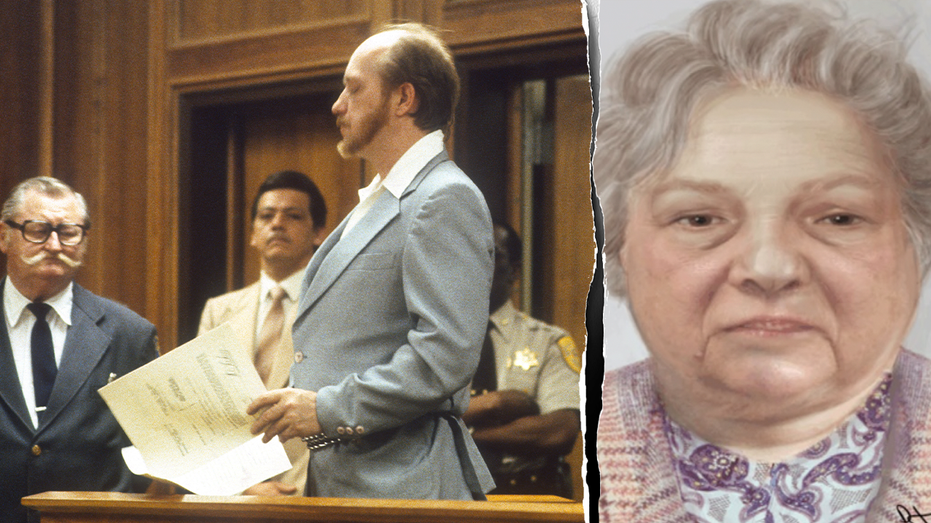

Suffolk County investigators have identified Sofia Margherita Marrone, known for decades as “Montauk Mary,” nearly 50 years after her body was found in Montauk, New York. Marrone was shot in March 1978, shortly after she was last seen leaving a hospital in Somers Point, New Jersey. Authorities say she may have been connected to convicted serial killer Richard Biegenwald, but they have not declared the case solved. The identification was part of a broader cold case effort that also identified five other previously unknown victims.
| 1) | DNA identification ends a decades-long mystery |
| 2) | Marrone’s final movements and fatal shooting |
| 3) | Possible link to Richard Biegenwald |
| 4) | Six cold case victims identified |
| 5) | Investigators continue pursuing answers |
DNA identification ends a decades-long mystery
Suffolk County investigators identified Marrone through new DNA methods announced Thursday. For almost five decades, authorities and the public knew her only by the name “Montauk Mary,” based on the location where she was found. The discovery restored the identity of a woman whose death had remained unresolved since 1978.
Marrone was from Pleasantville, New Jersey. Her identification was made during a cold case initiative involving local, state and federal partners. Investigators have said the effort is intended to pursue cases that remained unsolved despite the passage of time.
Marrone’s final movements and fatal shooting
Marrone was last seen on March 16, 1978, leaving a hospital in Somers Point, New Jersey. Six days later, on March 22, a U.S. Airman discovered her body near the Camp Hero radar tower at East Overlook Park in Montauk, at the eastern end of Long Island.
The autopsy found that Marrone had been shot four times, with three bullet wounds to her legs and another to her chest. Investigators said she had been killed only hours before her body was found. The location was later associated with popular culture because the Camp Hero site helped inspire the setting of a television series, but the investigation concerns a real homicide dating to 1978.
Possible link to Richard Biegenwald
Authorities are examining whether Marrone was a victim of Richard Biegenwald, a convicted killer known as the Jersey Shore “Thrill Killer.” Biegenwald died in prison in 2008 while serving life sentences for killing six people between 1958 and 1982. He had also been suspected in three other killings.
The potential connection is based on several details. Investigators said Marrone was killed with rare .22-caliber short rounds similar to ammunition Biegenwald was using when New Jersey police arrested him in 1983. He was also known to pick up people he encountered while walking in Jersey Shore communities.
A witness reported seeing a bearded man in a gold-colored car with New Jersey license plates near the Montauk park. Authorities said Biegenwald was known to have a beard and owned several vehicles, including one that broadly matched the description. These circumstances have made him a leading potential suspect, although officials have stopped short of resolving the case.
Six cold case victims identified
Marrone was one of six previously unidentified people named by investigators. Antoinette Rugg, previously known as the Heckscher Jane Doe, was 26 when her remains were found buried in sand at Heckscher State Park in April 1978. Prosecutors said a belt was tightly cinched around her throat, and that she had a 10-year-old son.
Ramon Perez y Rivera, previously known as Raymond Doe, was 41 when rabbit hunters found his remains in Deer Park in November 1976. He had been severely burned and had a gunshot wound to his abdomen. Kyong-Ok Kim, a 32-year-old immigrant from South Korea, was found near Osborne Avenue in Riverhead in March 1990. She had lived in Woodside, Queens, and had a 12-year-old son.
Omelios Steward, 28, was found in the water south of Fire Island in November 1990 and is believed to have drowned. Andreas Kupke, a 27-year-old German national, disappeared during a 10-day U.S. vacation in 1999. His partially decomposed remains were found in Montauk on Christmas Eve that year, but his cause of death remains unclear.
Investigators continue pursuing answers
The identification effort does not by itself establish who killed Marrone. Officials said three of the six newly identified people are believed to have been homicide victims, while one death appears accidental and another remains under investigation. Marrone’s case remains active as authorities assess the evidence connecting her to Biegenwald.
“Every person deserves to be known by their name, and every victim deserves answers and justice,” District Attorney Ray Tierney said in a statement.
Retired NYPD cold case sergeant Joseph Giacalone said the Suffolk County approach could serve as a model for other agencies by combining dedicated cold case teams, outside partnerships, funding and continued investigative work. The cases show how DNA technology can restore identities even decades after a death, while leaving investigators to determine whether additional evidence can support criminal conclusions.
| Number | Key Point |
|---|---|
| 1 | DNA identified Sofia Marrone, previously known as “Montauk Mary.” |
| 2 | Marrone was found shot dead in Montauk on March 22, 1978. |
| 3 | Authorities are investigating a possible connection to Richard Biegenwald. |
| 4 | Five other unidentified victims were also named through the cold case effort. |
Summary
Nearly 50 years after an unidentified woman was found murdered in Montauk, DNA has identified her as Sofia Margherita Marrone. Investigators are examining evidence that could connect the killing to Richard Biegenwald, but the case remains open. The broader identification effort gives names to six people and renews attention on unresolved deaths across Long Island.
Frequently Asked Questions
Who was “Montauk Mary”?
“Montauk Mary” was the unidentified name used for Sofia Margherita Marrone, whose body was found in Montauk in 1978.
How was Sofia Marrone identified?
Suffolk County investigators used new DNA methods to establish her identity nearly five decades after her death.
Why is Richard Biegenwald being investigated?
Authorities cited similar .22-caliber short ammunition, a witness description and Biegenwald’s known activities, but they have not declared him responsible or called the case solved.
