

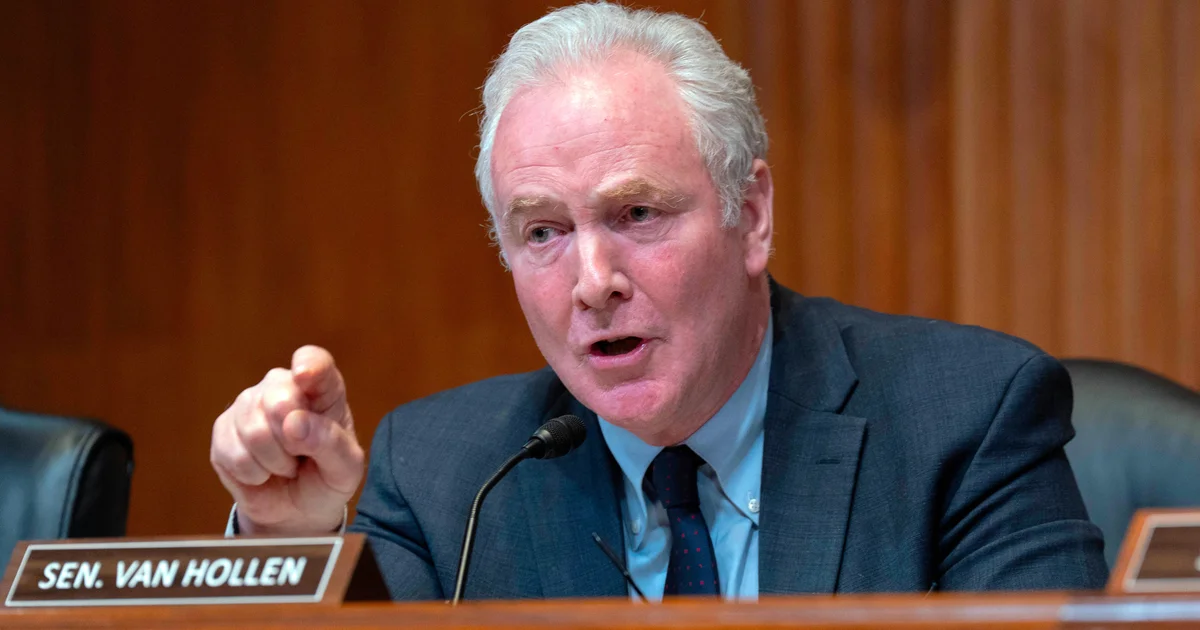

Washington — In a surprising move, Democratic Senator Chris Van Hollen of Maryland announced on Thursday his intention to challenge Senator Chuck Schumer for the position of Senate Majority Leader. This announcement comes on the heels of the Democratic Party’s significant victories in the recent midterm elections, positioning Van Hollen as a candidate who aims to reflect the party’s progressive aspirations. He emphasized the need for new leadership to address the issues facing working Americans and to challenge the status quo. His candidacy has already garnered support from prominent figures within the party, showcasing a potential shift in the dynamics of Senate leadership.
| Article Subheadings |
|---|
| 1) Van Hollen’s Announcement and Objectives |
| 2) Support from Key Figures within the Party |
| 3) Schumer’s Tenure and Response to the Challenge |
| 4) The Role of Progressive Voices in Leadership |
| 5) Prospects for Change in Senate Leadership |
Van Hollen’s Announcement and Objectives
Senator Chris Van Hollen made his intentions clear when he stated, “We need new leadership” to answer the call from Americans who seek to reform an economy perceived to be rigged against them. His campaign is marked by a spirit of urgency and a desire to address political corruption effectively. By positioning himself as a candidate for the Senate Majority Leader, Van Hollen aims to bridge the gap between the Democratic establishment and the progressive base, which has been increasingly vocal about the need for substantive policy change. With a challenge to Senator Chuck Schumer, his potential leadership would be evaluated on how it aligns with the progressive agenda.
Support from Key Figures within the Party
Van Hollen’s campaign has gained momentum with endorsements from influential Democrats. Notably, Independent Senator Bernie Sanders from Vermont quickly voiced his support for Van Hollen soon after the announcement. This alliance illustrates a shared vision among progressive lawmakers, emphasizing the demand for a party that stands up for working families and combats special interests. Additionally, figures such as Michigan Senator-elect Abdul El-Sayed have echoed sentiments of needing leadership that resonates with grassroots activism. However, while several Democrats express dissatisfaction towards Schumer’s leadership, they have yet to commit to Van Hollen’s candidacy.
Schumer’s Tenure and Response to the Challenge
Senator Chuck Schumer, who has been serving as the Senate Democratic leader since 2017, responded to Van Hollen’s challenge with openness, stating that he welcomes discussions about the future of the caucus. Reflecting on the party’s recent electoral gains, he has expressed confidence in his leadership, citing the success attained with 55 seats and a vision for delivering results for the American people. His established experience gives Schumer a resilient position as party leader, making it apparent that he desires to retain the leadership role despite emerging challenges.
The Role of Progressive Voices in Leadership
The push for change is felt strongly within the Democratic ranks, with notable contributions from progressive voices calling for a new approach to leadership. Senator Kirsten Gillibrand defended Schumer by highlighting his strategic leadership, while others like Jacky Rosen lent their support for him amidst the challenges from Van Hollen. Nonetheless, the rising discourse from progressives such as Sanders advocates for a more robust approach against powerful entities and the billionaire class. This presents a tension within the party as established leaders balance their strategies with the aspirations of the younger, progressive members seeking substantial reform.
Prospects for Change in Senate Leadership
Looking ahead, the outcome of the Senate leadership election remains uncertain. With many senators taking a wait-and-see approach, the dynamics continue to shift as party members engage in discussions regarding their priorities. Van Hollen has stated that he sees the race as “very much in flux,” suggesting that the electoral results have reinvigorated discussions about the direction of the party. As leadership elections are expected early next month, members of the Democratic caucus grapple with their choices, reflecting on the type of leadership that is needed to represent both their interests and those of the constituents.
| No. | Key Points |
|---|---|
| 1 | Senator Chris Van Hollen announced his challenge for Senate Majority Leader against Chuck Schumer. |
| 2 | He emphasizes the need for new leadership to tackle economic inequalities and political corruption. |
| 3 | Support from key figures like Bernie Sanders indicates a possible shift towards progressive leadership. |
| 4 | Senator Chuck Schumer expresses confidence in his leadership after the recent midterm victories. |
| 5 | The Democratic caucus is facing important discussions on future leadership and representation of progressive voices. |
Summary
The challenge posed by Senator Chris Van Hollen to Senator Chuck Schumer reflects a significant moment for the Democratic Party, especially in the wake of recent electoral successes. This evolving dynamic illustrates the tensions between established leadership and the desire for a more progressive agenda. As the party gears up for upcoming leadership elections, the discussions surrounding these issues reveal a broader narrative about the future direction of the Democratic caucus.
Frequently Asked Questions
Question: Who is Chris Van Hollen?
Chris Van Hollen is a Democratic Senator from Maryland who has served in the Senate since 2017, previously representing the state in the House of Representatives for over a decade.
Question: What is the significance of Van Hollen’s challenge?
Van Hollen’s challenge represents a call for new leadership within the Democratic Party and seeks to align leadership more closely with progressive ideals following a successful midterm election.
Question: How has Chuck Schumer responded to the challenge?
Schumer has welcomed the discussion regarding the leadership of the caucus and expressed pride in the successes achieved during his tenure, emphasizing his confidence to continue leading.
