

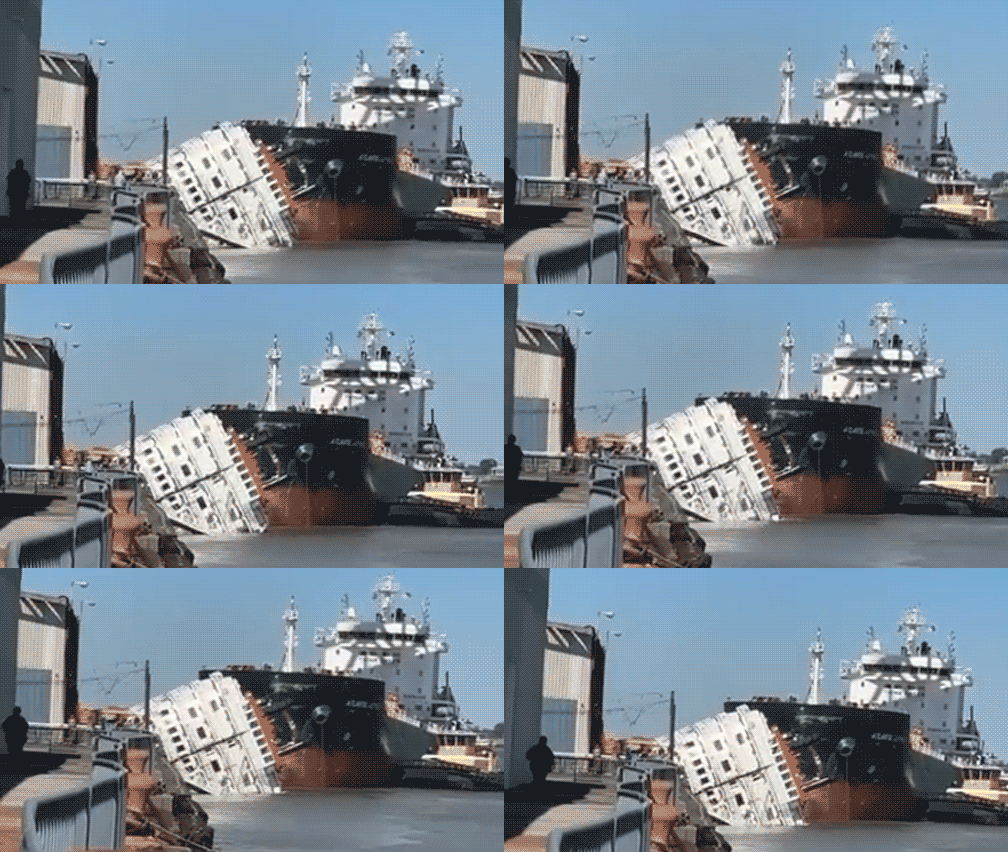

A significant maritime accident transpired on the Mississippi River in New Orleans, where a tanker collided with a river cruiser, leading to a capsizing incident that required immediate emergency response. Louisiana Governor Jeff Landry hailed the event as “a literal miracle” given that all passengers onboard were eventually accounted for. Despite 32 individuals being hospitalized, officials confirmed that none sustained life-threatening injuries. The incident is currently under investigation as responders praised their efforts in ensuring the safety of all involved.
| Article Subheadings |
|---|
| 1) Overview of the Collision Incident |
| 2) Emergency Response Coordination |
| 3) Investigation into the Collision Causes |
| 4) Community and Official Reactions |
| 5) Continuing Support and Recovery Efforts |
Overview of the Collision Incident
On November 13, 2026, at approximately 12:30 PM, a catastrophic collision occurred between the Atlantic Asphalt tanker and the American Heritage river cruiser on the Mississippi River near New Orleans. At the time of the accident, the river cruiser was docked, preparing to disembark passengers. Reports indicate that approximately 129 passengers, in addition to crew members, were aboard the vessel, although estimates later suggested that the total number might have reached between 180 and 190 individuals.
Initial sights of chaos unfolded as the tanker reportedly lost control and struck the cruiser, causing it to capsize. Eyewitness accounts highlighted the frantic moments as passengers sought safety while the cruiser took on water. Volunteers and bystanders quickly mobilized to assist, demonstrating a powerful local community response. Fortunately, all passengers and crew members were eventually accounted for, leading many to consider it a miracle given the circumstances.
Emergency Response Coordination
The swift response by emergency services was critical in managing the aftermath of the collision. Local Harbor Police were among the first responders to arrive on the scene, rapidly deploying resources to rescue those in the water. Firefighters from the New Orleans Fire Department utilized ladders to facilitate rescues from the dock, while nearby vessels played an essential role in helping individuals escape the turbulent waters.
As part of a coordinated effort, a police drone was diverted from an unrelated theft investigation to conduct aerial searches for anyone still unaccounted for. The collaboration between various agencies, including the U.S. Coast Guard, National Transportation Safety Board (NTSB), and local law enforcement, exemplified the effectiveness of emergency preparedness protocols. The NTSB confirmed they were sending a team of investigators to the site to begin their inquiry into the incident.
Investigation into the Collision Causes
While immediate rescue efforts were focused on ensuring passenger safety, officials turned their attention to the cause of the incident. Coast Guard Captain Melanie Burnham announced that an investigation had commenced, particularly focusing on an apparent loss of steering control that precipitated the tanker’s collision with the cruiser. The exact details remain undetermined, with investigators from the NTSB expected to conduct a thorough assessment.
The investigation is anticipated to examine all contributing factors, including the mechanical condition of the tanker, navigational protocols, and prevailing weather conditions at the time of the crash. As a precautionary measure, Harbor Police and emergency teams maintained a continued presence at the scene, ensuring no further hazards were present while the inquiry unfolded.
Community and Official Reactions
Community leaders and officials expressed their relief and gratitude following the successful rescue operations. Mayor Helena Moreno remarked on the miracle of having no unaccounted passengers, underscoring the heroic efforts of first responders both in the water and on land.
“We have zero people unaccounted for, which is a miracle,”
she stated during a press briefing. Governor Jeff Landry went further, stating,
“This is a miracle. The Mississippi River is not some quiet pond, right? I mean, there were challenges out there.”
Beyond local officials, broader discussions ensued regarding maritime safety in the region. Leaders such as House Speaker Mike Johnson and Senator John Kennedy shared sentiments of gratitude for the successful response and continued monitoring of the situation. The public response emphasized the importance of marine safety and the need for stringent regulations to prevent similar incidents in the future.
Continuing Support and Recovery Efforts
As recovery efforts progressed, the focus shifted towards providing aid and support for affected passengers. Medical teams from University Medical Center in New Orleans and surrounding hospitals attended to those hospitalized, ensuring they received comprehensive care. The total number of hospitalized individuals rose to 32, with reports indicating that injuries were not of a critical nature.
Community organizations, such as the Red Cross, were activated to assist passengers in navigating the aftermath, helping arrange accommodations and other necessary resources for their recovery. As a gesture of goodwill, American Cruise Lines instituted measures to assist passengers who had lost belongings during the chaos. Governor Landry assured that the state would continue to provide resources necessary for passengers to return home safely.
| No. | Key Points |
|---|---|
| 1 | Collision between a tanker and a river cruise ship occurred on November 13, 2026. |
| 2 | All passengers were accounted for, leading officials to call it a miracle. |
| 3 | Emergency responders coordinated effectively to rescue individuals from the water. |
| 4 | An investigation is underway to determine the cause of the collision. |
| 5 | Local and government officials are facilitating recovery efforts for the affected passengers. |
Summary
The tragic incident on the Mississippi River serves as a poignant reminder of the potential dangers associated with maritime operations. The unity displayed by emergency responders and local authorities in ensuring the safety of all onboard reflects a remarkable level of preparedness and cooperation. As investigations continue, the focus remains on ensuring accountability and reinforcing safety measures to prevent similar events from occurring in the future.
Frequently Asked Questions
Question: What happened during the tanker collision?
A tanker collided with the docked American Heritage river cruiser in New Orleans, causing the cruiser to capsize and prompting immediate emergency response.
Question: How many people were injured in the collision?
A total of 32 individuals were hospitalized following the incident, but officials reported that none of the injuries were critical.
Question: What steps are being taken to investigate the incident?
The National Transportation Safety Board (NTSB) is leading an investigation into the collision, focusing on possible loss of steering control as a contributing factor.
