

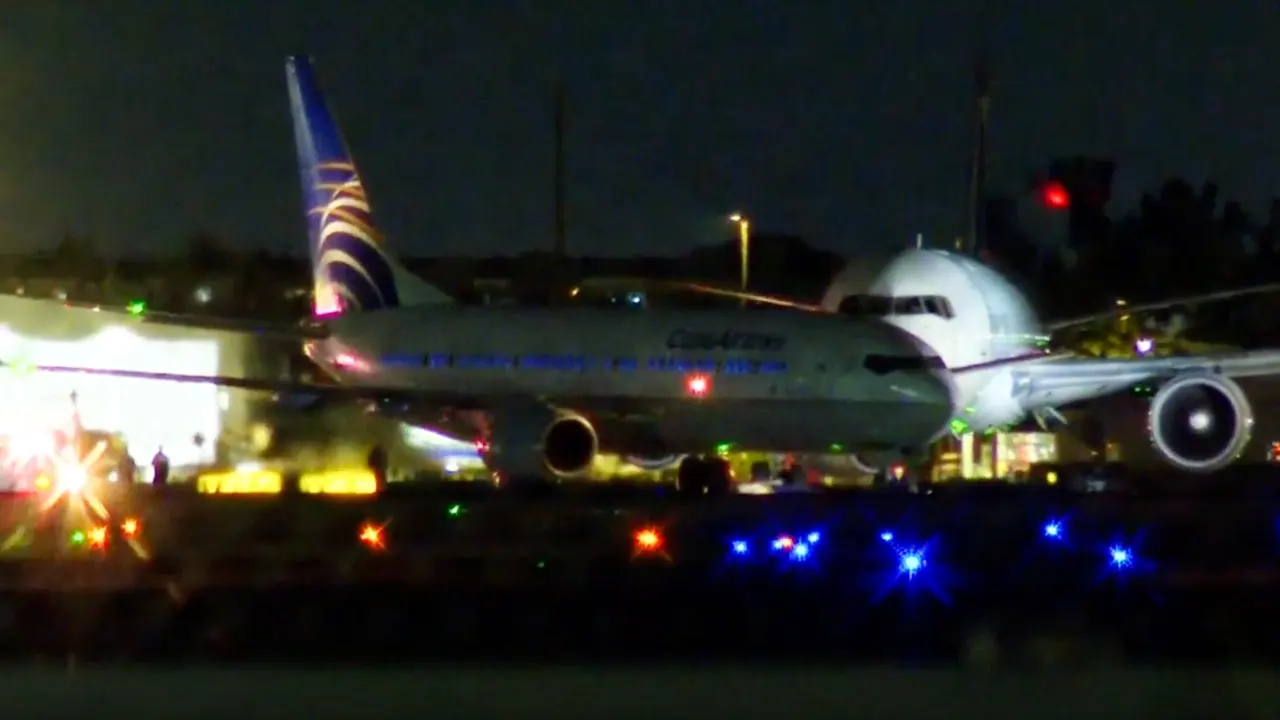

A collision between a UPS cargo plane and a Copa Airlines passenger jet occurred on the ground at Miami International Airport on Saturday night, resulting in minor injuries to two individuals. The incident took place around 9 p.m. local time as both aircraft were taxiing; a Copa Airlines Boeing 737’s wingtip struck the nose of a UPS Boeing 767. The Federal Aviation Administration (FAA) is currently investigating the circumstances surrounding the collision.
| Article Subheadings |
|---|
| 1) Details of the Incident |
| 2) Reaction from Authorities |
| 3) Passenger and Crew Experience |
| 4) Previous Similar Incidents |
| 5) Future Safety Measures |
Details of the Incident
The collision occurred around 9 p.m. local time when the wingtip of a Copa Airlines Boeing 737 made contact with the nose of a UPS Boeing 767 while both aircraft were taxiing. According to the Federal Aviation Administration (FAA), the air traffic controllers had directed the UPS flight to yield to the Copa Airlines jet, which was arriving from Panama City, Panama, and maneuvering to its gate after landing. Eyewitness accounts and air traffic control communications reveal a harrowing moment when the two planes collided at an intersection of taxiways. As a result of the impact, authorities reported that two individuals sustained minor injuries.
“At approximately 9:15 p.m., an arriving aircraft and a departing aircraft made contact with each other at the intersection of two taxiways,” stated Greg Chin, communications director for the Miami-Dade Aviation Department. Miami-Dade Fire Rescue attended to two patients on the scene. Fortunately, they did not require further medical transport, illustrating that although alarming, the situation could have resulted in more serious outcomes.
Reaction from Authorities
Following the incident, local authorities and aviation officials took immediate action to ensure the safety and operational efficiency of the airport. “Flights are being directed to other taxiways, so there is no impact on airport operations at this time,” Chin confirmed. The FAA launched an investigation to determine the precise circumstances leading to the collision, aiming to scrutinize whether procedural lapses, miscommunication, or equipment failure could have contributed to the incident.
Air traffic control audio recorded an exchange between pilots and controllers post-collision, offering insights into the immediate responses from both flight crews. A pilot aboard the Copa Airlines flight was heard reporting the collision, saying, “Somebody just hit us.” This highlights the critical nature of real-time communication in the pilot-air traffic control dynamic, especially in busy environments like an airport.
The UPS flight, identified as UPS 358, acknowledged the incident in their communication, admitting that the crew had misjudged their taxiing position. “Yeah, we went too far and he clipped us with his wing,” the UPS pilot responded during the radio exchange, indicating a lapse in awareness that is often rectified through thorough training and adherence to established protocols.
Passenger and Crew Experience
Copa Airlines reported that Flight CM427, which occupied 166 passengers and six crew members at the time of the collision, managed an efficient disembarkation after the aircraft came to a halt. Although the incident caused distress among passengers, the airline ensured they were all evacuated without further incident. The two individuals who received treatment for minor injuries were promptly attended to by emergency services.
In an official statement, Copa Airlines expressed a commitment to cooperating with the investigation while prioritizing the well-being of their passengers and crew. “Our crew is safe, and we are committed to working with authorities to determine what happened. The safety of our employees and public remains our highest priority,” the statement read.
As for the passengers on board, many reported their experiences ranged from shock to relief due to the minor nature of the injuries. Communication from the airlines during the emergency protocols is vital, and it seems that both Copa and UPS managed to adequately inform their crews and passengers to safely navigate the situation.
Previous Similar Incidents
This incident is not unique to the aviation industry. Similar ground collisions have been documented at airports around the globe, often resulting from human error or miscommunication within air traffic control systems. For instance, previous collisions at Miami International Airport have led to extensive investigations, causing a reevaluation of the effectiveness of communication protocols and the navigation systems in use.
The FAA’s investigation into this incident will likely prompt discussions around whether additional safety protocols are necessary to prevent similar future occurrences, including upgrades to existing technology or enhancements to pilot training regarding ground operations. Investigating past incidents can provide essential lessons that aviation authorities can implement to improve safety standards continuously.
Future Safety Measures
In the wake of this latest incident, industry experts believe that the aviation sector must revisit its safety measures and operational protocols. Enhanced training for pilots and air traffic control personnel is crucial, incorporating real-time simulation of collision scenarios to prepare crews for potential emergencies. Proponents of technology advocate for the adoption of advanced monitoring systems designed to better track aircraft movements on the ground.
In addition to education and technology, improving communication strategies between pilots and air traffic control is equally essential. Ensuring that both parties are on the same page is vital in preventing misunderstandings, particularly during busy operational periods. This incident, highlighting the risks present in even the most routine of procedures, could serve as a catalyst for wider safety discussions across the aviation industry.
| No. | Key Points |
|---|---|
| 1 | The collision happened at Miami International Airport between a UPS cargo plane and a Copa Airlines passenger jet. |
| 2 | Two individuals sustained minor injuries, treated on-site by emergency services. |
| 3 | The FAA is conducting an investigation to explore factors contributing to the collision. |
| 4 | Both airlines expressed commitment to cooperating with authorities while ensuring passenger safety. |
| 5 | The incident may lead to discussions about enhancing safety protocols and ground operations in aviation. |
Summary
In conclusion, the recent collision at Miami International Airport has raised significant concerns about aviation safety, particularly regarding ground operations. While the quick response from emergency services and the airlines involved prevented serious injuries, it highlighted the ongoing challenges in communication and navigational protocols within busy airport environments. The FAA’s investigation will be crucial in uncovering the root causes of this incident and enhancing safety measures to protect passengers and crew in future flying experiences.
Frequently Asked Questions
Question: What caused the collision between the planes?
The collision was reportedly caused when the wingtip of the Copa Airlines plane struck the nose of the UPS cargo plane while both were taxiing on the ground, following instructions from air traffic controllers.
Question: Were there any serious injuries as a result of the incident?
No serious injuries were reported; however, two individuals sustained minor injuries and were treated on-site by emergency services without the need for further medical transport.
Question: What actions are being taken following this incident?
The FAA is currently investigating the circumstances surrounding the collision, and both airlines have committed to cooperating fully with authorities to improve safety protocols and operational procedures.
