

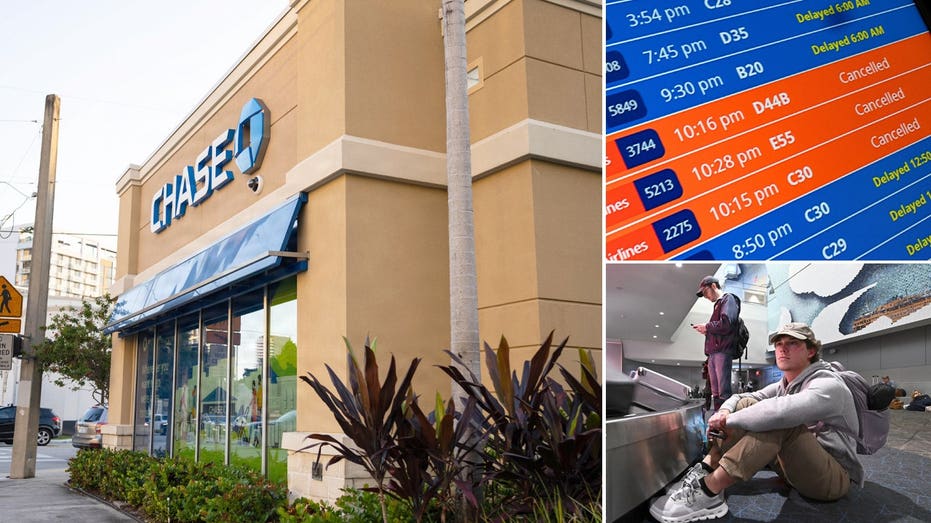

A series of technology failures disrupted email, air travel, human resources systems and online banking across the United States within five days. Microsoft 365 users faced nearly 24 hours of service problems, while a nationwide Federal Aviation Administration ground stop halted departures for almost five hours. Workday then reported a widespread service interruption before customers at several major banks encountered online access and transaction delays on Monday, Nov. 16, 2026.
The incidents affected widely used digital services but were not identified as cyberattacks in the available information. Companies and officials attributed the disruptions to technical defects, capacity constraints, infrastructure work and unresolved system issues.
| 1) | Banking customers report online access and transaction problems |
| 2) | Microsoft 365 outage disrupts email and workplace services |
| 3) | FAA ground stop interrupts flights nationwide |
| 4) | Workday disruption locks employees out of key systems |
| 5) | Failures expose dependence on interconnected technology |
Banking customers report online access and transaction problems
Customers of Chase, Bank of America, Wells Fargo and U.S. Bank reported online banking difficulties Monday, Nov. 16. Chase said some transactions were taking longer than usual, while customers retained access to their accounts and funds. Wells Fargo acknowledged that online banking was unavailable Monday afternoon and asked users to try again later. The precise scope and causes of reported problems at the other banks were not immediately clear.
A source familiar with the Chase incident described it as a technical bug rather than a cyber issue. Zelle said its payment network was functioning normally, but problems at participating financial institutions could delay payments because banks and credit unions manage customer accounts and hold the funds.
Microsoft 365 outage disrupts email and workplace services
The first major incident began Thursday, Nov. 12, when a widespread Microsoft 365 outage disrupted Outlook, Teams and other workplace services worldwide. The disruption lasted nearly 24 hours, with service restored Friday morning according to a preliminary incident report. Email experienced the most significant impact, while effects on other applications varied.
Microsoft executive Charles Lamanna attributed the failure to a previously undetected software defect, increased traffic and reduced server capacity. Microsoft says more than 430 million people use its Microsoft 365 applications, although that figure does not establish how many people were affected.
FAA ground stop interrupts flights nationwide
On Friday, Nov. 13, the Federal Aviation Administration halted departures nationwide for nearly five hours after technical problems affected aircraft communications and radar feeds. The disruption began at about 3:30 p.m. Eastern time, and air traffic resumed at approximately 8:15 p.m. The outage caused widespread cancellations and delays.
Transportation Secretary Sean Duffy said the problems began while contractor L3Harris Technologies was replacing copper wiring with fiber wiring in the air traffic control system. The work led to intermittent communications and radar gaps. Officials investigated whether contractor performance or a faulty router contributed to the failure. The FAA said some radio frequencies and radar feeds remained operational, every aircraft landed safely, and there was no indication of a cyberattack.
The FAA reported approximately 12,462 flight cancellations Friday, including 9,082 by major airlines, while cautioning that not every cancellation was directly caused by the ground stop.
Workday disruption locks employees out of key systems
Workday experienced a widespread outage Friday, one day after the Microsoft disruption. The human resources and payroll platform serves about 11,500 companies, including Walmart, Target, Netflix, Southwest Airlines and PNC Bank. Government agencies and NASA’s Jet Propulsion Laboratory also use the platform, although not all customers reported problems.
Users encountered a message stating that Workday was unavailable because of a service interruption. An outage-tracking website recorded nearly 3,000 reports shortly after 5 p.m. Friday. Workday said some customers were experiencing a service disruption and that teams were working urgently to investigate and resolve it.
Failures expose dependence on interconnected technology
The sequence affected communications, employment administration, aviation and financial services between Thursday, Nov. 12, and Monday, Nov. 16. The incidents involved private companies and government infrastructure, but available statements did not identify a common cause linking them.
The events showed how a technical problem in one service provider can create secondary effects. Microsoft users struggled with email and collaboration tools, airline passengers faced cancellations after the FAA interruption, and bank customers experienced delayed transactions. The reported information did not point to a coordinated cyberattack.
| Number | Key Point |
|---|---|
| 1 | Microsoft 365 services were disrupted for nearly 24 hours beginning Nov. 12. |
| 2 | A nationwide FAA ground stop on Nov. 13 caused major flight cancellations and delays. |
| 3 | Workday reported a widespread interruption affecting some customers. |
| 4 | Several major banks reported or were associated with online service problems Monday. |
Summary
A concentrated run of outages disrupted essential digital services across the United States. The incidents involved different platforms and infrastructure, and available information pointed to technical failures rather than a shared cyberattack. Customers faced delays in communications, travel, employment systems and banking.
Frequently Asked Questions
Which services were disrupted?
The reported disruptions affected Microsoft 365, FAA air traffic control communications and radar systems, Workday, and online banking services at several major financial institutions.
Were the incidents caused by cyberattacks?
The available information did not indicate a cyberattack. Reported explanations included a software defect, increased traffic, reduced server capacity, infrastructure work and other technical problems.
Was Zelle itself down?
Zelle said its payment network was operating normally. It cautioned that problems at participating banks and credit unions could delay payments for some customers.
