

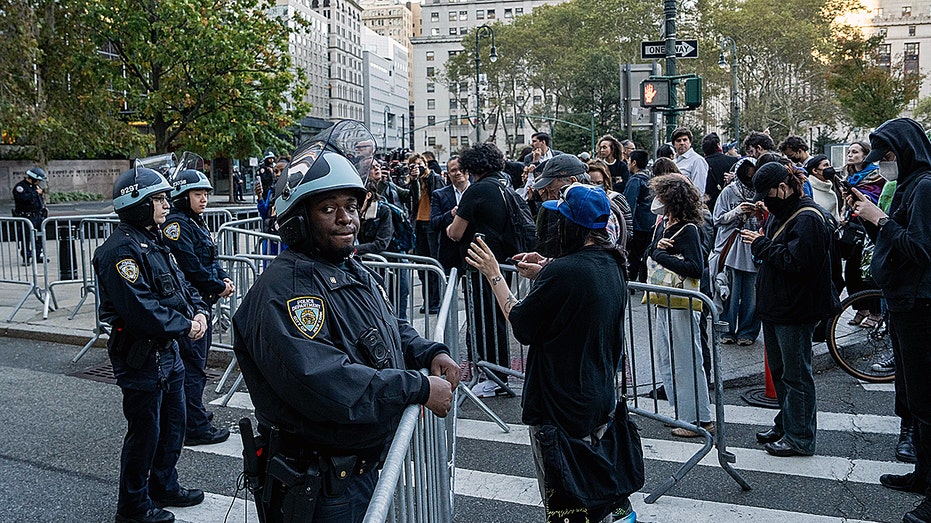

Zohran Mamdani announced Monday that New York City will disband the NYPD’s Strategic Response Group and adopt a civilian-led approach to protest response. The city’s counterterrorism functions will move into an existing command, while a new Community Dialogue and De-escalation Division will oversee protest-related engagement. The plan also limits several police crowd-control tools and creates specialized roles for officers supporting demonstrations.
The changes were announced by Mamdani alongside Police Commissioner Jessica Tisch as the administration moves to fulfill a campaign promise to separate counterterrorism operations from protest response. Officials said the new model is intended to emphasize communication, engagement and de-escalation while preserving police support for demonstrations involving criminal activity or serious public safety concerns.
| 1) | The city ends the Strategic Response Group’s protest role |
|---|---|
| 2) | A civilian division will lead dialogue and de-escalation |
| 3) | New limits will govern police crowd-control tools |
| 4) | Police will retain a specialized support function |
| 5) | The policy follows a record of extensive protest activity |
The city ends the Strategic Response Group’s protest role
Mamdani said the NYPD’s Strategic Response Group, known as the SRG, will be disbanded under the changes announced Monday, Nov. 16, 2026. The unit previously responded to citywide mobilizations, civil disorders and major events. It was also used for parades, protests, the papal visit and incidents requiring an increased police presence, including shootings, bank robberies and missing-person cases.
The administration will separate the unit’s counterterrorism responsibilities from its protest-response duties. Officials said those counterterrorism functions will be transferred to an existing NYPD command. Mamdani described the change as fulfilling a campaign commitment to distinguish constitutional demonstrations from terrorism threats.
New Yorkers exercising their constitutional right to protest should not be met with the same police response as a terrorism threat.
A civilian division will lead dialogue and de-escalation
The new Community Dialogue and De-escalation Division, or CDDD, will operate within the Mayor’s Office of Community Safety. Its purpose is to improve the city’s response to protests through civilian-led engagement, with an emphasis on communication and reducing tensions before situations escalate.
The CDDD will include a specialized dialogue team called the First Amendment Support Team, or FAST. The city said FAST will consist of 30 uniformed officers trained in communication and de-escalation. The division itself will not have weapons or arrest powers, establishing a formal distinction between civilian-led dialogue and traditional police enforcement.
New limits will govern police crowd-control tools
The reforms establish restrictions on equipment and tactics available during protest responses. The city said kettling, the use of long guns and the use of tear gas will be codified as prohibited tactics in those operations.
Pepper spray will not be used as a crowd-management tool. Long-range acoustic devices will also be subject to a 90-decibel limit. These provisions are intended to make the response more proportionate to the circumstances of a demonstration and to reinforce the administration’s focus on dialogue and de-escalation.
Police will retain a specialized support function
The NYPD will establish a new Patrol Support Division within its Patrol Services Bureau. The unit will consist of vetted officers who spend most of their time on regular patrol-related duties but receive specialized crowd-management training.
The Patrol Support Division will support responses to demonstrations when police involvement is necessary. Its structure is intended to preserve an operational police capability while ending the SRG’s combined role in protest response and counterterrorism. The city did not state that police would be removed from demonstrations involving criminal conduct or other significant incidents.
The policy follows a record of extensive protest activity
The policy follows a period in which the NYPD handled thousands of protests across New York City. Tisch said during a March budget hearing that the department facilitated 4,255 protests in 2025. The SRG was available at 245 of those events, or approximately 6%.
Tisch also said the SRG did not typically handle peaceful protests. According to her account, the unit was deployed when demonstrations involved criminal activity. The new structure therefore changes the formal organization and tools used for protest response while recognizing that police may still be needed when public safety concerns arise.
| 1 | The NYPD’s Strategic Response Group will be disbanded. |
|---|---|
| 2 | Counterterrorism functions will move to an existing command. |
| 3 | The CDDD and its 30-officer FAST team will prioritize dialogue and de-escalation. |
| 4 | Kettling, long guns and tear gas will be prohibited for protest responses. |
| 5 | A new Patrol Support Division will provide trained police support. |
Summary
New York City’s new protest-response framework separates counterterrorism from demonstrations and places civilian dialogue at the center of the approach. The plan creates a non-arrest division, limits crowd-control tools and maintains a trained police support unit for events involving public safety concerns. Its implementation will determine how the city balances First Amendment protections with the need to respond to criminal activity and disorder.
Frequently Asked Questions
What is happening to the NYPD Strategic Response Group?
The SRG will be disbanded. Its counterterrorism responsibilities will be transferred to an existing command, while protest response will be handled through the city’s new structure.
What is the Community Dialogue and De-escalation Division?
The CDDD is a new division within the Mayor’s Office of Community Safety. It will focus on dialogue and de-escalation and will not have weapons or arrest powers.
Will police still respond to demonstrations?
Yes. The NYPD will create a Patrol Support Division with vetted officers trained in crowd management. Police support will remain available for demonstrations involving criminal activity or other significant public safety concerns.
What protest tactics will be restricted?
The city said kettling, long guns and tear gas will be prohibited for protest responses. Pepper spray will not be used as a crowd-management tool, and long-range acoustic devices will be limited to 90 decibels.
