

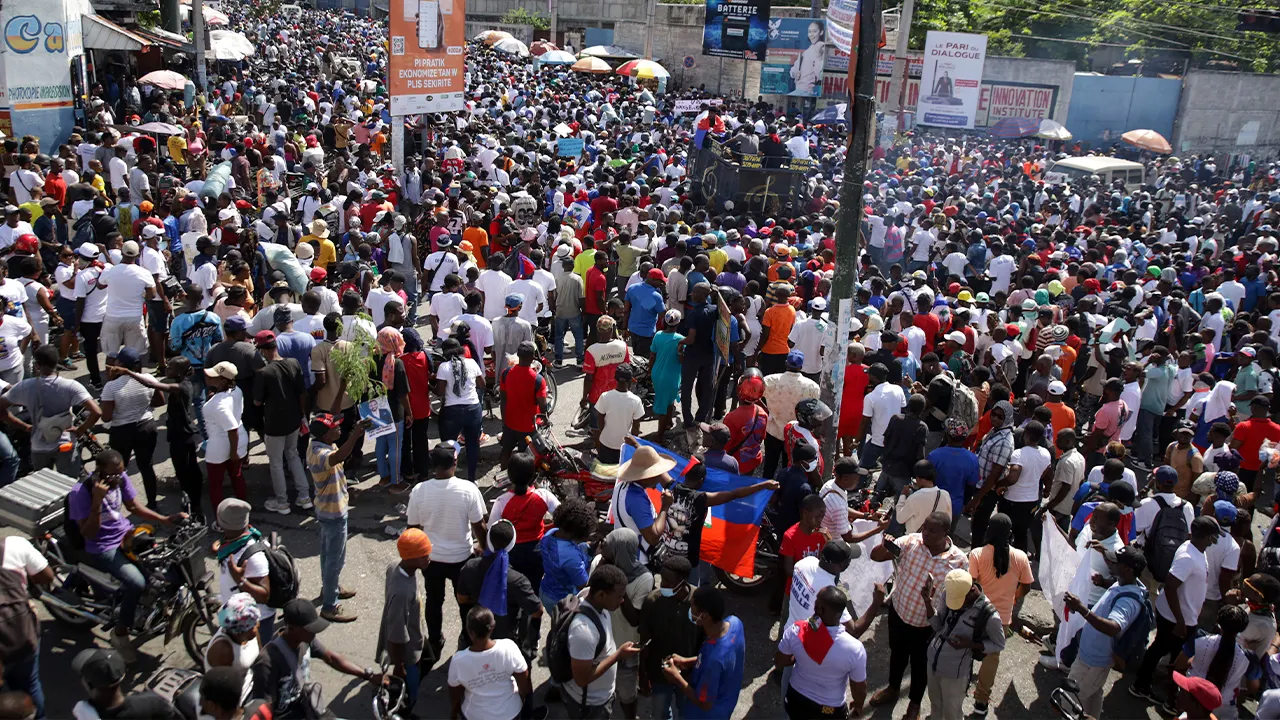

In a significant display of solidarity, thousands of people in Haiti rallied on Tuesday in support of Salvadoran President Nayib Bukele and his decision to deploy troops to combat violent gangs within the country. The march unfolded as Haiti’s Minister of Justice and Public Security, Patrick Pélissier, prepared to travel to San Salvador to discuss strategies for tackling the rampant gang violence that has plagued the nation for years. The event highlighted the growing collaboration between El Salvador and Haiti in addressing the security crisis that has left many residents living in fear.
| Article Subheadings |
|---|
| 1) The Rally in Support of Bukele |
| 2) Bukele’s Promises and Military Actions |
| 3) The Impact of Violence in Haiti |
| 4) International Concerns on Civilian Safety |
| 5) The Path Forward for Haiti and El Salvador |
The Rally in Support of Bukele
On November 17, 2026, a large procession took place in Port-au-Prince, where demonstrators expressed their gratitude to President Nayib Bukele for sending Salvadoran troops to aid in the fight against pervasive gang-related violence in Haiti. A video shared by Bukele captured the energy and enthusiasm of the crowd, which was seen chanting his name and celebrating with banners proclaiming messages of support such as “Long live Bukele” and “Down with the gangs.” The rally served as a loud endorsement of his approach to law and order and demonstrated a yearning for change among the Haitian populace.
Participants such as Claudy Mayas articulated their appreciation, stating, “Only a week of operation, we can see the path to change in Haiti. We say thank you to Bukele for all the help he gives us.” This sentiment was echoed across the crowd, with many revelers asserting that Bukele was providing hope and security that had been conspicuously absent in Haiti for years.
Bukele’s Promises and Military Actions
Amidst the backdrop of escalating violence, President Bukele has made bold promises to the Haitian people. He indicated that the operations spearheaded by his troops would mirror those successfully employed in El Salvador to dismantle gang networks. In a recent statement, Bukele warned, “We will finish them as we did in El Salvador,” referencing his administration’s aggressive tactics against gang elements.
“I never expected anything like this. I hear you loud and clear. I love you too. We will triumph. God will give us victory,”
he remarked, capturing the spirit of hope among supporters.
The Salvadoran military operations in Haiti have already seen impactful measures, including airstrikes that targeted the strongholds of notorious gangs like 400 Mawozo, one of the most dangerous crime syndicates in the region. These direct military interventions represent a notable escalation in the battle against organized crime, generated by a desperate need for effective security measures as gang violence proliferates in the wake of systemic governance issues in Haiti.
The Impact of Violence in Haiti
Gang violence in Haiti has reached alarming levels, with reports indicating that armed groups control between 80% and 90% of the capital, Port-au-Prince. This reality has transformed daily life into a struggle for many residents, who live in constant fear of violence, theft, and abduction. According to reports from the United Nations, almost 4,600 people fell victim to homicide between January and October of 2026 alone, alongside more than 1.5 million people displaced from their homes.
Among the demonstrators, voices were raised in unison to articulate their desires for peace and security in a nation where everyday activities have been curtailed by the threat of gang violence. As one demonstrator aptly put it, “We don’t ask much of the government. We don’t ask for jobs. We need only security.” This clear message underscores a desperate plea for intervention as gang operations wreak havoc on communities.
International Concerns on Civilian Safety
In the midst of the public outpouring of support for Bukele’s military initiatives, international observers and organizations have voiced concerns regarding civilian safety during anti-gang operations. The United Nations emphasized the need for security forces to strictly limit the use of lethal force to “situations where it is unavoidable to protect life from an imminent threat,” highlighting the potential for these operations to inadvertently jeopardize civilian lives.
These concerns echo a historical pattern where aggressive military actions against gangs have often led to collateral damage and heightened tensions among the civilian population. As the Salvadoran troops prepare to engage more deeply in the Haitian landscape, ensuring the safety and protection of non-combatants remains paramount for international human rights observers and local advocacy groups alike.
The Path Forward for Haiti and El Salvador
The collaboration between Haiti and El Salvador marks a critical juncture in addressing the multifaceted security crisis engulfing the region. Both nations share significant experience in grappling with gang-related struggles, and much weight is placed on the effectiveness of Bukele’s approach as a model for other Latin American countries facing similar challenges. The possible future implications of this alliance could reshape how regional players confront organized crime and violence.
As Bukele continues to commit to the fight against gangs, the eyes of the international community will be on Port-au-Prince. Observers hope that by tackling the root causes of violence and instability—such as economic inequality, political corruption, and inadequate law enforcement—both nations can carve a pathway toward lasting peace and security. The renewed hope expressed by participants in the recent rally reflects a collective yearning for a future where safety and stability can be restored.
| No. | Key Points |
|---|---|
| 1 | Thousands of Haitians rallied in support of Salvadoran President Nayib Bukele’s troop deployment against gangs. |
| 2 | Demonstrators expressed hope for change and security, recognizing Bukele’s efforts to combat gang violence. |
| 3 | U.N. officials highlighted the need for civilian safety amidst escalating military interventions in Haiti. |
| 4 | Between January and October 2026, nearly 4,600 people were killed in gang-related violence in Haiti. |
| 5 | The partnership between El Salvador and Haiti may reshape regional responses to gang violence in Latin America. |
Summary
The recent mass rally in Haiti highlights the growing desperation for security among its citizens, as well as their support for Salvadoran President Nayib Bukele‘s bold military strategies against gang violence. The convergence of hope for stability and the recognition of the risks involving military action indicates that both nations must navigate a complex path forward. The ongoing cooperation reflects not only the potential for success in combating organized crime but also the urgent responsibility to protect civilian lives in the tumultuous landscape of Haitian society.
Frequently Asked Questions
Question: Why did many Haitians support President Bukele’s military actions?
Haitians supported President Bukele’s military actions as they hope for relief from the gang violence that has plagued their communities. The crowd at the rally expressed their gratitude for the assistance and a strong desire for increased security and stability.
Question: How severe is the gang violence situation in Haiti?
The gang violence in Haiti is extremely severe, with reports indicating that armed gangs control an estimated 80% to 90% of Port-au-Prince. High homicide rates and massive displacement of residents reflect the dire circumstances faced by many Haitians.
Question: What are the international concerns regarding the military operations in Haiti?
International concerns focus on the safety of civilians during military operations. Organizations like the United Nations stress that the use of lethal force by security forces must be a last resort to prevent possible harm to non-combatants.
