

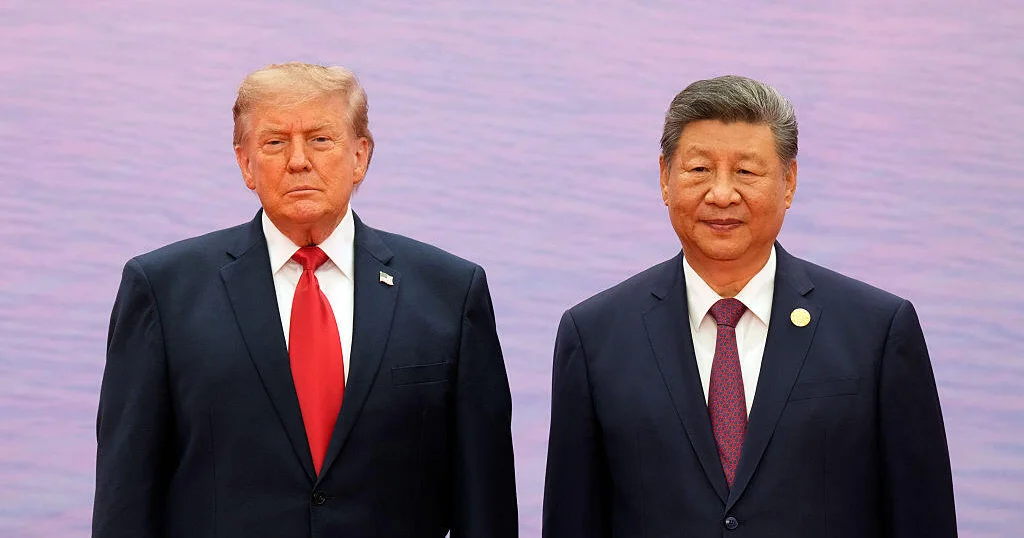

President Trump is engaged in critical discussions with Chinese President Xi Jinping during a high-stakes meeting amid a significant scandal regarding U.S. semiconductor exports to China. The meeting, held in Shenzhen, China, coincides with the Asia-Pacific Economic Cooperation (APEC) summit. This encounter marks the third in-person meeting between the leaders this year, underscoring the ongoing complexities of U.S.-China relations as they navigate trade, technology, and geopolitical concerns.
| Article Subheadings |
|---|
| 1) The Context of U.S.-China Relations |
| 2) The Semiconductor Scandal |
| 3) AI and Technological Concerns |
| 4) The Taiwan Dynamic |
| 5) Upcoming Trilateral Meeting |
The Context of U.S.-China Relations
The relationship between the United States and China has been increasingly tense, especially in the light of recent developments in trade and technology. As the world’s two largest economies, the U.S. and China have a complex relationship characterized by competition and interdependence. The ongoing trade war has escalated concerns over national security, economic policies, and technology transfers. The current meeting between Presidents Trump and Xi serves as a platform for both leaders to address these contentious issues directly while reaffirming their commitment to ongoing dialogues aimed at stabilizing the bilateral relationship.
President Trump’s administration has taken a hard stance on various matters, particularly concerning technology and national security. This includes imposing tariffs on Chinese imports and tightening regulations on technology transfers that could benefit Chinese companies. The meeting in Shenzhen, which is part of the APEC summit, is crucial as it allows both nations to discuss their differences in a setting that traditionally promotes cooperation among Pacific Rim nations. The implications of this meeting extend beyond economic issues, touching upon broader geopolitical dynamics in Asia and beyond.
The Semiconductor Scandal
Recently, the Trump administration has been scrutinized due to allegations surrounding the diversion of advanced semiconductor chips to China, which could potentially enhance China’s technological capabilities. These allegations are part of an investigation involving Megaspeed, a semiconductor company based in Singapore, which reportedly supplied chips to China, raising national security concerns. This scandal has placed Trump between competing factions within his administration; specifically, Treasury Secretary Scott Bessent and Commerce Secretary Howard Lutnick, who hold differing viewpoints on how to address China’s access to U.S. technology.
The Justice Department’s inquiry into the alleged activities of Megaspeed has drawn attention to the broader implications for trade relations. Secretary Bessent has emphasized the urgency of restricting chip access to Chinese entities, while Lutnick has been criticized for his perceived leniency towards Chinese partnerships. Trump’s position appears to be one of finding balance, as he seeks to manage both international relations and domestic pressures regarding trade and national security.
“It’s really kind of unfolded into a much bigger, longer-term scandal that involves the question of how many chips did China get, how porous were export controls, and how did the Commerce Department enforce them?”
This scandal touches on fundamental issues regarding U.S. export controls and the effectiveness of legal restrictions against technology transfers to China. Expert analysis suggests that while the administration’s actions may have some implications, the continued loopholes in export controls have made it challenging to fully restrict advanced computing capabilities from reaching China.
AI and Technological Concerns
In conjunction with the semiconductor scandal, the U.S. has introduced new interim trade rules to prevent advanced Chinese AI companies from accessing U.S. chips remotely. This significant policy decision comes at a time when both nations are racing to establish dominance in artificial intelligence. Leaders on both sides recognize the potential of AI technology to fundamentally shift economic power dynamics, leading to heightened competition.
The introduction of new regulations indicates a strategic shift by the Trump administration, aligning with a more aggressive posture toward protecting U.S. technological advancements. Experts suggest that cutting off Chinese companies from access to U.S. AI computing power could significantly widen the technological gap between the U.S. and China. This policy aims to inhibit China’s ability to develop AI capabilities that could challenge U.S. superiority.
Moreover, during a previous summit between Trump and Xi, both leaders emphasized the importance of discussing the safe development of AI technologies. However, analysts argue that mere discussions based on past incidents do not suffice in ensuring safety and coordination regarding the future implications of AI technologies. Experts believe that it is crucial for both powers to conduct substantial discussions involving technical experts to build a framework for AI safety and cooperation.
The Taiwan Dynamic
Taiwan remains a sensitive topic in U.S.-China relations, with President Trump indicating he expects Xi to bring it up during their meeting. The anticipated discussion revolves around cross-strait dynamics and Taiwan’s defense capabilities, further complicated by an ongoing $14 billion arms package that remains pending in the U.S. Congress. The eventual approval of this arms deal is anticipated to heighten tensions in the region.
Expert voices highlight the enduring concerns Xi has regarding U.S. support for Taiwan. Should Trump pursue arms sales to Taiwan, it could provoke a furious response from China, exacerbating already strained relations. Thus, this discussion during the Trump-Xi meeting is likely to center on both nations’ future strategies regarding Taiwan and the implications for regional stability.
Upcoming Trilateral Meeting
Following the bilateral summit, Trump will meet with both Xi and Russian President Vladimir Putin, marking a historic trilateral discussion format. Analysts express cautious optimism, believing that these talks could facilitate progress on critical geopolitical issues, even if substantial breakthroughs are unlikely during this meeting. Issues such as denuclearization and international stability will likely feature prominently in their discussions.
Trump has indicated that the dialogue will cover a wide range of topics, including not only denuclearization efforts but also the perceived threats posed by Iran. As both Trump and Xi prepare for this trilateral dialogue with Putin, experts suggest the opportunity exists to outline pathways for collaboration in areas of mutual concern, particularly amidst increasing global challenges.
| No. | Key Points |
|---|---|
| 1 | The meeting between Trump and Xi addresses escalating tensions in U.S.-China relations. |
| 2 | Allegations regarding semiconductor exports to China have led to an investigation that raises national security concerns. |
| 3 | New trade rules aim to restrict Chinese AI companies’ access to advanced U.S. technology. |
| 4 | The topic of Taiwan remains a key concern in the U.S.-China dialogue. |
| 5 | A trilateral discussion with Russia will cover critical geopolitical issues including denuclearization and regional stability. |
Summary
The upcoming meeting between President Trump and President Xi Jinping is set against a backdrop of significant challenges facing U.S.-China relations, including allegations of technology transfers and tensions over Taiwan. As the leaders strive to reinforce diplomatic channels while addressing escalating security concerns, the importance of this dialogue cannot be understated. Moving forward, the future of bilateral relations will depend on their ability to manage the complexities of trade, technology, and military dynamics effectively.
Frequently Asked Questions
Question: What is the significance of the semiconductor scandal?
The semiconductor scandal highlights national security concerns regarding the transfer of advanced chips to China, which may enhance its technological capabilities, raising alarms within the U.S. government about potential espionage and competitive disadvantages.
Question: How does AI play a role in U.S.-China relations?
AI is a critical area of competition between the U.S. and China, with both nations striving to be leaders in technology. The U.S. aims to restrict China’s access to advanced AI technology to prevent them from gaining an upper hand in this field.
Question: What are the potential implications of the meeting between Trump, Xi, and Putin?
The trilateral meeting may pave the way for future cooperative discussions on pressing geopolitical issues, although substantial breakthroughs are uncertain. Topics such as denuclearization and international security dynamics are likely to dominate their agenda.
