

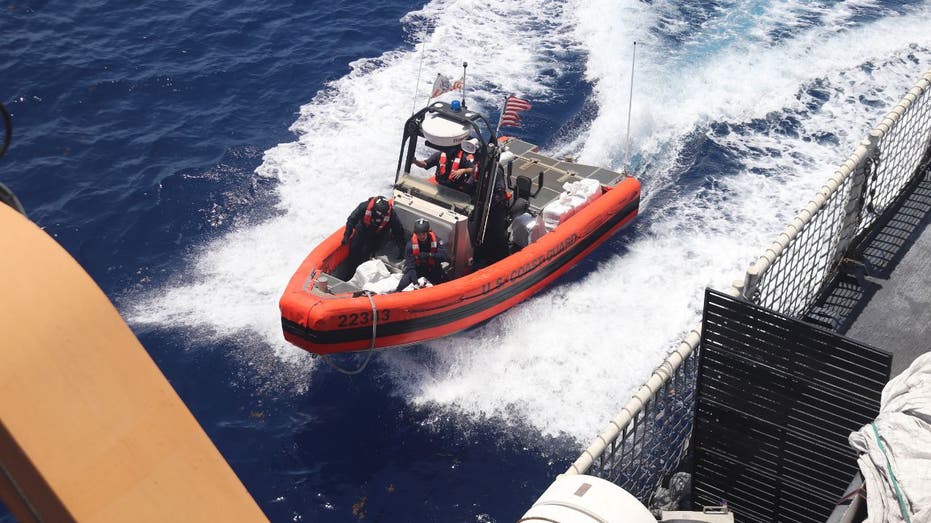

The U.S. Coast Guard and federal cybersecurity personnel boarded two foreign-flagged commercial vessels bound for U.S. ports in August after indications that their networks had been compromised. The operations took place on Aug. 21 and Aug. 24 in the Gulf of America, before either ship reached port. The actions came as U.S. authorities examined reports that Iran may have been involved in a wider campaign targeting energy tankers. Officials said the incidents did not cause reported disruptions to vessel operations, crew safety or the environment.
The boardings were intended to identify and mitigate cyber threats affecting the ships’ operational and information technology systems. The Coast Guard said the work was conducted with the Federal Bureau of Investigation and other federal cybersecurity specialists.
| Article Subheadings | |
|---|---|
| 1) | Offshore boardings targeted suspected cyber breaches |
| 2) | Multiagency teams examined ship systems |
| 3) | Investigation examines possible Iran-linked attacks |
| 4) | Threats affected maritime and energy security |
| 5) | Officials reinforce routine cyber risk controls |
Offshore boardings targeted suspected cyber breaches
The Coast Guard boarded the first inbound foreign-flagged commercial vessel on Aug. 21 and a second ship on Aug. 24. Both operations occurred offshore in the Gulf of America while the vessels were traveling toward U.S. ports. The purpose was to investigate indications that foreign cyber actors had compromised the ships’ networks and to reduce the risk that the suspected intrusions would affect their safe transit or port operations.
The Coast Guard said the measures were precautionary and security-focused. No operational disruption, vessel instability, threat to crew safety or environmental impact was reported after the boardings.
Multiagency teams examined ship systems
The first boarding involved Coast Guard law enforcement personnel, members of a Coast Guard Cyber Protection Team, a vessel inspector and FBI Cyber Action Team operators. Federal cybersecurity experts worked with the ships’ captains, crews and shore-based corporate staff to assess the suspected breaches and mitigate the identified threats.
A similar multiagency boarding and safety verification operation was conducted on the second vessel. The inspections focused on operational technology and information technology systems, which can affect navigation, propulsion, communications and other functions needed for safe maritime travel.
“The measures were designed to ensure the integrity of the vessel’s operational and information technology systems following indications that the networks of both vessels were compromised by foreign cyber actors.”
Investigation examines possible Iran-linked attacks
The Coast Guard operations coincided with reporting that U.S. authorities were investigating whether Iran was connected to dozens of cyberattacks against energy tankers. The reported targets included vessels carrying oil, liquefied petroleum gas, chemicals and other potentially explosive cargoes.
The reported attacks allegedly exploited vulnerabilities in Fortinet networking equipment. The investigation remained focused on determining the source and scope of the activity, and the Coast Guard’s confirmation of the boardings did not publicly establish that Iran was responsible for either vessel’s suspected compromise.
Threats affected maritime and energy security
The reported campaign included threats delivered to crews and shipping executives, including warnings involving bomb attacks against vessels. One ransom message directed to the captain of the Liberian-flagged supertanker Prosperity described the operation as a “planned execution.” The vessel was reported to be carrying about 2.3 million barrels of oil.
In one reported case, hackers breached propulsion and navigation systems, disrupted communications for roughly 30 hours and forced a crew to use manual procedures. Such an incident could delay energy shipments to Asia and Europe, although no comparable disruption was reported from the two vessels boarded by the Coast Guard.
Officials reinforce routine cyber risk controls
The Coast Guard said protecting the marine transportation system is part of its safety and security mission because shipping supports U.S. economic activity and national security. The agency said cyber risk management is handled alongside mechanical, weather and other hazards during vessel transits into and out of U.S. ports.
The agency is coordinating with port operators, vessel owners and local maritime stakeholders so that port activity can continue safely. It also urged maritime organizations to use Coast Guard Cyber Command’s free technical resources, maintain strong digital security practices and report suspected anomalies to the National Response Center.
| Number | Key Point |
|---|---|
| 1 | Two foreign-flagged ships were boarded offshore on Aug. 21 and Aug. 24. |
| 2 | The operations followed indications of network compromise by foreign cyber actors. |
| 3 | The FBI, Coast Guard cyber specialists and vessel inspectors participated. |
| 4 | Authorities were also examining possible Iranian involvement in attacks on energy tankers. |
| 5 | Officials reported no disruption, safety threat or environmental impact from the two incidents. |
Summary
The Coast Guard’s offshore boardings show how maritime authorities are treating cyber intrusions as potential safety and security threats. The August operations involved multiple federal agencies and focused on preventing suspected network compromises from affecting vessels before they entered U.S. ports. A separate investigation into attacks on energy tankers was considering possible Iranian involvement, but responsibility for the two boardings remained unconfirmed. Officials said continued cooperation among crews, shipowners, ports and government cybersecurity teams is central to protecting maritime commerce.
Frequently Asked Questions
Why did the Coast Guard board the two ships?
The Coast Guard boarded the vessels after receiving indications that their operational and information technology networks may have been compromised by foreign cyber actors.
When and where did the boardings occur?
The first boarding occurred on Aug. 21 and the second on Aug. 24 in the Gulf of America, while both foreign-flagged vessels were bound for U.S. ports.
Was Iran confirmed to be responsible?
No. U.S. authorities were investigating possible Iranian involvement in a wider series of reported attacks on energy tankers, but the available information did not establish that Iran caused the suspected compromises aboard these two ships.
Were the ships or their crews harmed?
The Coast Guard reported no operational disruption, vessel instability, crew safety threat or environmental impact connected to the two boardings.
