

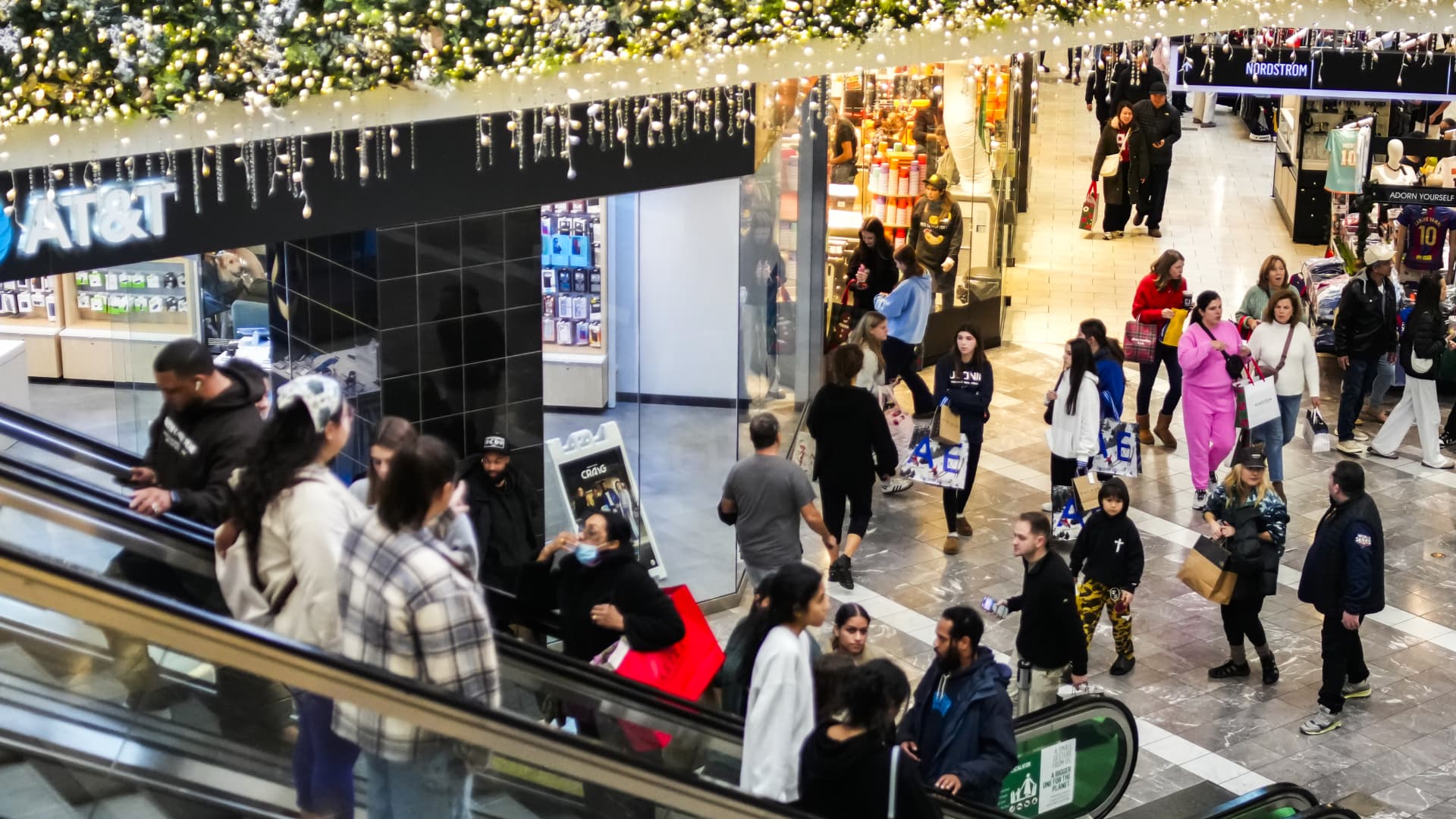

As the holiday shopping season kicks into gear, new data reveals that consumer spending remains resilient despite economic challenges. Various reports indicate a rise in planned holiday expenditures, with shoppers keen on finding deals amidst inflation and other financial pressures. Retailers are responding with optimism, anticipating robust sales as they prepare for one of the most crucial times of the year.
| Article Subheadings |
|---|
| 1) Economic Context and Consumer Sentiment |
| 2) Planned Spending Trends This Holiday |
| 3) Retailers’ Outlook for Holiday Sales |
| 4) The Role of Generational Spending Habits |
| 5) Summary of Sales Prospects for Retailers |
Economic Context and Consumer Sentiment
This year, several economic factors have influenced consumer behavior, leading to a cautious yet hopeful shopping atmosphere. High inflation and fluctuating gas prices have raised concerns among consumers, impacting their overall confidence and spending habits. The October consumer price index increased by a seasonally adjusted 0.4%, exceeding forecasts, while the personal consumption expenditures price index reflected a year-over-year spike of 3.8%. As these economic headwinds persist, many consumers have begun to tighten their budgets, leading to a reported decline in sales among major retailers such as Walmart and Lowe’s. In September, the Conference Board’s Consumer Confidence Index plummeted to its lowest level since 2014, revealing apprehensions about inflation and the labor market among the public.
Despite this cautious sentiment, recent earnings reports illustrate a mixed yet positive outlook. Experts believe that consumers, despite facing economic difficulties, still exhibit a desire to celebrate the holiday season, leading to a stronger-than-expected spending pattern during shopping periods such as Black Friday and Cyber Monday.
Planned Spending Trends This Holiday
According to data from The Conference Board, planned spending for gifts and nongifts is projected to reach an average of $1,049 per person this holiday season, reflecting an increase of 5.9% from last year’s average of $990. Even when adjusting for inflation, this represents a 3.2% rise, highlighting consumer intent to spend on holiday purchases despite economic pressures. Analysts further predict that total holiday sales will exceed $1 trillion this year, although this growth is significantly influenced by inflation rates.
Yet, while consumers are willing to spend more overall, they are prioritizing deals and value. Research conducted by Adobe found that in the first 22 days of November alone, online spending reached $82.5 billion, marking a notable 9.1% increase from the previous year. Anticipation of sales and significant markdowns has led consumers to shop earlier, taking advantage of promotions even before the traditional Black Friday events.
Retailers’ Outlook for Holiday Sales
With the holiday shopping season underway, major retailers are expressing optimism regarding consumer behavior. Reports indicate that spending is positive, with retailers preparing for increased sales. For example, Walmart Chief Financial Officer John David Rainey shared insights indicating that the retailer is seeing a resilient consumer base, buoyed by healthy payrolls and stable equity markets. He emphasized that despite lower consumer sentiment, it has not resulted in decreased economic output.
Similarly, executives from Target echoed this sentiment, discussing their strategic pricing initiatives aimed at attracting budget-conscious shoppers. Target has priced thousands of products at $5 and under while also promoting quality goods, showcasing their focus on affordability without sacrificing variety. The holiday quarter started encouragingly for the retailer, concluding that customers will find desirable options throughout the season.
The Role of Generational Spending Habits
Generational trends also play a significant role in shaping holiday spending patterns. A survey by Deloitte indicates that consumers from Generation Z are expected to make a substantial impact this season, with a majority reporting plans to take part in Black Friday and Cyber Monday sales. About 87% of shoppers anticipate purchasing items during this critical period, which is a notable increase from 82% last year. Furthermore, Generation Z’s affinity for “buy now, pay later” payment options is poised to impact their shopping behaviors, as 40% of them plan to use this method for their holiday purchases.
This generational approach offers insight into how younger consumers manage their finances while still aiming to participate in the holiday festivities. According to Brian McCarthy, the retail strategy lead at Deloitte, the trend of deferring payment timings allows shoppers to manage their financial commitments better while still enjoying holiday gifting.
Summary of Sales Prospects for Retailers
Overall, retailers are gearing up for a promising holiday shopping period. Companies like Best Buy and Lowe’s are preparing for what they hope will be a successful and lucrative holiday season. Despite some challenges, such as economic fluctuations and changing consumer preferences, these retailers are planning their merchandising strategies to cater to evolving shopper needs. Best Buy has noted that customers are looking for upgrades and higher-value products, while simultaneously seeking good deals.
However, some firms, including TJX Companies and Burlington Stores, have reported weaker sales and lowered forecasts, mainly due to unexpected warmer weather affecting their seasonal sales. As retailers navigate these fluctuations, many executives remain hopeful, anticipating that as temperatures drop, spending will rebound and support the holiday sales momentum.
| No. | Key Points |
|---|---|
| 1 | Economic conditions, including inflation, have led to cautious consumer sentiment. |
| 2 | Planned holiday spending is up 5.9% compared to last year, totaling an average of $1,049 per person. |
| 3 | Retailers are optimistic about holiday sales, with many preparing for increased consumer purchases. |
| 4 | Generation Z shoppers are significantly impacting holiday sales, with a strong preference for discounts and payment flexibility. |
| 5 | Despite mixed retail performances, optimism remains about strong holiday sales among major retailers. |
Summary
In summary, as we approach the peak of the holiday shopping season, the economic landscape is challenging yet promising for both consumers and retailers. Economic factors may have instilled caution in consumer behavior, yet projected spending figures indicate a willingness to invest in holiday traditions. Retailers are preparing for a bustling season, adjusting their strategies to align better with consumer expectations and preferences, especially among younger shoppers. This year could mark a balancing act between frugality and festive spending, ultimately shaping the future of holiday retail.
Frequently Asked Questions
Question: How are economic conditions affecting holiday shopping this year?
Economic conditions, such as high inflation and fluctuating gas prices, have made consumers more cautious, yet many are still willing to spend on holiday gifts despite these challenges.
Question: What is the expected increase in holiday spending this year?
Planned holiday spending is projected to average around $1,049 per person, which is a 5.9% increase from the previous year.
Question: How are retailers preparing for the holiday season?
Retailers are optimistic and preparing for increased sales by promoting various deals and discounts to attract budget-conscious consumers during the holiday season.
