

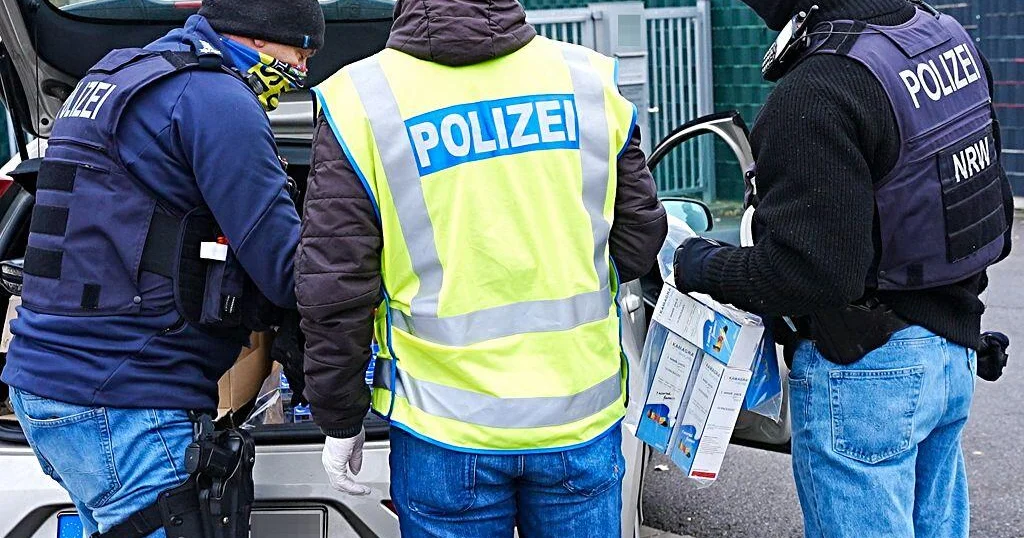

In a significant counter-terrorism operation, German authorities apprehended two Iraqi men, Mostafa Al-R. and Ameer J., on charges of terrorism on Thursday. The arrests, conducted by the Federal Criminal Police Office in Cologne and Heidelberg, are linked to their alleged connections with the Iran-linked terrorist organization Harakat Ashab al-Yamin al-Islamiya (HAYI). This group is accused of planning attacks on Jewish institutions across Europe. Investigations reveal that the suspects were part of a domestic terrorist organization, with links to ongoing threats against U.S. and Israeli interests in the region.
| Article Subheadings |
|---|
| 1) Details of the Arrests and Charges |
| 2) Link to Harakat Ashab al-Yamin al-Islamiya |
| 3) The Role of Key Individuals in Terrorism Network |
| 4) Investigative Measures and Broader Implications |
| 5) Ongoing Investigation and Future Steps |
Details of the Arrests and Charges
The apprehension of Mostafa Al-R. and Ameer J. marks a pivotal moment in Germany’s fight against domestic terrorism. The arrests occurred during coordinated operations carried out by the Federal Criminal Police Office in two locations: Cologne and Heidelberg. Officials have indicated that the federal charges against the suspects hinge on their alleged membership in a domestic terrorist organization as defined under Section 129a of Germany’s Criminal Code. The arrest warrants that led to their capture were issued by a federal judge on November 18, indicating ongoing intelligence that necessitated these swift actions.
During the raids, extensive searches were conducted at 17 different locations across multiple states, including Baden-Württemberg, Hesse, and North Rhine-Westphalia. More than 250 officers participated in this cross-state operation, demonstrating the seriousness with which authorities are approaching the threat posed by such terrorist entities. The investigative measures not only targeted the two Iraqi nationals but also included actions against other individuals linked to the suspect network.
Link to Harakat Ashab al-Yamin al-Islamiya
The terrorist organization Harakat Ashab al-Yamin al-Islamiya (HAYI) is at the center of this case. This relatively obscure group has emerged as a significant player in a range of violent actions against Jewish institutions across Europe, particularly in the context of growing anti-Semitic sentiment and heightened geopolitical tensions. The U.S. government has classified HAYI as a proxy for Iran’s Islamic Revolutionary Guard Corps (IRGC) and has accused it of being a front for the Iranian-backed militia, Kataib Hezbollah in Iraq.
Prosecutors have chronicled a series of sabotage, arson, and violent attacks that the group has purportedly carried out since the commencement of tensions linked to the U.S.-Iran conflict. British authorities have similarly designated HAYI as a terrorist organization. As the investigation deepens, reports suggest that the group’s activities have not only been confined to Germany but have extended to attacks on Jewish sites in the United Kingdom, France, Belgium, and the Netherlands, which raises alarms about the associated risks to European national security.
The Role of Key Individuals in Terrorism Network
Among the key figures tied to this unfolding narrative is Mohammad Al-Saadi, who remains a focal point for U.S. investigations. Allegations suggest that Mostafa Al-R. had maintained contact with Al-Saadi, who is currently facing charges in the United States. His prominence within the terrorist network underscores the transnational dimensions of the threats posed by such groups. Prosecutors allege that as early as late 2025, Al-Saadi and Mostafa Al-R., along with other individuals, collaborated to establish a group intending to conduct terrorist acts across Germany and other European nations, illuminating the long-term planning capabilities of these terrorists.
Furthermore, Ameer J. has been identified as a member of this same faction, potentially facilitating the group’s operations and strategic planning. This troubling connection not only highlights the continued recruitment efforts within such organizations but also emphasizes the need for vigilant monitoring of potential terrorists who may attempt to enter or remain in Germany.
Investigative Measures and Broader Implications
The operations that led to the arrests were informed by intelligence gathered by the Federal Office for the Protection of the Constitution (BfV), which acts as Germany’s domestic intelligence agency. Their involvement suggests a proactive approach to countering extremism and protecting citizens from acts of terror. The extensive searches across multiple locations are indicative of an organized effort to dismantle networks tied to HAYI, potentially disrupting future plots against both Jewish communities and broader European interests.
As part of this comprehensive investigation, authorities are working diligently to assess other potential threats and to gather intelligence on possible connections the suspects may have with additional extremist cells both in and outside Germany. The implications of these findings are vast—not only could they lead to the prevention of future attacks, but they also signal a need for collaborative efforts among European nations, emphasizing the importance of information-sharing in the fight against transnational terrorism.
Ongoing Investigation and Future Steps
Following the arrests, the judicial proceedings will determine the future of Mostafa Al-R. and Ameer J. as they appear before a presiding investigative judge at the Federal Court of Justice in Karlsruhe. Authorities have not disclosed further details regarding the suspects’ immigration status, length of stay in Germany, or any other nationalities they may hold. Their next court appearance is crucial in deciding on pretrial detention, which could set the tone for further legal proceedings against them.
The ongoing nature of the investigation means that more arrests and detentions could follow as law enforcement continues to analyze evidence and search for other associates linked to the suspects. Given the rapidly shifting landscape of terrorism, officials remain vigilant about the dual threats—those that might arise domestically and from external actors aligned with groups like HAYI. The resolution of this case may yield vital insights into emerging trends in extremist activity across Europe.
| No. | Key Points |
|---|---|
| 1 | Two Iraqi nationals were arrested in Germany on suspicion of terrorism tied to a Iran-linked group. |
| 2 | The suspects are alleged members of Harakat Ashab al-Yamin al-Islamiya, associated with attacks on Jewish institutions. |
| 3 | Key figures including Mohammad Al-Saadi are connected to the suspects, indicating a broader terrorist network. |
| 4 | Extensive searches conducted in multiple German states demonstrate the seriousness of the terrorism threat. |
| 5 | The investigation remains active, potentially leading to further arrests and the dismantling of extremist networks. |
Summary
The recent arrests of Mostafa Al-R. and Ameer J. underscore the persistent threat of domestic terrorism within Europe, particularly those linked to Iran’s regional ambitions through organizations like HAYI. Authorities are actively responding to these threats with robust investigative measures aimed at preventing extremist violence aimed at vulnerable communities. The implications of this case extend beyond the immediate arrests, highlighting the need for vigilance against transnational terrorism and the importance of international cooperation in safeguarding public safety across Europe.
Frequently Asked Questions
Question: What are the charges against the arrested suspects?
The suspects are charged under Section 129a of Germany’s Criminal Code for membership in a domestic terrorist organization.
Question: What is Harakat Ashab al-Yamin al-Islamiya?
Harakat Ashab al-Yamin al-Islamiya (HAYI) is a terrorist organization linked to Iran, known for targeting Jewish institutions across Europe.
Question: What other countries have been affected by the activities of HAYI?
HAYI has been implicated in attacks on Jewish institutions in the United Kingdom, France, Belgium, and the Netherlands.
