

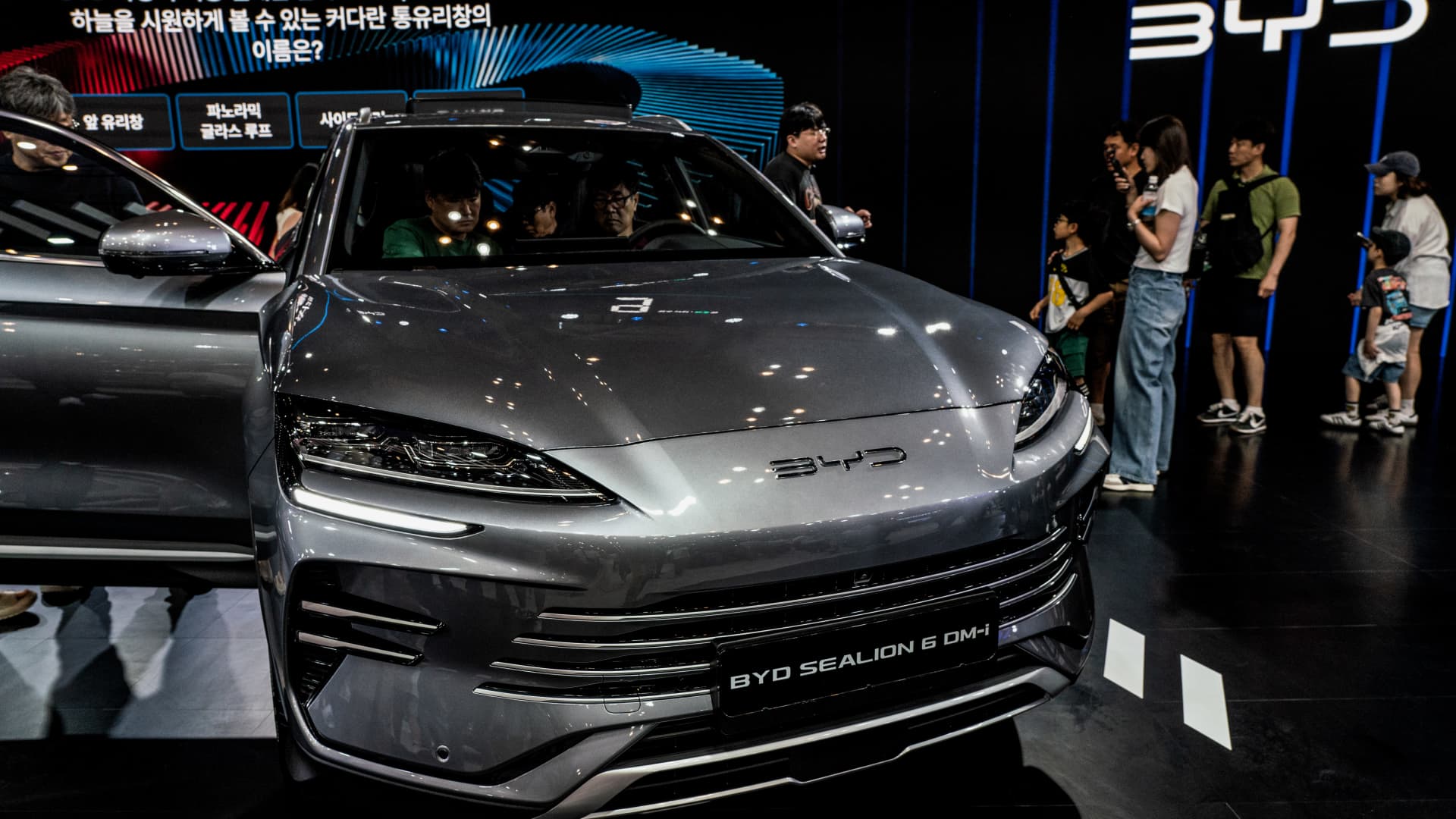

A BYD Sealion 6 DM-i was displayed during the Busan International Mobility Show 2026 in South Korea on June 27. In Detroit, major automakers are intensifying their campaign to secure a permanent ban on the domestic sale, import, and manufacturing of Chinese connected vehicles, hardware, and software. This move comes amid growing concerns over competition from Chinese automakers, who are perceived to be undercutting U.S. companies with subsidized vehicles.
The Alliance for Automotive Innovation, representing the majority of U.S. vehicle manufacturers, has formally requested congressional leaders to act swiftly before the current legislative session concludes on January 3. They assert that the presence of Chinese automakers in the market poses an immediate threat, prompting fears of significant repercussions for the American automotive industry.
Calls to action are intensifying as domestic midterm elections approach, increasing the urgency for lawmakers to respond to these concerns. The implications of such legislation could reverberate through the market dynamics of the automotive industry for years to come.
| Article Subheadings |
|---|
| 1) Pressure from Major Automakers |
| 2) Urgency of Legislative Action |
| 3) Growing Concerns Over Chinese Competitors |
| 4) Legislative Efforts and Bipartisan Support |
| 5) Possible Market Impacts |
Pressure from Major Automakers
The automotive sector in the United States is primarily represented by the Alliance for Automotive Innovation, a coalition that includes a significant number of manufacturers. The pressure placed upon Congress is rooted in the belief that Chinese vehicles, equipped with advanced connected technologies, are being introduced into the global market in a manner that undermines fair competition. In a recent letter addressed to congressional leaders, John Bozzella, the CEO of the Alliance, emphasized the threat posed by subsidized Chinese vehicles and urged swift legislative action. He articulated that while Chinese automakers have not yet penetrated the U.S. market, the alarm bells are ringing, and it is critical for policymakers to take preemptive measures to safeguard domestic markets.
Urgency of Legislative Action
The Alliance for Automotive Innovation has put forth a request for Congress to implement a permanent ban on the sale, importation, and manufacturing of connected vehicles from China. This request is timely, coming as lawmakers head towards a voting deadline on January 3 during the current congressional session. Obstacles such as midterm elections could potentially disrupt this process, leading stakeholders to call for immediate attention to the matter before the political landscape shifts. The request serves as a critical reminder of the precarious position the U.S. automotive sector is in, as it appears vulnerable to influences from foreign competitors.
Growing Concerns Over Chinese Competitors
U.S. automakers are particularly concerned about the apparent strategies leveraged by Chinese companies to enhance their global foothold. Companies like BYD and Geely have been rapidly increasing their vehicle exports, especially to markets in Europe and Central and South America, precipitating fears within the American industry. The competitive pricing strategies adopted by these Chinese firms raise questions regarding the sustainability of domestic production. Automotive leaders fear that a sustained influx of lower-priced Chinese vehicles might lead to a price war affecting domestic manufacturers and, consequently, the U.S. economy as a whole.
Legislative Efforts and Bipartisan Support
Despite the pressures and concerns, there appears to be a growing, bipartisan agreement in Washington to scrutinize the influx of Chinese vehicles. Recent legislative drafts, endorsed by various members of both the House and Senate, indicate that officials are taking steps to address these imports proactively. Notably, legislation being considered even proposes barring entities with significant Chinese investment, such as Mercedes-Benz, from operating in the U.S. market. This demonstrates a collaborative effort across party lines, emphasizing national security and economic integrity. The Alliance for Automotive Innovation is attempting to engage constructively with lawmakers to create balanced policies that will ensure the success of all member companies.
Possible Market Impacts
The potential passing of legislation banning Chinese vehicle imports could have significant ramifications for the automotive market. While such a ban may protect U.S. companies from unfair competition, it could also lead to increased vehicle prices if domestic manufacturers do not have global competitors to moderate costs.
“Enacting a permanent ban on Chinese vehicles and high-risk hardware and software in the 119th Congress will send a clear and bipartisan message that China’s strategy to dominate global automotive manufacturing will be met with a national security policy response from the American government,”
stated Bozzella, underlining the critical nexus between national security and economic strategy. Absent an international trading environment conducive to competition, American consumers may ultimately face higher prices and reduced choices in automobile markets.
| No. | Key Points |
|---|---|
| 1 | Major automakers are advocating for a permanent ban on Chinese connected vehicles and associated technologies. |
| 2 | The urgency for legislative action arises from the upcoming Congress deadline on January 3. |
| 3 | U.S. automakers are deeply concerned about competitive pressures from subsidized vehicles produced by Chinese firms. |
| 4 | There is growing bipartisan support in Congress to tackle the issue of Chinese vehicle imports. |
| 5 | Legislation may significantly impact pricing and availability in the domestic automotive market for consumers. |
Summary
In conclusion, the pressing concerns raised by U.S. automakers regarding competition from Chinese companies underscore the turbulent dynamics within the global automotive industry. Legislative actions advocated by the Alliance for Automotive Innovation reflect not only economic considerations but also vital national security implications. As lawmakers grapple with these challenges, the outcomes will likely shape the landscape of automotive manufacturing and consumer choices for years to come.
Frequently Asked Questions
Question: What is the main concern regarding Chinese connected vehicles?
The primary concern is that Chinese manufacturers are subsidizing their vehicles, enabling them to undercut prices, thus threatening U.S. manufacturers and potentially compromising national security.
Question: Why is legislative action needed quickly?
Urgent action is required due to the impending Congress deadline on January 3, which highlights the need to establish protective measures before substantial market changes occur.
Question: What could be the aftermath of a ban on Chinese vehicles?
A ban might protect domestic automakers, but it could also lead to higher prices for consumers as competition decreases, potentially resulting in fewer choices in the market.
