

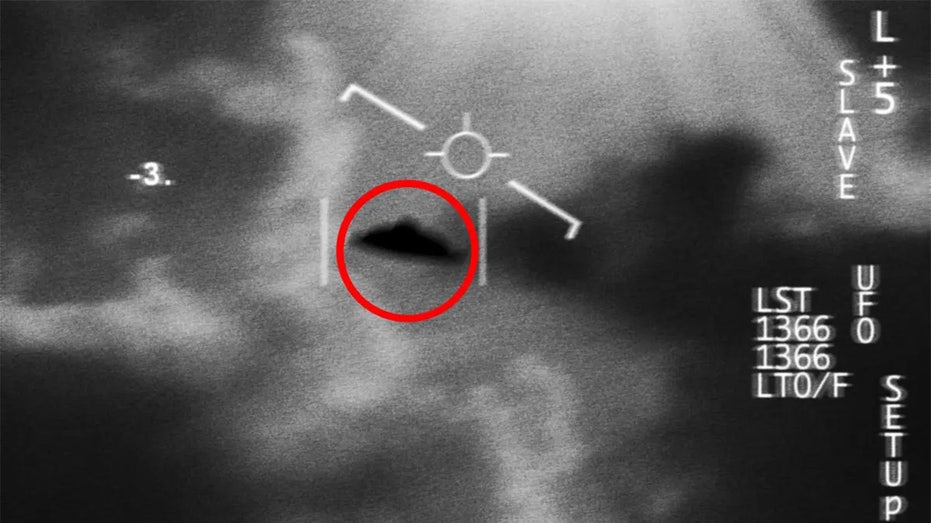

Declassified records reveal that a Pentagon contractor designed a 5,000-square-foot underground vault in North Las Vegas to hold alleged recovered hardware and biological samples linked to unidentified anomalous phenomena. The plans were developed under a $22 million aerospace threat program that operated from 2008 to 2010. The records also show that officials debated whether the work required the government’s most restrictive secrecy measures. A separate release included three newly declassified military sensor videos recorded in 2020, 2023 and 2026.
| 1) | The planned underground vault |
| 2) | The Pentagon program and contractor |
| 3) | Security measures and proposed secrecy |
| 4) | DIA concerns over research value |
| 5) | Newly released UAP sensor videos |
The planned underground vault
The vault was detailed in a July 2009, 10-month report prepared by Bigelow Aerospace Advanced Space Studies, or BAASS. The proposed facility would have been buried 15 to 20 feet beneath the Nevada surface, protected by three-foot-thick reinforced concrete walls and reached through a guarded access tunnel. Its stated purpose was to store acquired “exotic material or tissue,” including hardware and biological samples obtained from private companies, individuals or groups in the United States and elsewhere, including Brazil.
The plans called for multiple security doors and extensive camouflage for any parts of the structure visible above ground. The records show that the facility was planned, but they do not establish that the bunker was completed or that such materials were ultimately stored there.
The Pentagon program and contractor
The work was conducted through the Advanced Aerospace Weapon System Applications Program, also referred to in Pentagon correspondence as the Advanced Aerospace Threat Identification Program. It began in 2008 with a $10 million congressional earmark backed by then-Senate Majority Leader Harry Reid of Nevada and the late Senator Daniel Inouye of Hawaii. The stated mission was to study foreign aerospace threats and technological developments over a 40-year horizon.
BAASS, founded by Nevada businessman Robert Bigelow, was the only company to submit a bid after the Defense Intelligence Agency solicited proposals in August 2008. The contract was awarded the following month. By May 2009, the company had 47 full-time employees, including scientists, engineers and former military and law enforcement investigators, and was examining additional facilities for laboratories, evidence storage and secure meetings.
Security measures and proposed secrecy
BAASS converted a nondescript South Polaris Avenue building into a fortified workplace with soundproof offices, electronic deadbolts, tinted windows, surveillance cameras and an eight-foot perimeter fence. Company names and logos were removed from the exterior. The North Las Vegas complex associated with the proposed vault was also described as having razor wire, cameras and armed guards with military backgrounds.
Harry Reid sought to place parts of the program inside a Restricted Special Access Program. In a June 24, 2009, letter to Deputy Defense Secretary William Lynn III, he said investigators had found “several highly sensitive, unconventional aerospace-related findings.” He proposed a 14-person access list that included lawmakers, government and military officials, a Senate aide and three BAASS contractors.
“The need for a highly secure underground vault operated by BAASS became apparent” as the company pursued recovered hardware and biological samples, the July 2009 report stated.
DIA concerns over research value
The DIA’s assessment differed from the secrecy approach advocated by Harry Reid. During the program’s first year, BAASS funded 26 outside research papers addressing subjects such as warp drives, wormholes, antigravity, invisibility and mind-controlled machines. Some papers received positive peer reviews, including from researchers at Sandia National Laboratories, but senior DIA officials concluded that the material did not warrant the highest classification levels.
In a November 13, 2009, memo, DIA Deputy Director Letitia A. Long wrote that the program documents delivered during fiscal year 2009 were unclassified because BAASS had not established a secure facility and employees were still being vetted for clearances. She said the agency was unaware of information sufficiently sensitive to require additional protection. DIA Director Ronald L. Burgess Jr. and William Lynn III later told Harry Reid that the reports were of limited value to the agency. Congress provided another $12 million in fiscal year 2010, but the DIA did not extend the contract beyond its second year.
Newly released UAP sensor videos
The same records release included three infrared and electro-optical videos submitted by U.S. Central Command to the All-domain Anomaly Resolution Office. The recordings were made from U.S. military platforms in 2020, 2023 and 2026 and show sensors tracking unidentified areas of contrast across their fields of view.
One 54-second recording from 2026 shows a sensor following two separate objects before intermittently losing contact. Pentagon officials said the descriptions accompanying the videos were not analytical conclusions about the objects’ nature or significance. Officials also said the material was not redacted to conceal information about UAP encounters under the administration’s transparency directive.
| Number | Key Point |
|---|---|
| 1 | BAASS planned a 5,000-square-foot underground vault in North Las Vegas. |
| 2 | The proposed facility was intended for alleged recovered hardware and biological samples. |
| 3 | DIA officials rejected the request for the highest secrecy protections. |
| 4 | Three military sensor videos from 2020, 2023 and 2026 were also released. |
Summary
The documents provide a detailed record of how a private contractor pursued secure facilities and physical materials during an early U.S. government UAP investigation. They also show a division between lawmakers seeking exceptional secrecy and intelligence officials who found the research insufficiently sensitive and of limited operational value. The newly released videos add current sensor data to the broader disclosure effort, but officials cautioned that the footage does not establish what the observed objects were.
Frequently Asked Questions
Was the Nevada vault built?
The declassified records describe architectural plans for the vault, but the material does not establish that construction was completed.
What was the vault intended to store?
The proposal referred to acquired “exotic material or tissue,” including recovered hardware and biological samples allegedly connected to UAP cases.
What did the newly released videos show?
The videos show military sensors tracking unidentified areas of contrast in recordings made in 2020, 2023 and 2026. Officials said the footage alone does not determine the objects’ nature or significance.
