

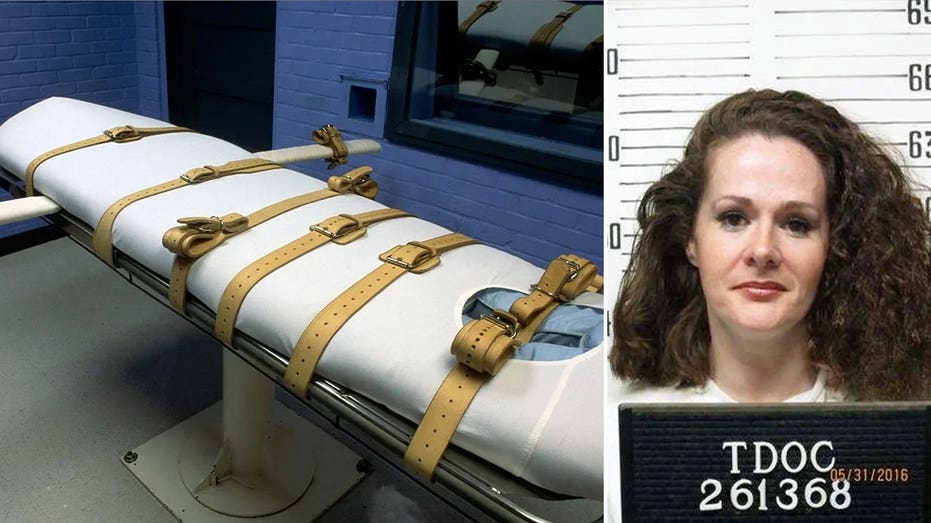

Christa Pike survived Tennessee’s failed execution attempt after an improperly placed IV delivered lethal drugs into the tissue of her arms rather than her bloodstream. Dr. Mark Fowler, the physician involved, said the execution team should have stopped after Pike reported severe pain. Tennessee has halted its remaining executions for the year while an independent review examines what went wrong.
Pike received two doses of pentobarbital during the Sept. 30 attempt and was hospitalized for days before regaining consciousness. She remains on death row while courts and state officials consider the consequences of the failed procedure.
| 1) | A misplaced IV caused the failed drug delivery |
| 2) | Pike’s pain raised concerns during the execution |
| 3) | The procedure ended after prolonged medical distress |
| 4) | The doctor called for changes to Tennessee’s protocol |
| 5) | The state faces legal and political scrutiny |
A misplaced IV caused the failed drug delivery
Dr. Mark Fowler, who served as the physician during Christa Pike’s Sept. 30 execution attempt, said the IV used to administer pentobarbital had not been properly inserted into a vein. Instead, the medication entered the subcutaneous tissue of her arms. The problem prevented the drugs from reaching her bloodstream as intended and helps explain why the execution continued for roughly 45 minutes.
Pike, 50, received two doses of pentobarbital but remained alive. She was eventually transported by ambulance to Vanderbilt University Medical Center, where she spent days receiving treatment before regaining consciousness.
Pike’s pain raised concerns during the execution
Pike’s attorneys had previously said in a court filing that she reported severe pain during the procedure. She told people in the execution chamber, “My arm feels like it’s about to burst open.” Fowler acknowledged that the complaint should have prompted the team to stop and reassess the IV placement.
“They should have stopped and reassessed, and they didn’t,” Fowler said.
Fowler said he initially considered whether Pike’s response to the medication might simply be taking longer than expected. As the procedure continued, however, he became concerned that she could survive with irreversible brain damage.
The procedure ended after prolonged medical distress
When Fowler entered the chamber, Pike was still alive and gasping for air. After another period of concern, he diagnosed her as comatose. A deputy commissioner then ordered the execution stopped, and Fowler directed that oxygen be provided.
Pike later described continuing physical problems in a statement released by her attorneys. She said her body, arms, hands and throat remained painful and that she still struggled to speak. She also said she was deeply hurt by what she called the incompetence that placed many people in a difficult situation.
The doctor called for changes to Tennessee’s protocol
Fowler said Tennessee’s lethal-injection procedures should be revised to reduce handoffs among members of the execution team. He also said the people who place IV lines should remain in position and monitor those lines while the lethal drugs are administered.
“The people who place the IV lines should thereafter be observant about what’s happening with them as the medicine goes in,” Fowler said.
Fowler’s role has drawn scrutiny because he also participated in the 2025 execution of Byron Black and in the failed May execution of Tony Carruthers. In the Carruthers case, he attempted to place an IV near Carruthers’ clavicle after paramedics could not establish conventional access, but stopped when the procedure became too painful and adequate anesthetic was unavailable.
The state faces legal and political scrutiny
Following Pike’s failed execution, Tennessee Gov. Bill Lee halted the state’s remaining executions for the year and ordered an independent review. Lee said Pike remains incarcerated under state law and indicated that her death sentence is unlikely to change unless a court rules otherwise.
Christa Pike was sentenced to death for the 1995 torture and killing of 19-year-old Colleen Slemmer, who participated in the same federal Job Corps program in Knoxville. Pike’s attorneys have asked Lee to commute the sentence to life without parole. The failed execution has also prompted court action concerning the preservation of evidence and continuing scrutiny of the state’s execution procedures.
| Number | Key Point |
|---|---|
| 1 | The IV delivered pentobarbital into Pike’s arm tissue instead of a vein. |
| 2 | Pike reported severe arm pain during the Sept. 30 execution attempt. |
| 3 | She survived two doses, was hospitalized and later regained consciousness. |
| 4 | Tennessee halted its remaining executions for the year and ordered a review. |
| 5 | Pike’s attorneys are seeking a sentence of life without parole. |
Summary
The failed execution exposed a fundamental problem with IV placement and the monitoring of lethal drugs. Fowler acknowledged that Pike’s reported pain should have triggered an immediate reassessment. The state’s independent review, legal proceedings and decision on future executions will determine how Tennessee responds.
Frequently Asked Questions
What went wrong during Christa Pike’s execution attempt?
The IV was reportedly not properly inserted into a vein, causing the pentobarbital to enter the tissue of Pike’s arms instead of her bloodstream.
Did Christa Pike survive the procedure?
Yes. She survived after receiving two doses of pentobarbital, was hospitalized for days and later regained consciousness.
What action has Tennessee taken?
Gov. Bill Lee halted the state’s remaining executions for the year and ordered an independent review of the failed procedure.
