

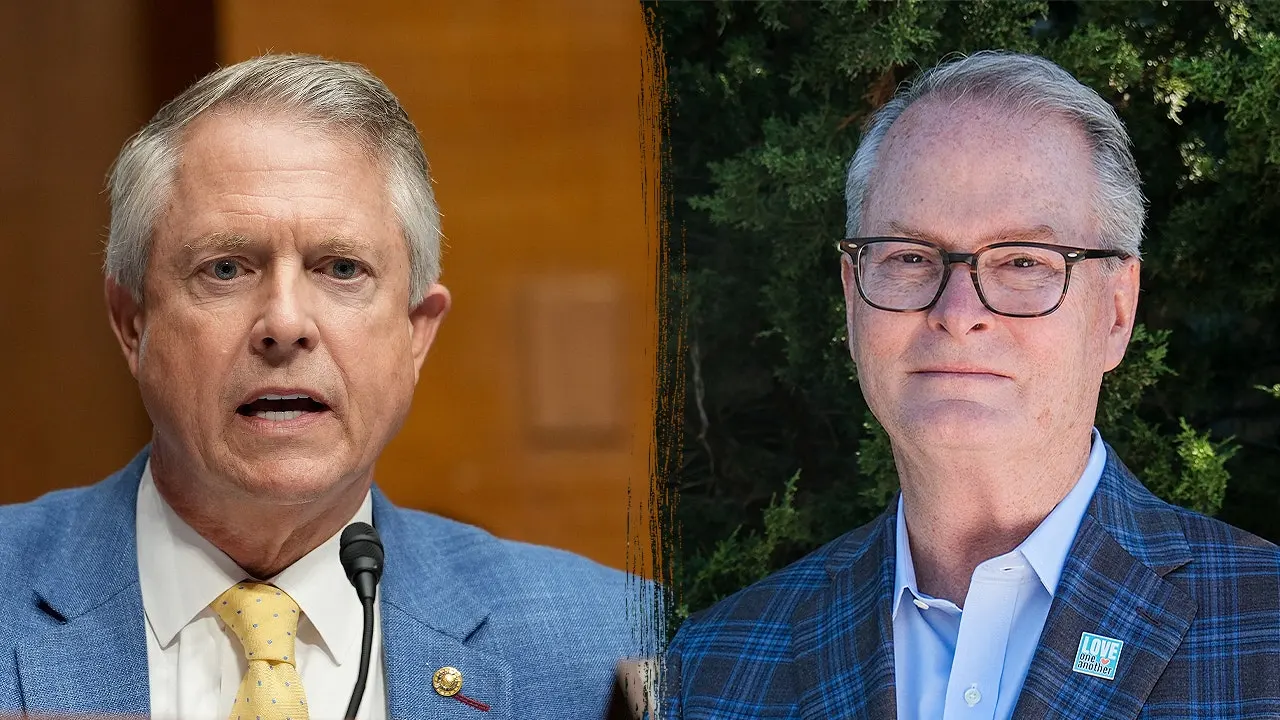

In a highly contentious debate held recently for the Kansas Senate race, incumbent Senator Roger Marshall, a Republican, and his Democratic challenger Adam Hamilton voiced their differing views on key issues while attempting to distance themselves from controversial elements within their respective parties. The candidates discussed a variety of topics, including immigration, economic policies, and the influence of former President Donald Trump. As they addressed their past controversies, the duel marked a crucial moment in their campaign leading to the pivotal elections that could affect the balance of power in the Senate.
| Article Subheadings |
|---|
| 1) Candidates Tackle Personal Controversies |
| 2) Defining Party Allegiances Amid National Debates |
| 3) Immigration and Economic Policies Under Scrutiny |
| 4) A Moment of Unlikely Agreement |
| 5) The Stakes for Kansas Senate Race |
Candidates Tackle Personal Controversies
During the debate, both candidates faced tough questions regarding their past actions that have been leveraged in attack ads leading up to the election. Senator Marshall was confronted about a report from the New York Times that revealed his previous medical practice had sued over 700 patients for unpaid bills. In response, he attempted to justify his practice by emphasizing the free care provided, stating, “Every year we gave away $3 to $4 million of charity,” before elaborating on the economic realities of running a medical business, like payroll and operational costs. This defense, however, did not erase the questions regarding his management practices or the implications of his past decisions on his current campaign.
On the other hand, Hamilton was pressed about his handling of serious allegations involving a volunteer at his church’s summer camp, who was later identified as a sexual predator. Acknowledging his oversight, he admitted, “I should have checked to make sure that he wasn’t going back. That was a mistake on my part.” His admission aimed to show accountability but also raised alarm over potential lapses in judgment that could sway voters during this critical race.
Defining Party Allegiances Amid National Debates
As the debate progressed, both candidates tried to position themselves relative to their parties and their national agendas. Marshall framed Hamilton’s election as a potential boon for Senate Minority Leader Chuck Schumer and the Democrats, indicating that a vote for Hamilton would essentially empower the broader Democratic agenda. Conversely, Hamilton sought to present himself as an independent-minded Democrat, disassociating from mainstream party policies when convenient. The moderator highlighted a recent campaign appearance by President Trump on behalf of Marshall, prompting questions about loyalty to the former president’s policies, and Marshall’s response was skillfully hedged. He affirmed that while he supports Trump’s agenda, there are points of disagreement, asserting he does not endorse every aspect of policy from his party’s leadership.
Immigration and Economic Policies Under Scrutiny
A key issue driving the debate was immigration policy, with Hamilton expressly breaking with President Joe Biden’s administration. He remarked that, “The Biden policies when it came to the border were a disaster,” emphasizing the need for stronger and more secure borders. Hamilton’s stance was bolstered by the recent influx of migrants, which he argued necessitates a firm but fair approach to immigration reform. His claim of rejecting Schumer’s support if he were to take office further positioned him as willing to challenge party leadership, resonating with voters who value dissenting voices in politics.
In contrast, Marshall reinforced his platform advocating for border security that aligns closely with the traditional Republican viewpoint. During the debate, each candidate grappled over their party’s standing on economic concerns including inflation and job creation, further illustrating their respective policies and visions for the future of Kansas and the country.
A Moment of Unlikely Agreement
Despite their differences, an unexpected moment of consensus emerged when both candidates were asked about gender identities. Both Marshall and Hamilton responded with the assertion that there are only two genders, male and female. This unified viewpoint diverged from more progressive stances taken by members of their respective parties and stood out as a rare display of agreement amidst a demographically polarized political landscape. Following this, Hamilton elaborated on his concerns regarding fair competition in sports, specifically denouncing the idea of biological males competing against females, indicating his Christian values and traditional beliefs surrounding gender roles.
The Stakes for Kansas Senate Race
The Kansas Senate race has developed into a competitive battleground, especially considering it could sway control of the Senate. As the midterm elections near, Marshall seeks re-election in a state that hasn’t elected a Democrat to the Senate since 1932, making Hamilton’s campaign particularly remarkable. Trump’s involvement in campaigning for Marshall underscored the importance of this seat in the broader context of Republican strategies to maintain Senate control. The recent debates, public engagements, and ad campaigns are indicative of the intense battle for Kansas that may echo throughout the national political landscape.
| No. | Key Points |
|---|---|
| 1 | Senators Marshall and Hamilton distanced themselves from their parties’ controversial aspects during the debate. |
| 2 | Marshall defended his past actions in medicare, while Hamilton acknowledged mistakes in his church’s oversight. |
| 3 | The candidates articulated their positions on immigration, each aiming to attract moderates. |
| 4 | A rare moment of agreement on gender identity underscored their traditional values in a polarized environment. |
| 5 | The outcome of this race could impact the overall power dynamic in the Senate. |
Summary
The recent Kansas Senate debate exemplified the complex interplay of personal history, party politics, and voter expectations shaping the electoral landscape. As both candidates navigated personal controversies while striving to assert their independence from their parties, the stakes could not be higher. With the balance of the Senate at risk, voters in Kansas find themselves at a critical juncture where their choices can reverberate nationally. The engagement demonstrated by both Marshall and Hamilton may ultimately influence public perception and voter turnout as the election date approaches.
Frequently Asked Questions
Question: What are the main issues being debated in the Kansas Senate race?
The main issues include immigration policy, economic strategies, and personal controversies surrounding the candidates’ past actions. Candidates are also discussing party loyalty and how it affects their platforms.
Question: How does this race impact the wider political landscape?
The Kansas Senate race could influence control of the Senate, making it a significant focal point for both parties as they strategize to gain or maintain power in the upcoming midterms.
Question: What do the candidates agree on regarding gender identity?
Both candidates, Marshall and Hamilton, agree that there are two genders: male and female, which reflects their traditional values amid broader societal discussions on gender identity.
