

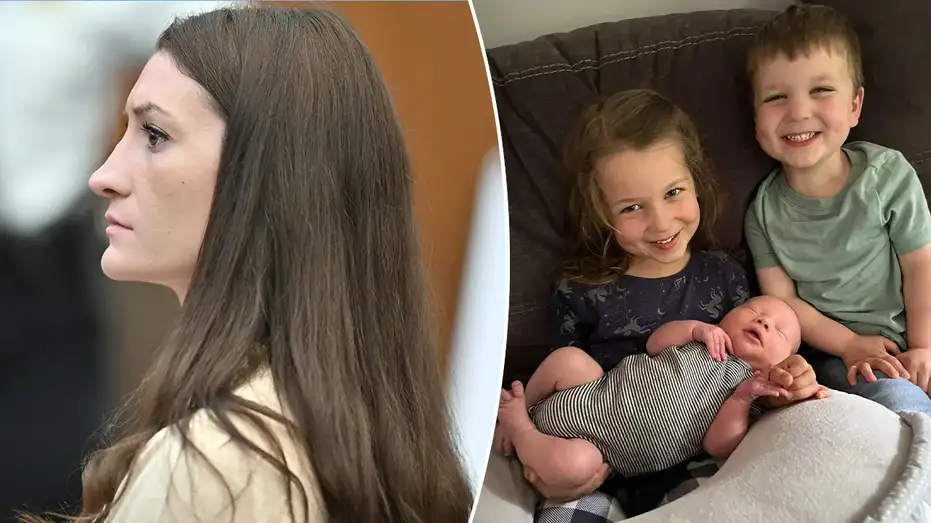

Paula Devlin, one of 11 jurors who supported finding Lindsay Clancy not criminally responsible, said the panel viewed the case as a possible turning point for women and families. Her comments followed the jury’s 11-1 deadlock, which led to a mistrial in the Massachusetts mother’s case. Legal analyst Neama Rahmani called that reasoning problematic, saying jurors must apply existing law to the facts before them. The case concerns the January 2023 deaths of Clancy’s three children in Duxbury, Massachusetts.
| 1) | Juror describes the panel’s broader concerns |
| 2) | Legal analyst challenges the jury’s reasoning |
| 3) | Deadlock and disputes over the evidence |
| 4) | The underlying allegations and defense |
| 5) | What the mistrial means next |
Juror describes the panel’s broader concerns
Paula Devlin, 65, said in a television interview that jurors believed the trial could influence how women and families are treated in the future. She said the panel saw the proceedings as a turning point and viewed preventing similar deaths as a form of justice for the children.
“This would be something that could change something to make it better for other women in the future, for other families.”
Devlin’s account reflected the perspective of the jurors who favored a finding that Lindsay Clancy was not criminally responsible. The jury’s deliberations ended without a unanimous verdict, preventing the case from reaching a final determination.
Legal analyst challenges the jury’s reasoning
Neama Rahmani, a Los Angeles-based trial attorney and legal analyst, said jurors should decide criminal responsibility based only on the evidence and law presented in the case. He argued that considering the potential effect on other women, children or future cases risks moving beyond the jury’s assigned role.
“Jurors are supposed to decide cases solely based on the facts of that case.”
Rahmani said the jury’s function is to apply the law rather than create policy or use a verdict to influence broader social outcomes. He also noted that a court generally cannot investigate the substance of jury deliberations unless there is evidence of an outside influence that may have prejudiced the panel.
Deadlock and disputes over the evidence
Before the mistrial, Devlin said the jury was divided eight to two in favor of finding Clancy not criminally responsible, while two jurors were undecided. She said one juror and another panel member were leaning toward a guilty verdict, producing the final 11-1 impasse.
Several jurors and defense attorney Kevin Reddington have said the holdout juror did not show the other panel members evidence he believed supported guilt beyond a reasonable doubt. Devlin said the jurors might have reached a different conclusion if that evidence had been presented during deliberations. The holdout juror has not publicly discussed the case or responded to requests for comment.
The underlying allegations and defense
Lindsay Clancy is charged with three counts of first-degree murder in the deaths of her children, Cora Clancy, 5, Dawson Clancy, 3, and Callan Clancy, 8 months. Prosecutors allege that on January 24, 2023, she fatally strangled the children with exercise resistance bands in the basement of the family’s home in Duxbury.
The defense has not disputed that Clancy killed the children. Instead, it argued that postpartum psychosis made her not criminally responsible. After the killings, she cut her wrists and neck and jumped from a second-story window in what authorities described as a suicide attempt, leaving her partially paralyzed.
What the mistrial means next
A judge has declared a mistrial because the jury could not reach a unanimous verdict. Rahmani said the legal system generally bars inquiries into deliberations, though an exception may apply if jurors considered information from traditional or social media or another outside source.
The defense has indicated it plans to pursue another motion to dismiss after jurors spoke publicly about the deadlock. Separately, a fundraiser organized to support the holdout juror had reportedly raised more than $115,000 for security, legal expenses and lost work. The holdout’s public silence leaves the precise basis of his position unclear.
| Number | Key Point |
|---|---|
| 1 | The jury deadlocked 11-1, resulting in a mistrial. |
| 2 | Paula Devlin said some jurors viewed the case as a chance to improve outcomes for women and families. |
| 3 | Neama Rahmani said jurors must apply the law rather than seek broader policy change. |
| 4 | The defense argued that postpartum psychosis made Lindsay Clancy not criminally responsible. |
Summary
The mistrial leaves the criminal responsibility question unresolved in the deaths of Lindsay Clancy’s three children. Juror comments have highlighted a sharp divide over whether broader social concerns influenced deliberations, while legal analysts continue to emphasize that verdicts must be based on the evidence and governing law. Any further proceedings will depend on decisions by the court and the parties.
Frequently Asked Questions
Why was a mistrial declared?
The jury could not reach a unanimous verdict after deliberations ended in an 11-1 deadlock.
What did the defense argue?
The defense argued that postpartum psychosis made Lindsay Clancy not criminally responsible for the deaths of her three children.
Why did a legal analyst criticize the juror’s comments?
Neama Rahmani said jurors should apply the law to the facts of the case, not consider how a verdict might affect other women, children or future cases.
