

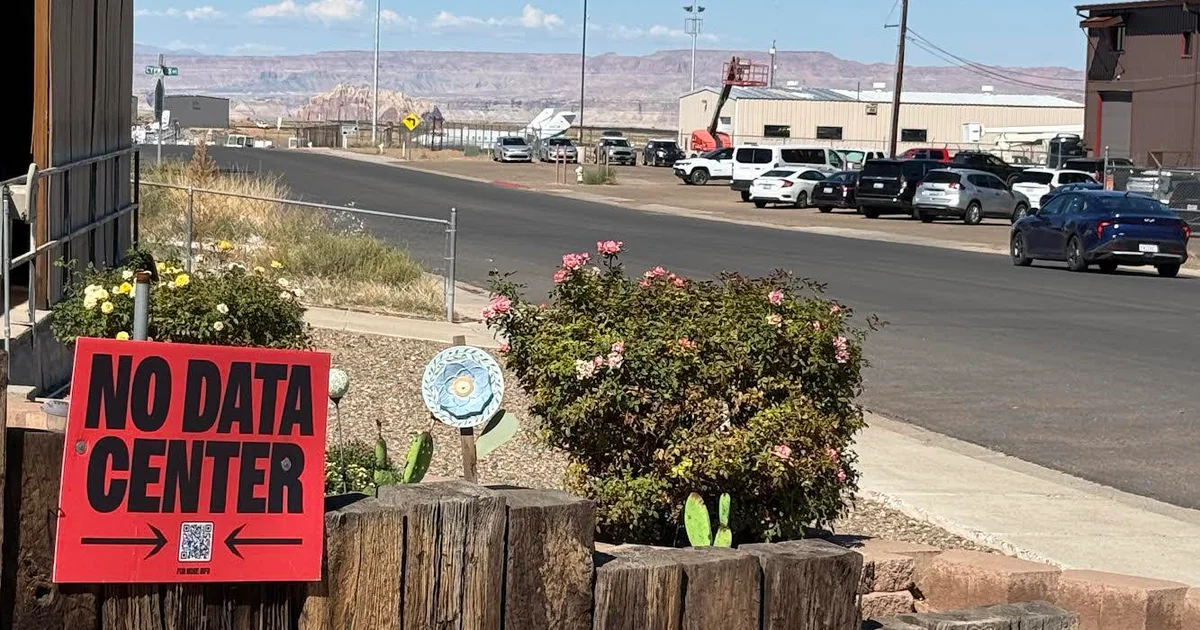

In Page, Arizona, residents are grappling with the dual threats of environmental concerns and political conflict as a potential $10 billion data center looms on the horizon. Local resident Doug Herrera has expressed fears that pollutants from uranium mining may have impacted his family’s health, raising alarms about similar risks posed by the data center. As the City Council approves land sale for this mega project, opposition grows among locals worried about health risks, pollution, and political repercussions in the upcoming midterm elections.
| Article Subheadings |
|---|
| 1) Local Concerns Rise Over Health Impacts |
| 2) Political Divisions Amplified by Data Center Debate |
| 3) Environmental Impacts of Data Centers Scrutinized |
| 4) Economic Considerations in the Data Center Boom |
| 5) Community Mobilization and Growing Opposition |
Local Concerns Rise Over Health Impacts
The residents of Page, with a population of about 7,000, are increasingly concerned about the potential health hazards associated with the construction of large data centers. Local resident Doug Herrera questions whether his father’s death from cancer could be linked to past uranium mining operations nearby. His anxiety reflects broader fears about the impacts of the proposed data center, especially regarding pollutants and health complications, which studies have suggested could include respiratory issues and heightened cancer risks.
Herrera’s concerns are echoed by other residents, many of whom have mobilized to oppose the project, voicing fears over air and water quality. As Mr. Herrera pointed out, “There is light pollution, sound pollution. The temperature is going to rise.” This resonates with other local voices, such as Jan Boehme, who expressed similar concerns about potential noise disturbances and other negative impacts on their quality of life. This growing apprehension underlines the need for more thorough studies and assessments before permits are granted for further development.
Political Divisions Amplified by Data Center Debate
The proposed data center project has not only galvanized community opposition but it has also fueled political divisions. Candidates in Arizona’s 1st Congressional District are facing heightened scrutiny over their stances related to new data centers, marking a significant shift in political landscapes. The candidates find themselves divided, with some advocating for measures to halt new construction due to environmental health concerns.
The pushback from constituents against the new data centers has led to an unusual alliance among various political factions, complicating the typical unity within parties. According to a recent poll, about 60% of Americans oppose constructing new data centers in the U.S. This strong grassroots sentiment is causing candidates to re-evaluate their positions and consider the potential fallout during the upcoming midterm elections.
Environmental Impacts of Data Centers Scrutinized
Emerging research surrounding the environmental impacts of data centers is beginning to gain traction, fueling fears among communities. Central to these concerns are reports that link the energy consumption of data centers to increased air pollution, which could lead to health complications including heart disease and respiratory issues. Environmental studies predict alarming statistics—up to 1,300 deaths annually by 2030 connected to emissions from such facilities.
The proposed data center, set to be built on 500 acres near scenic tourist attractions like Horseshoe Bend, raises additional environmental concerns, especially regarding wildlife and land use. Activists like Alison Steele, the executive director of the Environmental Health Project, express worries over the need for immediacy in understanding these health impacts. “By the time we have a substantial volume of research it’s going to be too late, because the decisions are being made now,” she warned, emphasizing the urgency of addressing these potential hazards.
Economic Considerations in the Data Center Boom
A significant driving force behind the proliferation of data centers in the U.S. is the economic promise they hold, particularly in rural areas. Proponents argue that these projects can provide much-needed jobs and bolster local economies. The data center industry is often viewed as an essential component of expanding the technological landscape and meeting growing consumer demand for digital services, including cloud computing and artificial intelligence installations.
However, the economic benefits come at a price. Residents worry that the environmental and health implications of these centers could outweigh potential local economic gains. The local council’s approval of the land sale for the new data center has led to visions of economic opportunity clashing with public health concerns, as communities weigh the long-term implications of inviting such facilities into their neighborhoods.
Community Mobilization and Growing Opposition
In response to the proposed data center, residents have begun to organize and mobilize their concerns, showcasing a strong grassroots movement. Petitions against the project have circulated, and community meetings have been held to amplify voices calling for action. The community’s resistance has turned significant local and state attention to the issue, with some leaders now advocating for moratoriums on new data center constructions until a comprehensive review of their impacts can be completed.
Notably, many residents within Page see this opposition as not only a fight for their health but a reflection of broader issues around local governance, transparency, and accountability. Backlash against the City Council’s initial land approval culminated in the ousting of the mayor, signaling a possible shift in local politics driven by community activism. As more residents join the fight against new data centers, the call for “no data centers” resonates throughout the town, marking a pivotal moment in local political engagement and activism.
| No. | Key Points |
|---|---|
| 1 | Residents of Page, Arizona, express deep concern about the health impacts of a proposed $10 billion data center. |
| 2 | Political tensions have surfaced as local elections approach, splitting candidates over their positions on data center construction. |
| 3 | Research indicates potential health risks associated with data centers, including significant rates of air pollution and associated health complications. |
| 4 | Despite economic promises from data center development, local communities are concerned about the environmental burdens they bring. |
| 5 | Community mobilization against the data center is growing, leading to increased political activism and the potential for future changes in local governance. |
Summary
The debate over the proposed data center in Page, Arizona, serves as a microcosm of larger national discussions surrounding environmental health, local governance, and economic opportunity. As residents voice their fears and push back against the project, it remains to be seen how these sentiments will shape future political landscapes and regional developments. The convergence of grassroots activism, scientific research, and shifting political dynamics points toward an evolving narrative that will impact not just Page but communities across the nation.
Frequently Asked Questions
Question: What are the primary health concerns associated with data centers?
Primary health concerns include increased risks of respiratory diseases, heart conditions, and elevated cancer risks due to emissions from gas turbines and diesel generators.
Question: Why are data centers controversial in political discussions?
Data centers are controversial because they represent a conflict between economic development and community health concerns, leading to divisions among political candidates and their constituencies.
Question: What actions are residents taking to oppose the data center?
Residents are organizing petitions, attending community meetings, and mobilizing against the data center through local activism, ultimately influencing local political action.
