

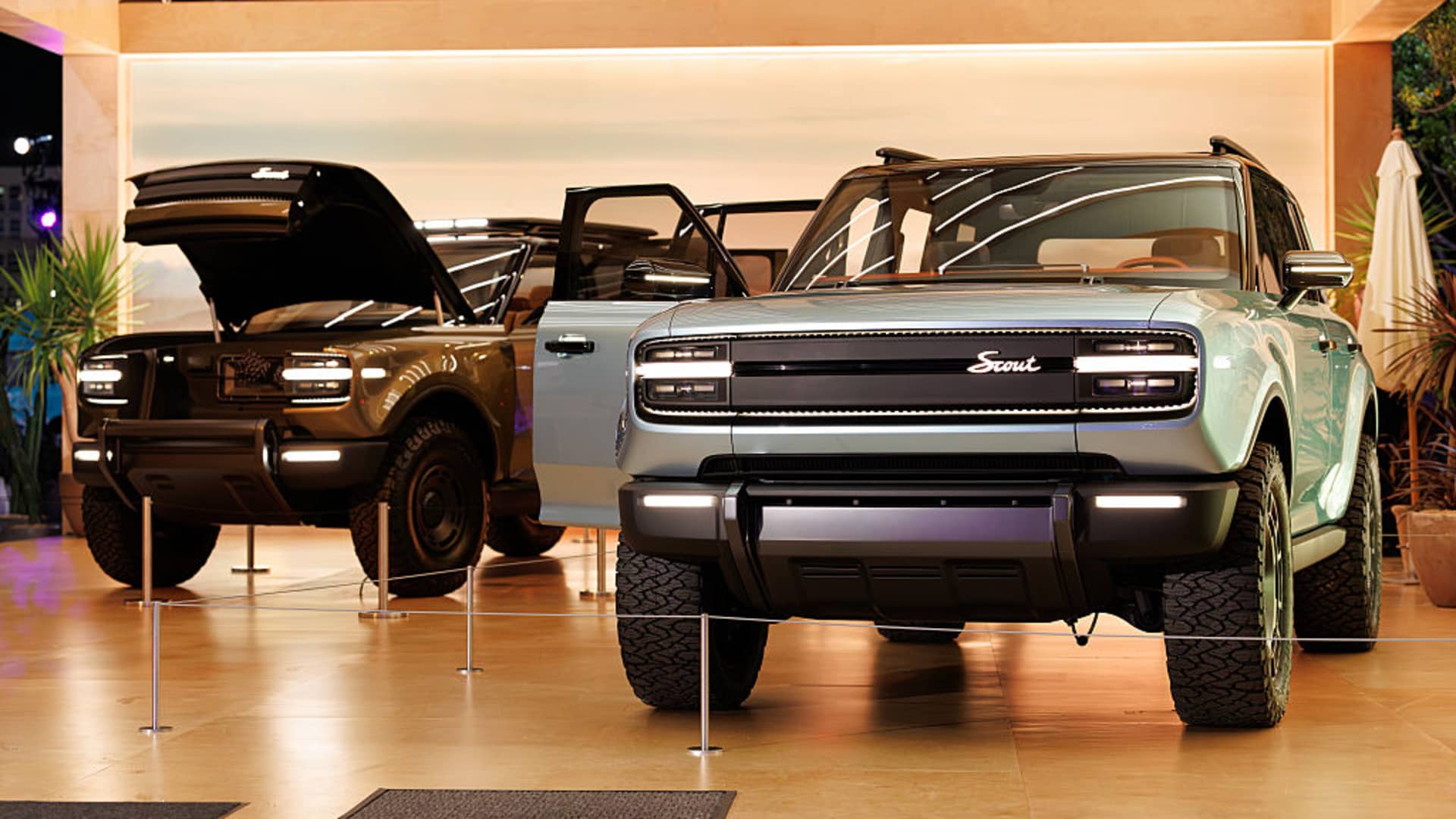

Scout Motors, an electric vehicle startup backed by Volkswagen, is making significant strides as it approaches the completion of its new $2 billion manufacturing facility in Blythewood, South Carolina. The company has amassed approximately 212,000 reservations for its upcoming Terra pickup truck and Traveler SUV, with hopes to convert these interests into sales as production begins. CEO Scott Keogh anticipates increasing these reservations significantly before the customer deliveries start in 2028, focusing on the conversion of interest to actual purchases.
| Article Subheadings |
|---|
| 1) Scout Motors’ Rapid Reservation Growth |
| 2) Production Details and Expectations |
| 3) EREV Models Leading the Charge |
| 4) Pricing and Market Strategy |
| 5) Construction Progress and Future Plans |
Scout Motors’ Rapid Reservation Growth
Scout Motors has achieved remarkable success in garnering public interest, with over 212,000 reservations for its upcoming electric vehicles: the Terra pickup truck and the Traveler SUV. This impressive milestone was shared by CEO Scott Keogh, who stressed that while reservations are a valid measure of interest, they must eventually translate into actual sales. The automotive sector has seen high-profile instances where initial enthusiasm did not materialize into firm sales figures, a risk that Scout is well aware of.
The reservations for Scout’s vehicles demonstrate a clear consumer interest in electric utility and recreational vehicles, backed by the historical appeal of the brand that previously existed from 1961 to 1980. This newfound interest is not merely coincidence but attributed to a combination of factors including increasing awareness of electric vehicles, shifts in market dynamics, and Scout’s strategic partnerships. Speaking on the company’s future, Keogh reflected that he believes it is feasible for Scout to see its reservations double to 400,000 by the time customer production starts.
Production Details and Expectations
The upcoming vehicles are scheduled to enter full production in 2024, with first deliveries slated for 2028. Scout Motors has dedicated immense resources to ensure a smooth launch, backed by a crucial investment in infrastructure. The construction of the plant is currently in the final stages, which not only includes the main building but also essential supporting infrastructure. Keogh highlighted the importance of achieving a solid order book prior to production commencing, stating a goal of a 12 to 18-month order book before the introduction of the vehicles to the market.
Achieving a robust production pipeline is vital because it would lend credibility to Scout Motors as a contender in the evolving EV sector. In his remarks, Keogh has emphasized that initial production volumes will be crucial; a target of reaching 100,000 units quickly could enable Scout to gain a competitive edge within a matter of months, solidifying its market presence.
EREV Models Leading the Charge
One of the standout features of Scout Motors’ lineup is the introduction of extended-range electric vehicles (EREVs). These hybrid models utilize both electric power and an internal combustion engine serving as a backup generator, extending overall vehicle range. Currently, about 87% of the reservations for Scout’s vehicles have been for EREV models, a trend that is significantly shaping the product lineup strategy.
The company’s decision to prioritize the introduction of EREVs reflects the current market conditions and growing consumer preferences, showcasing a broader acknowledgement of consumer hesitation concerning electric vehicle adoption. Keogh noted that the company’s plan is to first launch mid-level models rather than focusing solely on premium-priced variants, diverging from industry norms. This strategy positions Scout to cater to a wider audience, aiming to attract not only EV enthusiasts but also current owners of traditional internal combustion engine vehicles.
Pricing and Market Strategy
In terms of market entry, both the Traveler and Terra are anticipated to be competitively priced at under $60,000. According to Scout Motors, the EREV models will boast an impressive range of over 500 miles, which is considerably more than the all-electric models’ approximate 300-mile range. This strategic pricing and enhanced range could position Scout favorably against competitors in the burgeoning EV market.
Keogh has indicated that the primary objective is to gain market share as quickly as possible. With benchmarks like 100,000 units viewed as pivotal for long-term viability, the strategy focuses on maximizing volume and solidifying customer loyalty post-purchase. This is especially relevant in light of rival players in the space, such as Rivian Automotive, which faced criticisms for their pricing approach. Scout’s initial focus on affordability may attract a broader customer base, thus enhancing early sales traction.
Construction Progress and Future Plans
Scout’s manufacturing facility in Blythewood is reported to be approximately 85% complete, with additional investments also going into a $300 million supplier park, ensuring a continuity of supply chain efficacy. The anticipated opening of the plant aligns strategically with consumer demand projected in the electric vehicle market over the next several years.
Reservations for Scout’s vehicles, which opened in October 2024, represent a return to the market for a renowned vehicle brand, known for its rugged design elements and capabilities. As Scout Motors prepares for the market launch, it seeks to strike a balance between innovation and reliable vehicle production, aiming to establish itself as a key player in the rapidly evolving electric vehicle market.
| No. | Key Points |
|---|---|
| 1 | Scout Motors has received over 212,000 reservations for its Terra pickup and Traveler SUV. |
| 2 | The company expects production to begin in 2024, aiming for deliveries in 2028. |
| 3 | A substantial portion of reservations (87%) are for extended-range electric vehicles. |
| 4 | Prices for both models are expected to be effectively set under $60,000. |
| 5 | The construction of Scout’s manufacturing plant is nearing completion at 85% completion rate. |
Summary
Scout Motors is making significant advances as it ramps up preparations for the production of its electric vehicles. With a strong base of reservations, innovative models, an evolving market strategy, and advancements in construction, the company is positioning itself for success in a competitive landscape. As consumer interest in electric vehicles rises, Scout’s approach to blending traditional vehicle attributes with modern electric capabilities may well cater to a diverse audience, facilitating a successful launch and sustained growth in the coming years.
Frequently Asked Questions
Question: What types of vehicles will Scout Motors produce?
Scout Motors will offer a range of vehicles including full electric models as well as extended-range electric vehicles (EREVs) that incorporate an internal combustion engine for added range.
Question: When does Scout plan to start delivering its vehicles?
Deliveries of Scout Motors’ vehicles are set to begin in 2028, following the start of full production in 2024.
Question: How many reservations has Scout Motors received to date?
As of now, Scout Motors has received approximately 212,000 reservations for its Terra and Traveler vehicles.
