

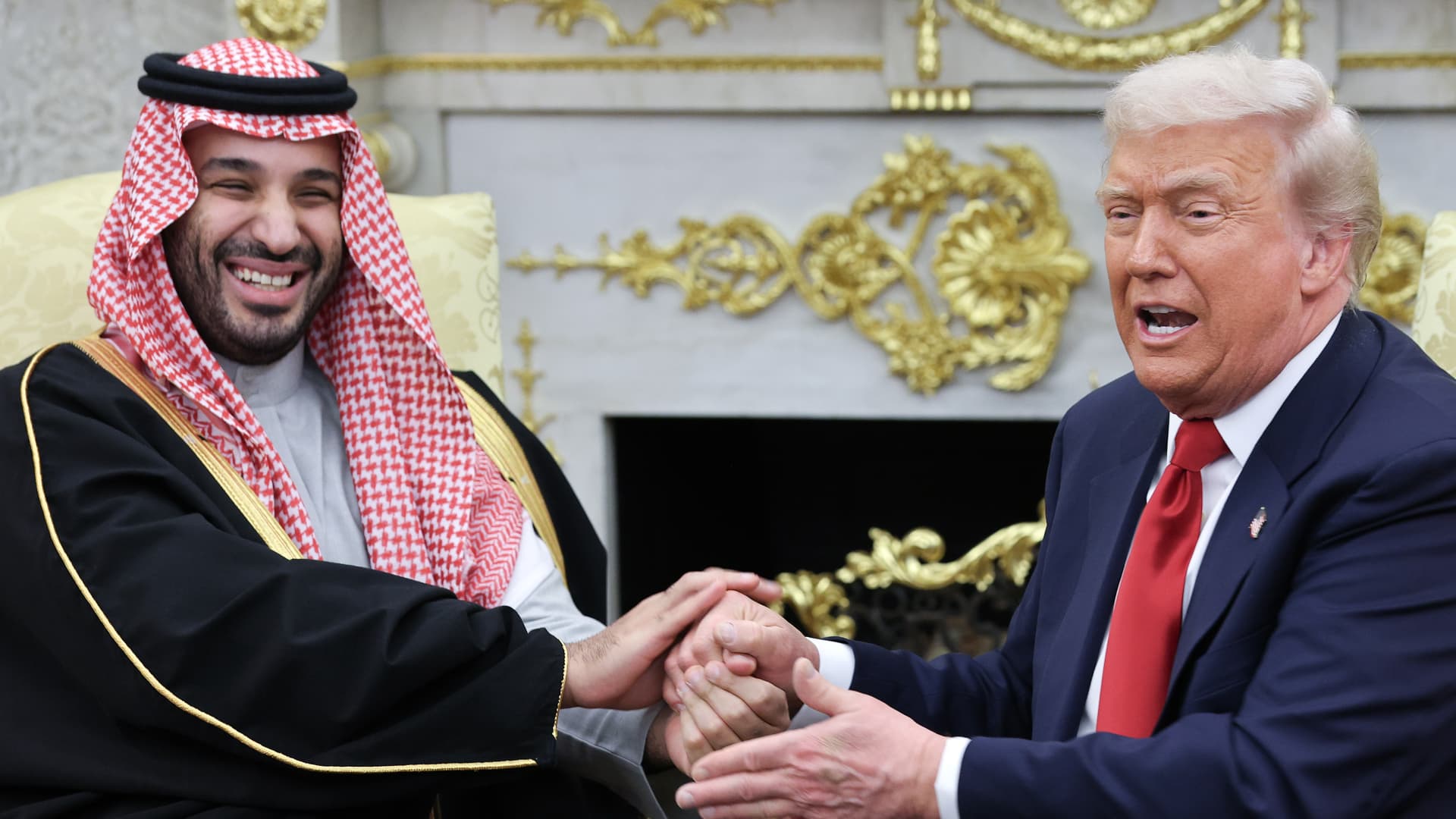

The U.S. administration has greenlit a substantial arms deal with Saudi Arabia, potentially worth $24.3 billion, which includes the sale of nearly 50 F-35 fighter jets. This transaction aims to bolster Saudi Arabia’s defense capabilities amid ongoing conflicts, particularly the threats from Houthi forces in Yemen. As lawmakers review the deal, there are concerns regarding national security and the implications of advanced military technology potentially reaching rival entities.
| Article Subheadings |
|---|
| 1) Overview of the F-35 Sale to Saudi Arabia |
| 2) Implications for U.S. Foreign Policy |
| 3) Congressional Concerns and Review Process |
| 4) Historical Context of U.S.-Saudi Relations |
| 5) Future Outlook for Regional Security |
Overview of the F-35 Sale to Saudi Arabia
The recent decision by the U.S. administration to approve the $24.3 billion sale of 48 F-35 fighter jets to Saudi Arabia marks a significant move in international arms trade. The F-35, produced by Lockheed Martin, is regarded as the world’s most advanced fighter aircraft and represents a key component in modern military operations. The deal includes not only the jets themselves but also essential maintenance parts and engines, notably from Pratt & Whitney, which enhances the operational capabilities of the Saudi Air Force.
This strategic arms deal was announced by officials on Thursday, highlighting its relevance given the current geopolitical landscape, particularly the increasing tensions in the Middle East. The urgency of bolstering Saudi Arabia’s defensive measures is underscored by the ongoing conflict in Yemen, where Iranian-backed Houthi forces have escalated their attacks against Saudi targets. The proposal underscores a commitment to ensuring that Saudi Arabia remains a strong ally in the Gulf region.
Implications for U.S. Foreign Policy
The U.S. State Department emphasized that this arms sale aligns with its objectives regarding foreign policy and national security. The agreement is seen as a means to enhance the security of a significant non-NATO ally, thus promoting political stability and economic growth within the Gulf region. Officials argue that strengthening Saudi defense capabilities could deter aggression and facilitate a more stable environment not just in Saudi Arabia, but across the broader Middle East as well.
Moreover, this deal arrives at a critical juncture where the U.S. seeks to reaffirm its alliances in the Arab world, especially against the backdrop of Iran’s growing influence and the shifting allegiances in the region. Such transactions are often portrayed as tools not merely for military support but also as leverage to advance U.S. diplomatic interests throughout the Middle East.
Congressional Concerns and Review Process
As with any significant military sale, the proposed deal will undergo scrutiny from Congress, which has a designated 30-day period to assess and potentially block the transaction. Some lawmakers have already expressed apprehensions regarding the implications of this sale on U.S. security interests. For instance, Representative Raja Krishnamoorthi has raised concerns that introducing advanced military technology like the F-35 to Saudi Arabia could have unintended consequences, particularly in relation to access by China to sensitive information embedded within the technology.
Krishnamoorthi articulated his position in a statement, arguing against the sale, saying,
“We must not sell our most advanced fighter jet anywhere the CCP may be able to get its hands on the technology inside it.”
This sentiment reflects a growing awareness among lawmakers regarding the ramifications of defense sales amid rising global technology competition.
Historical Context of U.S.-Saudi Relations
The relationship between the United States and Saudi Arabia has evolved over decades, often marked by arms deals and diplomatic partnership. However, past incidents, such as the 2018 assassination of journalist Jamal Khashoggi, cast a shadow over these ties, leading to calls within Congress for greater accountability regarding arms sales to the kingdom. There’s a prevailing concern that military support from the U.S. may inadvertently bolster a regime that has faced international criticism for its human rights record.
Additionally, previous administrations have had to navigate a delicate balance between supporting Saudi Arabia’s defense needs while ensuring the protection of civilian rights and addressing regional peace efforts. The historical context illustrates the complexities involved in arms transactions with a nation that serves as a critical ally yet faces scrutiny from both domestic and global observers.
Future Outlook for Regional Security
Looking ahead, the outcome of this arms deal may set the tone for future U.S. engagements in the Gulf region. If approved, it could trigger additional sales or partnerships as regional powers reassess their security postures in response to this new military capability within Saudi Arabia. Observers argue that this arms deal could motivate neighboring nations to enhance their own military capabilities, potentially leading to an arms race in an already volatile region.
Furthermore, as Saudi Arabia enhances its military capabilities, the shift in the strategic landscape could influence policy decisions in other Gulf states. Increased military spending and advancements may prompt new alliances or exacerbate existing tensions, particularly with Iran, which perceives such sales as direct threats to its national security.
| No. | Key Points |
|---|---|
| 1 | Approval of a $24.3 billion arms sale to Saudi Arabia, including 48 F-35 fighter jets. |
| 2 | The deal aims to bolster Saudi defenses against threats, particularly from Houthi forces. |
| 3 | Congress has a 30-day window to review the deal amidst growing concerns over advanced technology access. |
| 4 | The sale reflects longstanding U.S.-Saudi relations despite scrutiny over human rights issues. |
| 5 | Future regional security dynamics may shift in response to enhanced military capabilities in Saudi Arabia. |
Summary
The proposed arms deal with Saudi Arabia represents a crucial development in U.S. foreign military sales, aimed at strengthening an important ally amidst regional threats. While highlighting the strategic interests involved, it also raises critical questions regarding security, ethics, and the balance of power within the Middle East. As Congress deliberates, the implications of this contract could reverberate beyond the immediate regional context, affecting geopolitical relationships worldwide.
Frequently Asked Questions
Question: What is the significance of the F-35 fighter jet?
The F-35 is known for its advanced stealth, agility, and precision, making it a pivotal asset for modern air forces. Its capability to engage in various combat scenarios enhances a nation’s defense strategy significantly.
Question: How does this arms deal impact U.S. relations with Iran?
The arms deal could exacerbate tensions with Iran, particularly as it views U.S. military support for Saudi Arabia as a direct threat. The situation could further complicate diplomatic efforts aimed at stabilizing the region.
Question: What role does Congress play in the arms sale process?
Congress has the authority to review and possibly block military sales. They can express concerns or impose restrictions based on broader foreign policy or national security considerations.
