

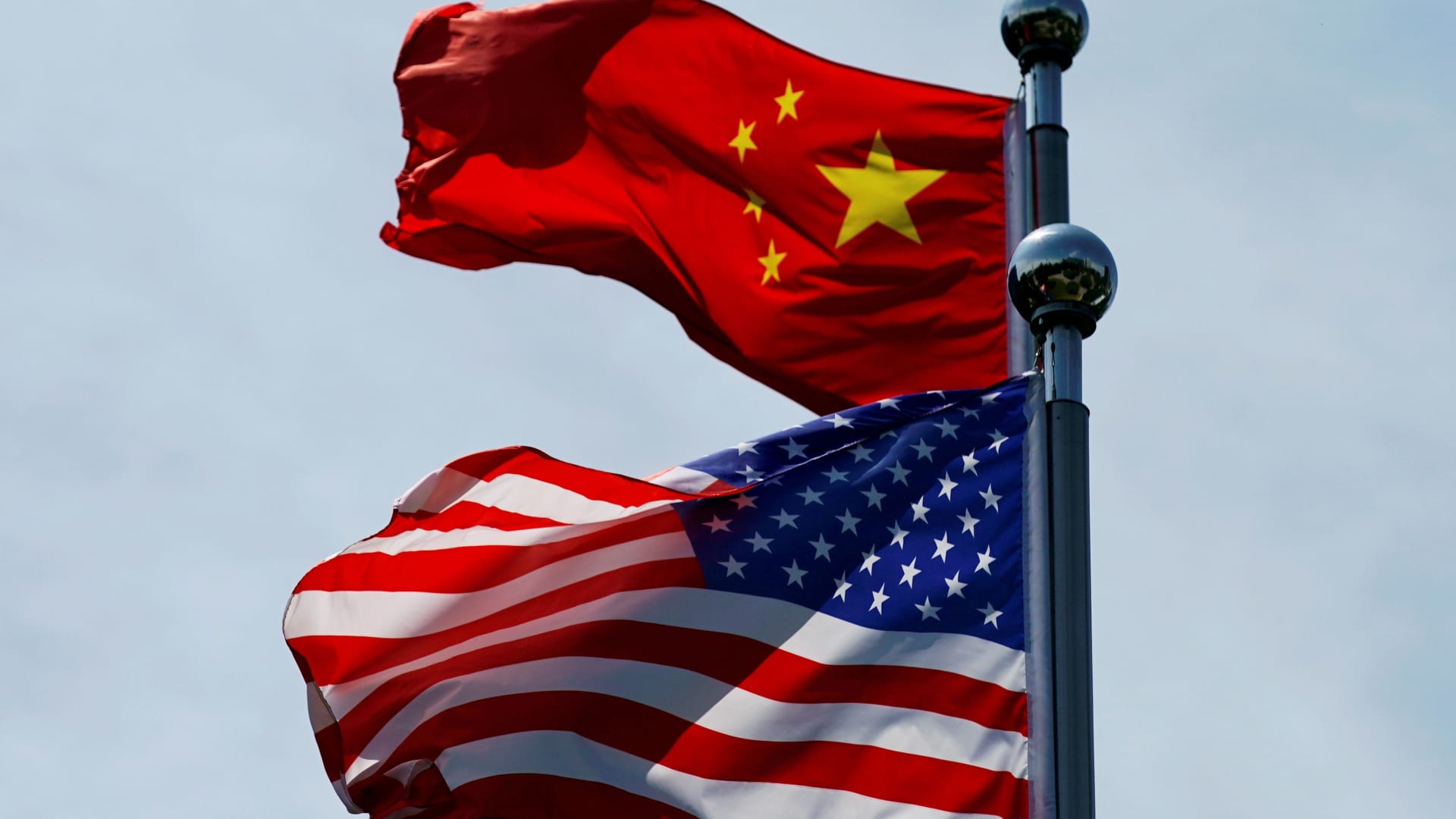

In a complex and evolving diplomatic landscape, U.S. and Chinese officials are engaging in discussions amid increasing tensions surrounding U.S. sanctions on Iran. Despite tough rhetoric from the Trump administration, cooperation seems to be on both countries’ agendas, as they prepare for an important upcoming state visit. U.S. officials are urging financial institutions to steer clear of dealings with Iranian oil, and both sides are navigating this sensitive issue with caution as they balance competitive and collaborative elements in their relationship.
| Article Subheadings |
|---|
| 1) U.S. Pressure on Chinese Financial Institutions |
| 2) China’s Strategic Caution Amid Sanctions |
| 3) Navigating Diplomatic Waters: Upcoming Meetings |
| 4) The Broader Implications for U.S.-China Relations |
| 5) Final Thoughts on Cooperation and Competition |
U.S. Pressure on Chinese Financial Institutions
The United States has intensified its efforts to impose secondary sanctions against Iran, targeting financial channels and institutions that may also involve Chinese banks. U.S. Treasury Secretary Scott Bessent articulated a clear warning, indicating that any Chinese financial institutions engaged in converting Iranian oil into monetary gains could face punitive measures. “If Chinese banks are part of the ecosystem that turns Iranian oil into money, into repression, they will be targeted,” he stated. This statement signals a shift in U.S. strategy, incorporating a more aggressive stance against perceived enablers of Iran’s actions.
The challenges lie in balancing economic ties with Iran against the broader requirements of U.S. sanctions. Despite the warnings, little has been disclosed regarding exact sanctions or measures, leading experts like Jodie Wen, a postdoctoral fellow at Tsinghua University, to suggest that these proclamations are more cautionary than definitive threats. This nuanced positioning by both superpowers indicates the complexity of their economic interdependence amidst diplomatic frictions.
China’s Strategic Caution Amid Sanctions
In response to the U.S. sanctions, China has adopted a measured stance. Officially, the Chinese government has expressed intentions to take necessary actions to safeguard its interests without specifying the nature of those actions. China’s Foreign Ministry spokesperson stated there was no significant information available concerning dialogue with the U.S. relating to Iran. This ambiguity leaves observers to ponder the potential ramifications for Chinese businesses and the extent to which they may be affected by U.S. policies.
Despite these tensions, analysts are observing that China’s response may be more about maintaining its broader diplomatic goals than simply retaliating against U.S. actions. Ryan Hass, a director at the Brookings Institution, suggests that China interprets the U.S. actions as performative, recognizing the lack of groundwork for any major escalations. This indicates that China may prioritize its strategic interests over outright defiance against U.S. sanctions, demonstrating a cautious yet resilient approach in the geopolitical arena.
Navigating Diplomatic Waters: Upcoming Meetings
Amidst the backdrop of increasing sanctions and diplomatic tension, both countries are looking ahead to significant discussions. U.S. President Donald Trump mentioned the forthcoming state visit of Chinese President Xi Jinping, which has generated speculation on whether this meeting could facilitate a more cooperative atmosphere. Talks between U.S. Ambassador to China David Perdue and Chinese Foreign Minister Wang Yi have also been noted, with both sides aiming to secure a constructive dialogue in the wake of heightened economic competition and sanctions.
While concrete outcomes from these discussions remain to be seen, experts assert that maintaining open channels of communication is vital. Such interactions could be pivotal in balancing economic grievances and fostering cooperation that benefits both nations. As preparations for high-level interactions advance, the world watches closely to gauge their implications for regional stability and global economic trends.
The Broader Implications for U.S.-China Relations
The ongoing situation surrounding U.S. sanctions has broader ramifications beyond immediate financial institutions. As both nations navigate this complex web of competition and collaboration, analysts believe the U.S.-China relationship is poised at a critical juncture. There appears to be a push towards a model of “controlled competition,” a concept that emerged during the Trump administration’s previous engagements, contrasted with the current Biden administration’s perception of China as a strategic adversary.
Such differing views influence how each nation conducts international relations across various fronts, from trade to military presence in the Asia-Pacific region. Han Shen Lin, managing director at The Asia Group, noted that China has developed mechanisms to manage compliance with U.S. sanctions while protecting its national interests. This balancing act may afford both countries the opportunity to navigate disputes without resorting to escalated confrontations or economic warfare, of which the international community is increasingly wary.
Final Thoughts on Cooperation and Competition
Ultimately, the relationship between the United States and China is characterized by an intricate balance of competition and cooperation. While current tensions—especially surrounding sanctions against Iran—create pockets of uncertainty, the avenues for collaboration remain. Observers are keenly aware that both nations must navigate these tumultuous waters with prudence and foresight to prevent irreparable damage to their partnerships.
Looking forward to future engagements, it appears that U.S. and Chinese leaders recognize the value of maintaining a dialogue, albeit against a backdrop of firm geopolitical posturing. Both countries stand to lose significantly from a breakdown in communication and trust—a reality that may encourage them to find mutually beneficial resolutions despite competing interests.
| No. | Key Points |
|---|---|
| 1 | The U.S. has intensified sanctions targeting Iranian oil transactions involving Chinese banks. |
| 2 | China has responded cautiously, emphasizing its sovereignty and intent to protect its interests. |
| 3 | Upcoming talks between U.S. and Chinese officials may pave the way for improved diplomatic relations. |
| 4 | Analysts suggest a shift towards controlled competition rather than outright hostility. |
| 5 | Maintaining dialogue is critical to prevent escalation and foster cooperation in the bilateral relationship. |
Summary
As the situation between the U.S. and China continues to evolve, the intricate balance between competition and cooperation is tested. While U.S. sanctions create immediate pressure on Chinese financial institutions, both nations are choosing to engage in dialogue, recognizing the profound impact of their relationship on global dynamics. The critical forthcoming meetings between leaders could set the stage for either escalation or reconciliation, underscoring the need for both sides to prioritize strategic communication.
Frequently Asked Questions
Question: What are secondary sanctions?
Secondary sanctions are measures imposed by one country on entities from another country to restrict their ability to trade with a third party, in this case, to penalize those doing business with a sanctioned country.
Question: Why is the U.S. tightening sanctions on China related to Iran?
The U.S. aims to limit Iran’s revenue from oil exports by targeting financial institutions that may facilitate these transactions, as part of an effort to curb Iran’s influence in regional conflicts.
Question: What does “controlled competition” mean in U.S.-China relations?
Controlled competition refers to a mode of engagement where both nations acknowledge their competitive interests while still cooperating on specific issues, rather than escalating tensions to a point of confrontation.
