

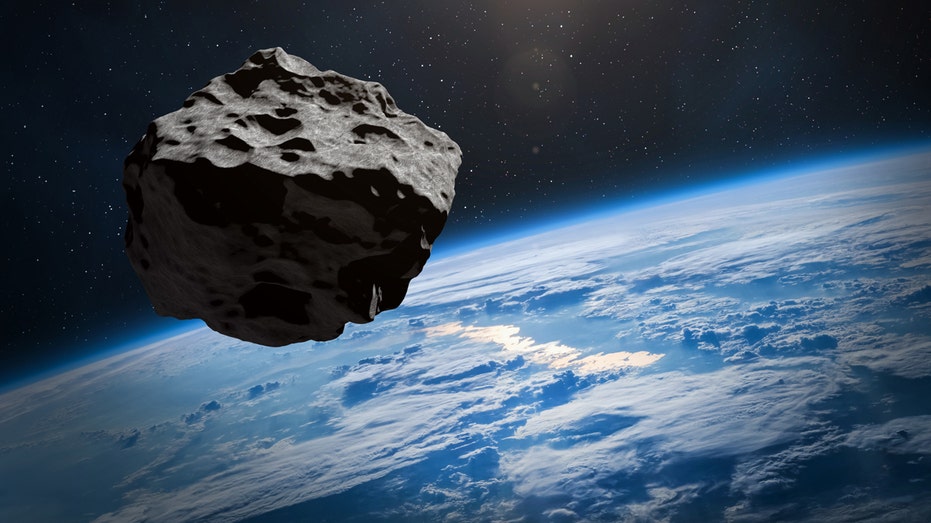

A near-Earth object known as 1998 KY26 is drawing attention because its path appears to include acceleration that gravity alone cannot explain. NASA Administrator Jared Isaacman said there is no evidence the roughly 36-foot-wide object threatens Earth or is anything other than an asteroid. A research team has proposed that it could be Phobos 1, a Soviet spacecraft lost while traveling toward Mars in 1988, although the idea remains unproven. A planned Japanese spacecraft encounter in 2031 could provide a decisive test.
| 1) | Why 1998 KY26 is attracting scientific attention |
| 2) | NASA’s assessment of the object’s risk |
| 3) | Why the dark-comet explanation is disputed |
| 4) | How the Phobos 1 hypothesis was developed |
| 5) | What a 2031 spacecraft visit could reveal |
Why 1998 KY26 is attracting scientific attention
1998 KY26 is classified as a near-Earth asteroid and is estimated to be about 36 feet across. Observations indicate that it reflects approximately 52% of incoming sunlight and completes one rotation every 5.35 minutes. Its measured path includes what scientists call nongravitational acceleration, meaning forces other than the gravitational pull of the Sun and planets may be influencing its movement.
The object has been observed through telescope and radar campaigns, allowing researchers to study its size, brightness, rotation and trajectory. The unusual motion does not indicate an imminent collision. Instead, it presents a scientific problem: researchers must determine whether the acceleration results from natural activity on a small asteroid or from another physical source.
NASA’s assessment of the object’s risk
NASA continues to monitor 1998 KY26, but Jared Isaacman has said the agency has seen no evidence that it is a danger to Earth. His assessment addresses the immediate question of safety while leaving the object’s exact physical explanation open for further study.
“I’ve not seen any evidence to suggest this is a threat to our planet or anything other than an asteroid.”
The statement reflects the distinction between an unusual scientific observation and a confirmed hazard. The object is being examined because of its acceleration and other characteristics, not because current tracking indicates that it is on a dangerous impact course.
Why the dark-comet explanation is disputed
One proposed explanation is that 1998 KY26 is a dark comet containing water ice beneath its surface. Under that theory, sunlight would heat buried ice, causing water to turn into gas and produce a small thrust that changes the object’s trajectory. Such activity can affect a comet’s motion, even when the object does not display an obvious cloud or tail.
However, a peer-reviewed study by Georgia Institute of Technology researchers Korbin Hansen and Masatoshi Hirabayashi, published in Icarus, concluded that the object is likely too warm for buried water ice to remain active long enough to explain the observed acceleration. Their calculated water-loss rates therefore weigh against classifying 1998 KY26 as a dark comet at present. Other research has suggested that sunlight absorbed by the surface and heat later released from it could still create a natural nongravitational force.
How the Phobos 1 hypothesis was developed
Harvard astrophysicist Avi Loeb and researchers Adam Hibberd and Adam Crowl examined whether 1998 KY26 could be Phobos 1, an unmanned Soviet spacecraft launched toward Mars in July 1988. The mission lost contact after a faulty command caused the spacecraft to shut down, leaving its ultimate location unknown.
The researchers created a simplified model of Phobos 1 and compared its expected sunlight reflection during rotation with observations of 1998 KY26. They reported a close match across eight observation sets. They also modeled the effects of sunlight striking a cylindrical spacecraft body or solar panels and found that the spacecraft scenarios aligned more closely with hundreds of telescope and radar measurements.
The team described the result as strongly plausible but presently unproven. The analysis does not establish that the object is a spacecraft, and competing studies have found that its reflected light is consistent with a rocky asteroid originating in the inner asteroid belt.
What a 2031 spacecraft visit could reveal
The Japan Aerospace Exploration Agency’s Hayabusa2 spacecraft is scheduled to rendezvous with 1998 KY26 in July 2031, according to a 2025 study in Nature Communications. A close encounter could allow cameras and other instruments to examine the object’s surface, shape, composition and rotation directly.
Those measurements could distinguish between a natural asteroid and a manufactured object. They could also test whether the surface contains signs of cometary activity, spacecraft materials or structures associated with the Phobos 1 design. Avi Loeb has said the mission could provide the strongest test of the lost-probe theory, but the outcome cannot be known until the encounter occurs.
| Number | Key Point |
|---|---|
| 1 | 1998 KY26 is a small near-Earth object with unexplained nongravitational acceleration. |
| 2 | NASA has found no evidence that the object threatens Earth. |
| 3 | A study found conditions that challenge the dark-comet explanation. |
| 4 | The Phobos 1 theory matches several observed characteristics but remains unconfirmed. |
| 5 | Hayabusa2’s planned July 2031 rendezvous may provide direct evidence about the object’s nature. |
Summary
1998 KY26 is an unusual near-Earth object whose acceleration has prompted both conventional and highly speculative explanations. Current research does not prove that it is the lost Phobos 1 spacecraft, while NASA says it has no evidence of a threat to Earth. Continued observations and the planned Hayabusa2 encounter should provide more reliable evidence about its composition and origin.
Frequently Asked Questions
What is 1998 KY26?
1998 KY26 is a roughly 36-foot-wide near-Earth object generally classified as an asteroid. It has an unusually rapid rotation and a path affected by apparent nongravitational acceleration.
Is 1998 KY26 a danger to Earth?
NASA Administrator Jared Isaacman said there is no evidence that the object threatens Earth or is anything other than an asteroid.
Could it be the lost Phobos 1 spacecraft?
Researchers found that a simplified model of Phobos 1 matched several observations of 1998 KY26, but they described the hypothesis as plausible rather than proven.
When could scientists learn more?
The Japan Aerospace Exploration Agency’s Hayabusa2 spacecraft is scheduled to rendezvous with 1998 KY26 in July 2031, potentially allowing direct study of the object.
