

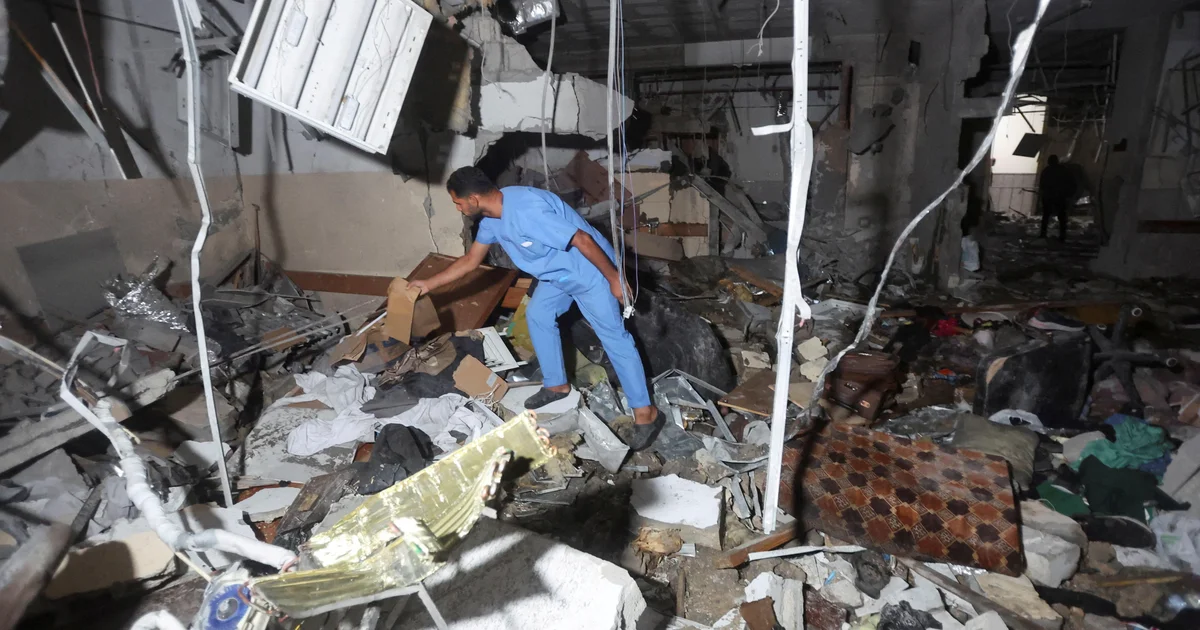

An Israeli airstrike on the Nasser Hospital in Khan Younis, southern Gaza, resulted in the deaths of six individuals, with at least a dozen more reported injured, according to the Gaza Health Ministry. The attack, occurring early Thursday, was described by the Israeli military as a targeted strike against a “senior Hamas terrorist” and militant activity allegedly taking place within the hospital premises. The incident has heightened tensions, with Israel accusing Hamas of exploiting medical facilities for military purposes.
| Article Subheadings |
|---|
| 1) Details of the Airstrike and Immediate Aftermath |
| 2) The Strategic Importance of Nasser Hospital |
| 3) Historical Context of Attacks on Medical Facilities |
| 4) Current Situation in Gaza Post-Attack |
| 5) Reactions from the International Community |
Details of the Airstrike and Immediate Aftermath
The airstrike occurred in the early hours of Thursday, targeting the surgery department of the Nasser Hospital. The Gaza Health Ministry indicated that among the casualties were six deceased, with reports confirming that at least one doctor was among the victims. Eyewitness accounts from an Associated Press journalist present at the scene noted substantial destruction to the hospital’s second floor, raising concerns over the safety of patients and medical staff within such facilities.
According to a statement released by the Israeli military, the airstrike was justified based on the claim that Hamas was operating within the hospital. However, the Israeli Defense Forces (IDF) did not provide concrete evidence to substantiate these assertions, leading to skepticism and outrage from Palestinian health officials and international observers. In light of these claims, many are questioning the military’s operational protocols regarding strikes in densely populated areas.
The airstrike has sparked protests and condemnation from various factions within Gaza, emphasizing the ongoing struggles faced by civilians amidst the conflict. The destruction of medical facilities not only compromises immediate medical care but also severely impacts the overall healthcare system already plagued by shortages of both personnel and resources.
The Strategic Importance of Nasser Hospital
Nasser Hospital stands as one of the few remaining operational medical facilities in the Gaza Strip, particularly vital for regions like Khan Younis, which have seen their healthcare infrastructure deteriorate significantly due to ongoing conflict. The facility has been a critical lifeline, providing essential services to a population that has faced relentless bombardment and limited access to healthcare resources.
Historically, hospitals in conflict zones like Gaza have been targeted due to their perceived dual-use nature, meaning they can serve civilian purposes while allegedly being used by combatants. The role of Nasser Hospital during this heightened period of conflict underscores the dire situation, as medical teams often find themselves caught between conflicting narratives and military actions.
Reports indicate that prior to this strike, Nasser Hospital had been one of the remaining bastions for medical care in the region, frequently overwhelmed by the influx of injured civilians. As airstrikes continue to take their toll, the strategic significance of such facilities has never been more apparent; they are not just medical centers but also symbols of resilience amidst devastation.
Historical Context of Attacks on Medical Facilities
The targeting of medical facilities has been a troubling trend in the ongoing Israeli-Palestinian conflict. In the years leading up to this airstrike, several incidents had raised alarms regarding the protection of healthcare personnel and infrastructure under international humanitarian law. For instance, in 2025, an airstrike at Nasser Hospital resulted in the deaths of five journalists, drawing condemnation from various human rights organizations.
The repetition of such attacks has led international observers to question the practices of both military forces involved in the conflict. Humanitarian organizations have consistently called for the protection of hospitals, emphasizing that armed conflict should not jeopardize civilian health facilities. The attacks underscore a broader concern regarding accountability and adherence to the principles of distinction and proportionality in warfare.
With multiple investigations into past incidents yet to yield significant consequences, the continued bombing of medical facilities raises critical ethical and legal questions about the ongoing conflict and the responsibilities of both state and non-state actors in protecting civilians. The airstrike at Nasser Hospital draws attention to a pattern of behavior that endangers not only the immediate victims but also the fabric of societal resilience in war-torn regions.
Current Situation in Gaza Post-Attack
In the aftermath of the airstrike, Gaza’s healthcare system is likely to face increased strain. The Gaza Health Ministry has reported mounting casualties and has called for urgent international intervention to prevent further military escalations. The situation remains precarious, as reports indicate that strikes by Israeli forces have continued despite previous agreements for a ceasefire.
As such, the civilian population finds itself with limited access to essential services, including medical care, which is vital for their survival. The current conflict, which reignited on October 7, 2023, has resulted in a humanitarian crisis, with death tolls escalating rapidly and basic needs becoming harder to meet. Fortunately, a few international agencies continue efforts to deliver medical supplies and humanitarian aid, but the need far exceeds available resources.
Consequently, the airstrike has not only resulted in immediate casualties but has exacerbated the existing humanitarian crisis in Gaza, creating a pervasive atmosphere of fear among civilians. With tensions remaining high and attacks seemingly unrelenting, the plight of those in Gaza continues to demand urgent global attention.
Reactions from the International Community
The international community has responded with a mix of condemnation and calls for investigations following the airstrike on Nasser Hospital. Several humanitarian organizations have expressed outrage, emphasizing the need for accountability for actions that endanger civilians. These reactions come as nations grapple with the complexities of international law concerning armed conflict and the protection of civilian life.
The United Nations has reiterated calls for both parties to adhere to international humanitarian law and protect civilians, specifically emphasizing the inviolability of medical facilities. Statements from various UN officials reflect a growing concern that such attacks can lead to serious violations of human rights and may constitute war crimes under international law.
Global sentiment towards the conflict has become increasingly polarized, with nations often aligning in response to their geopolitical interests. However, the common thread remains a vocal commitment to the protection of civilian life and the urgent need for peaceful resolutions. Many world leaders are now advocating for renewed dialogue aimed at achieving a sustainable ceasefire and ultimately, a long-term peace agreement.
| No. | Key Points |
|---|---|
| 1 | An Israeli airstrike on Nasser Hospital resulted in six deaths and multiple injuries among civilians. |
| 2 | Israel claims the hospital was being used by Hamas militants as a cover for military activity. |
| 3 | Nasser Hospital is one of the few operational medical facilities in Gaza, critical for civilian healthcare. |
| 4 | Historical context illustrates a pattern of attacks on medical facilities within the region. |
| 5 | The international community has called for accountability and adherence to humanitarian law in conflict zones. |
Summary
The recent airstrike on Nasser Hospital highlights the dire humanitarian situation in Gaza, underscoring the critical role of medical facilities amidst ongoing conflict. The incident has drawn international condemnation, emphasizing the necessity for adherence to international humanitarian law and the protection of civilians, especially in conflict zones. As armed confrontations continue, the plight of the people of Gaza becomes an urgent concern for the global community, calling for immediate attention and solutions to prevent further loss of life.
Frequently Asked Questions
Question: What happened during the recent airstrike on Nasser Hospital?
The airstrike led by Israeli forces resulted in the deaths of six individuals, including a medical professional, and injured at least a dozen. It targeted the surgery department of the hospital amidst claims that Hamas was using it for military operations.
Question: Why is Nasser Hospital significant in the context of Gaza’s healthcare?
Nasser Hospital serves as one of the few operational medical centers remaining in Gaza, providing critical healthcare services to civilians in a war-torn region where healthcare infrastructure has been severely compromised.
Question: What are the broader implications of attacks on medical facilities?
The targeting of medical facilities raises serious concerns regarding violations of international humanitarian law, highlighting the need for accountability and protection of civilians in conflict zones to prevent further humanitarian crises.
