

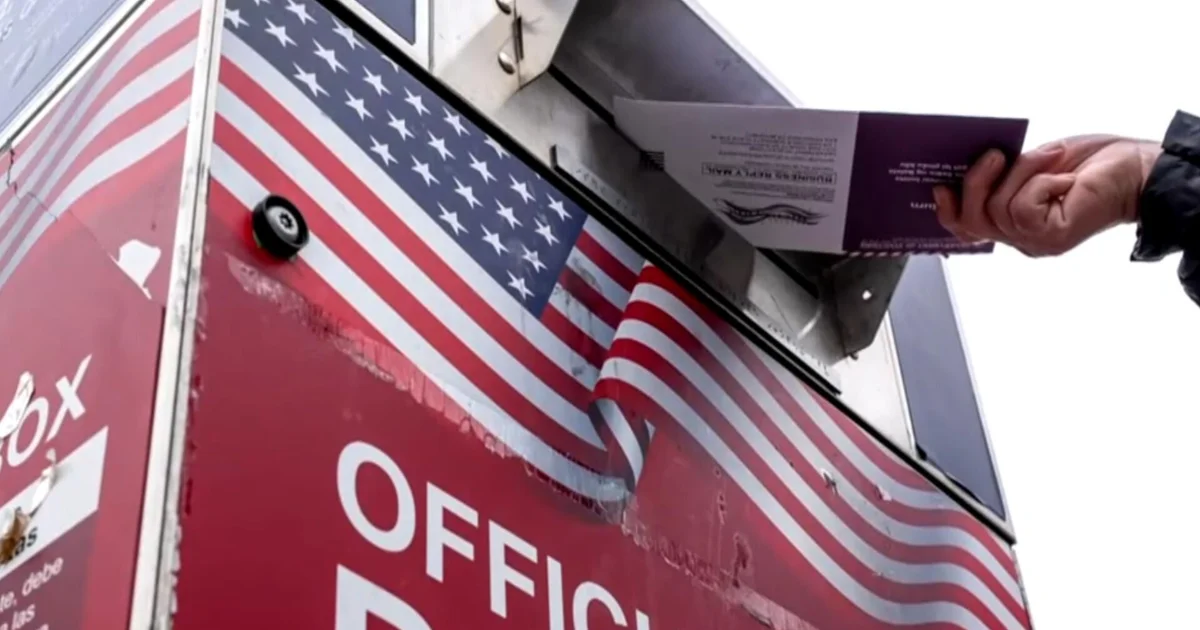

In a significant legal ruling, the U.S. Supreme Court upheld a lower court’s decision that prevents the U.S. Postal Service from enforcing newly proposed regulations for mail voting. This decision comes as the Trump administration sought to implement these rules ahead of the crucial midterm elections in November. The ruling effectively halts the new guidelines while a legal challenge continues, with concerns raised by election officials about potential voter disenfranchisement.
| Article Subheadings |
|---|
| 1) Supreme Court Upholds Block on Postal Service Regulations |
| 2) Implications for Voters and Election Officials |
| 3) Arguments from the Trump Administration |
| 4) Legal Proceedings and Challenges Ahead |
| 5) Reactions to the Supreme Court’s Ruling |
Supreme Court Upholds Block on Postal Service Regulations
On a pivotal ruling made on Monday, the U.S. Supreme Court chose to leave intact a lower court’s decision that barred the U.S. Postal Service from enforcing its newly proposed regulations surrounding mail-in voting. The ruling has been regarded as a crucial development as it aids in protecting voters in the upcoming midterm elections scheduled for November. The decision has been characterized by experts as a significant move against the backdrop of growing tension and concern surrounding mail-in voting integrity and accessibility.
The Supreme Court determined that the Trump administration, in its efforts to implement these regulations, was “unlikely to succeed on the merits” of their case against a preliminary injunction previously set by a District Court. This legal verdict means the Postal Service’s new requirements—finalized late last month—will remain on hold as the case continues to progress through the judicial system. This order is particularly impactful as ballots have already begun to be mailed out to voters in several states, raising worries among election officials about their capacity to adapt to any new policies in time for the elections.
With the landscape of mail voting evolving rapidly, this Supreme Court decision plays an essential role in ensuring that election processes remain accessible to all eligible voters, emphasizing the judiciary’s commitment to uphold voting rights amid legal and political battles surrounding the electoral process.
Implications for Voters and Election Officials
The implications of the Supreme Court’s ruling extend beyond mere regulatory details; they touch upon fundamental issues of voter access and election integrity. With the decision to prevent the Postal Service from enforcing its requirements, many state and local election officials expressed relief, acknowledging the critical need for upholding accessibility in the electoral process. However, the possibility of confusion and operational challenges still looms large as these officials scramble to prepare for the elections amidst ongoing legal uncertainties.
Election officials across the country had raised alarms prior to the court’s ruling, emphasizing that attempting to comply with the new regulations would likely lead to disenfranchising significant numbers of voters. Specifically, the Postal Service’s proposed rules required mail ballot envelopes to meet stringent design standards, including unique barcodes, which some officials believed would be impossible to implement in time for the midterms. Such a situation could have escalated to widespread disenfranchisement, affecting the democratic process as many individuals rely on mail-in voting to participate in elections.
As a result of the ruling, states are now allowed to conduct their elections without the looming threat of the new regulations, a factor that may contribute to higher voter turnout and a more organized electoral process leading up to November. The ongoing focus remains on ensuring that voters are equipped with the means and ability to cast their ballots without undue hindrance.
Arguments from the Trump Administration
Amid the legal dispute, the Trump administration has maintained that the new postal regulations are crucial for mitigating potential fraud in mail voting, which they deemed a significant threat to the integrity of elections. The Solicitor General, D. John Sauer, articulated this stance, positing that the regulations would help address what he referred to as a “particularly pernicious species of fraud.”
Despite these claims, the administration has been unable to present concrete evidence of widespread voter fraud associated with mail ballots. Indeed, there exists a notable contradiction as President Trump himself participated in mail voting earlier this year, which raises questions about the consistency of the administration’s arguments. Even within the court’s chambers, some justices expressed skepticism about the necessity and efficacy of the proposed measures, suggesting that while the rules may align with the Postal Service’s authority, their practical application during a time-sensitive election could create more harm than good.
The administration’s push for the regulations has sparked considerable backlash from Democratic-led states and voting rights groups, which argue that the Postal Service does not possess the authority to impose rules on federal elections. They contend that states maintain the prerogative to manage their election processes autonomously and that any disruptive intervention undermines this authority.
Legal Proceedings and Challenges Ahead
The legal battle over the Postal Service’s regulations is part of a broader, contentious struggle over mail voting that has intensified in recent months. The conflict escalated after President Trump signed an executive order in late March, mandating the Postal Service to develop regulations for mail voting while simultaneously calling for the Department of Homeland Security to compile citizen residency lists. This executive order served as the catalyst for legal action initiated by several Democratic-led states seeking to challenge the administration’s directive.
In a series of moves through the courts, the original order by U.S. District Judge Indira Talwani temporarily barred the implementation of vital components of the executive order until a thorough examination could take place. The Supreme Court’s involvement complicated the lower court actions, indicating an ongoing legal dance that unveils layers of regulatory complexity and political posturing.
As the legal proceedings continue, all eyes remain on the evolving dynamics of the case. With voting rights advocates and the Trump administration locked in opposition, the decisions made in varying courts will likely shape the electoral landscape leading into the midterm elections—an essential focus for all voters seeking to ensure their voices are heard.
Reactions to the Supreme Court’s Ruling
Reactions to the Supreme Court’s decision have been multifaceted, reflecting a spectrum of interpretations in light of the political environment. Officials from Democratic-led states, along with voting rights advocates, have hailed the ruling as a significant victory for voter protection. Attorney General Letitia James emphasized the importance of safeguarding the fundamental right to vote, voicing her relief that the Supreme Court granted a reprieve that could have otherwise exacerbated chaos within the electoral process.
Conversely, opinions from the Trump administration and its supporters have framed the ruling as a setback in the fight against purported voter fraud, underscoring their commitment to push forward with regulations designed to enhance election security. As the narrative unfolds, the implications of the ruling remain evident, with potential consequences for both sides as the midterm elections approach, making it imperative for all political actors to remain agile in response to the shifting legal context.
The ongoing discourse surrounding mail-in voting continues to be a critical focal point, influencing voter sentiment, legislative strategies, and potential legal ramifications. In this environment, the battle for the rights of voters to freely exercise their franchise remains at the forefront of American democracy.
| No. | Key Points |
|---|---|
| 1 | The U.S. Supreme Court upheld a ruling preventing the Postal Service from enforcing new mail voting regulations. |
| 2 | State and local election officials expressed relief as the new rules could have led to widespread voter disenfranchisement. |
| 3 | The Trump administration argues that the regulations are necessary to combat alleged voter fraud, although evidence remains scarce. |
| 4 | The legal battle over mail-in voting regulations is ongoing and is likely to impact the upcoming midterm elections significantly. |
| 5 | The decision has garnered mixed reactions, highlighting the divisive nature of mail voting in contemporary politics. |
Summary
The Supreme Court’s decision to block the Postal Service’s new mail voting regulations is a critical development in the ongoing debate over voting rights in the United States. As the midterm elections draw near, the ruling serves as a reminder of the need to uphold fairness and accessibility in the electoral process. The administration’s attempts to impose new regulations in the face of substantial public outcry reflect a broader struggle over how elections are conducted and who has the authority to dictate those processes. The coming weeks will be pivotal in shaping the landscape of future elections, emphasizing the importance of safeguarding the democratic process for all citizens.
Frequently Asked Questions
Question: What were the key regulations proposed by the Postal Service?
The regulations required mail ballot envelopes to meet specific design standards, including unique barcodes, coupled with requirements for state and local election officials to submit voter information through an online portal.
Question: Why did the Trump administration support the new regulations?
The Trump administration argued that the regulations were necessary to mitigate potential voter fraud associated with mail-in voting, which they claimed could undermine electoral integrity.
Question: What impact does the Supreme Court’s decision have on upcoming elections?
The decision prevents the enforcement of regulations that could have disenfranchised voters, thereby helping to maintain accessibility and operational stability for local election officials as they prepare for the upcoming midterm elections.
