

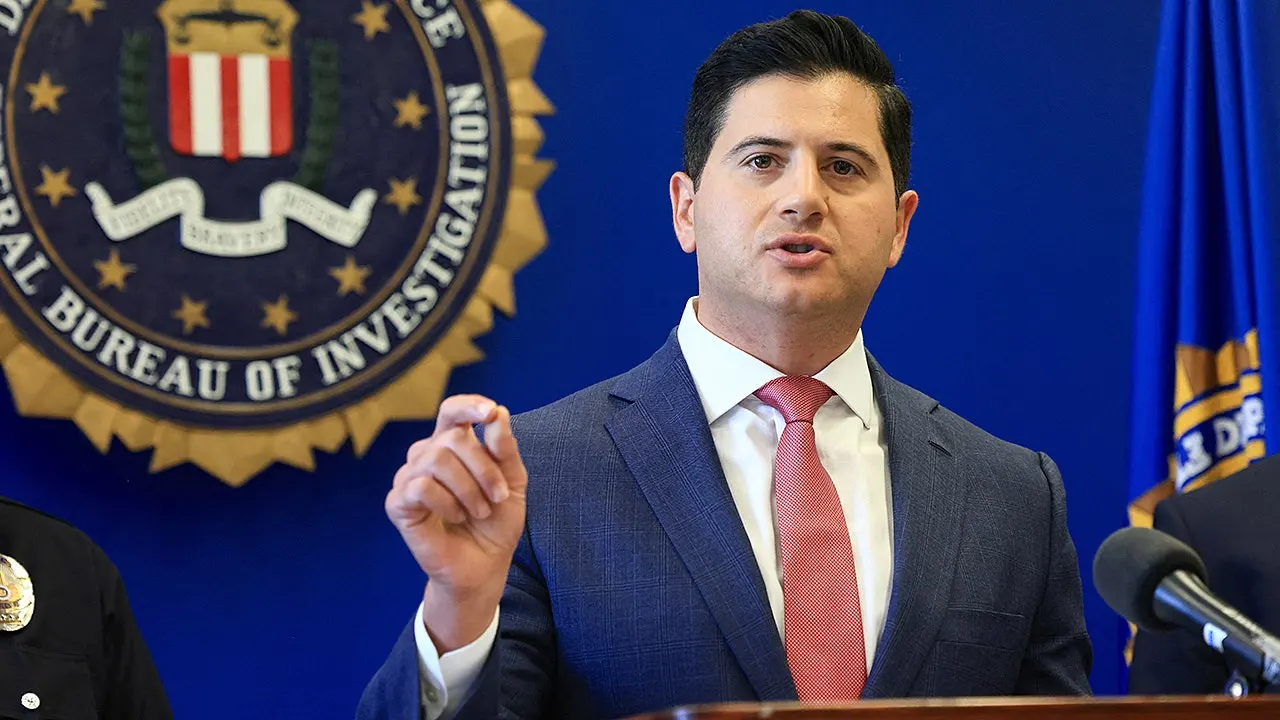

A federal judge has determined that Bill Essayli, the acting U.S. attorney for Southern California, will be disqualified from overseeing two significant criminal cases. The ruling by U.S. District Judge J. Michael Seabright came after a review of his appointment status, which has raised questions about its legality. While the disqualification will not be immediate—allowing for a possible appeal—this decision underscores challenges surrounding federal prosecutor appointments and their implications in ongoing legal matters.
| Article Subheadings |
|---|
| 1) Judge’s Ruling Overview |
| 2) Background on Bill Essayli’s Appointment |
| 3) Legal Implications of the Ruling |
| 4) Essayli’s Response and Future Outlook |
| 5) Broader Context and Related Cases |
Judge’s Ruling Overview
On Tuesday, J. Michael Seabright, a U.S. District Judge, issued a ruling that disqualified Bill Essayli from taking part in two pending criminal cases that are under federal jurisdiction. The ruling is a significant development in legal circles, as it touches on the larger question of how federal prosecutors are appointed and if such appointments comply with the law. The court identified Essayli as serving in an unlawful capacity, stating that he is acting as a “de facto” U.S. attorney despite the absence of a formal appointment. Seabright’s decision came after evaluating the legal basis for Essayli’s ability to supervise prosecutions, ultimately concluding that his role was not appropriately validated.
Background on Bill Essayli’s Appointment
Essayli has held various titles within the U.S. Attorney’s Office, initially starting as an interim U.S. attorney, a position that came from a temporary appointment that expired after 120 days. In the months that followed, the then-Attorney General Pam Bondi designated him as a special attorney and promoted him to first assistant U.S. attorney. Though he has performed these crucial duties, he has not received the formal nomination from the President nor confirmation from the Senate. This unique and complicated employment situation is central to the current controversy surrounding his authority.
The nature of his position and the lack of a conventional appointment process placed Essayli in a precarious legal stance, leading to the recent ruling. The judge determined that while he might have the title of first assistant U.S. attorney, such a title did not grant him lawful representation of the U.S. attorney’s office. The combination of his previous interim role and irregular appointment procedures were ultimately viewed by the court as reasons sufficient to disqualify him, particularly in light of recent judicial scrutiny on similar appointments.
Legal Implications of the Ruling
The implications of this ruling reach beyond the immediate consequences for Essayli. By deeming him a “de facto” U.S. attorney, the court’s decision may pave the way for future legal precedents concerning the legitimacy of acting U.S. attorneys and their capacity to oversee federal cases. The case could influence how appointments are conducted across federal entities, especially as different circuits may adopt varying interpretations on what constitutes lawful appointment practices.
The decision highlights ongoing tensions within federal law enforcement related to the manner of appointing prosecutors and maintaining a legal framework that upholds checks and balances. Following the Ninth Circuit’s ruling against a similar appointment in Nevada earlier in the summer, this California-based ruling underscores a judicial climate scrutinizing the proper adherence to constitutional norms in federal appointments.
Essayli’s Response and Future Outlook
In response to the ruling, Essayli articulated disagreement with the judge’s decision. He issued a statement that indicated the Justice Department would consider seeking a stay of the ruling while they appeal the decision, stating,
“We respectfully disagree with the court’s order.”
He indicated hope that the ultimate determination, likely by the Supreme Court, would allow him to continue serving in his current role amidst the ongoing legal proceedings.
Provided that his appeal is allowed to move forward, Essayli maintains the potential to continue overseeing significant prosecutions that could have far-reaching consequences. Additionally, he has commented on the implications of the ruling concerning election integrity in California, indicating his commitment to his role within the Justice Department.
Broader Context and Related Cases
The recent court ruling and the scrutiny of Essayli’s appointment tie into broader issues facing the Justice Department, including a notable initiative challenging California’s voter registration outcomes. Essayli has played an instrumental role in efforts concerning more than 20,000 registered voters that the administration claims may not be U.S. citizens, highlighting a contentious political arena around electoral integrity.
This case indicates a growing conflict between federal entities and state governance, particularly concerning voter eligibility and the administrative mechanics of elections. As the Justice Department pushes for legal rulings to decide the eligibility of these voters, the attention on Essayli’s role also becomes a significant element of this discussion. Legal experts will be observing how the case unfolds and whether it influences strategies for tackling perceived electoral vulnerabilities in future elections.
Key Points
| No. | Key Points |
|---|---|
| 1 | A federal judge has ruled to disqualify Bill Essayli from overseeing two criminal cases. |
| 2 | Essayli has served in federal roles but was never formally nominated or confirmed in his current position. |
| 3 | The ruling could set a precedent for how federal prosecutors are appointed in the future. |
| 4 | Essayli has expressed disagreement with the ruling and intention to appeal the decision. |
| 5 | The case is closely tied to broader issues around election integrity and federal versus state governance. |
Summary
The recent ruling concerning Bill Essayli encapsulates pressing questions regarding the legal foundation of federal prosecutorial appointments. By disqualifying him from two criminal cases, officials signal a potential reassessment of practices that have been perceived as unchecked and may challenge the very structure of federal prosecution within the United States. As the case progresses, the implications could influence future procedural adherence for appointments, affecting the intersection of administrative law and electoral integrity.
Frequently Asked Questions
Question: What does it mean to be a ‘de facto’ U.S. Attorney?
A ‘de facto’ U.S. Attorney refers to a situation where an individual effectively performs the duties and roles of the U.S. Attorney without having gone through the necessary formal appointment and confirmation processes. This designation raises legal questions about the legitimacy of their authority.
Question: What was Judge Seabright’s main concern regarding Essayli’s appointment?
Judge Seabright’s primary concern centered on the legality of Essayli’s appointment, specifically his authority to act as an U.S. attorney without proper nomination and Senate confirmation, which led to his ruling against his involvement in the cases.
Question: How may this ruling affect future appointments within the Justice Department?
This ruling could set significant precedents regarding how federal prosecutors are appointed and what legal frameworks must be followed to ensure appointments are both valid and constitutional, potentially impacting oversight and governance within the Justice Department.
