

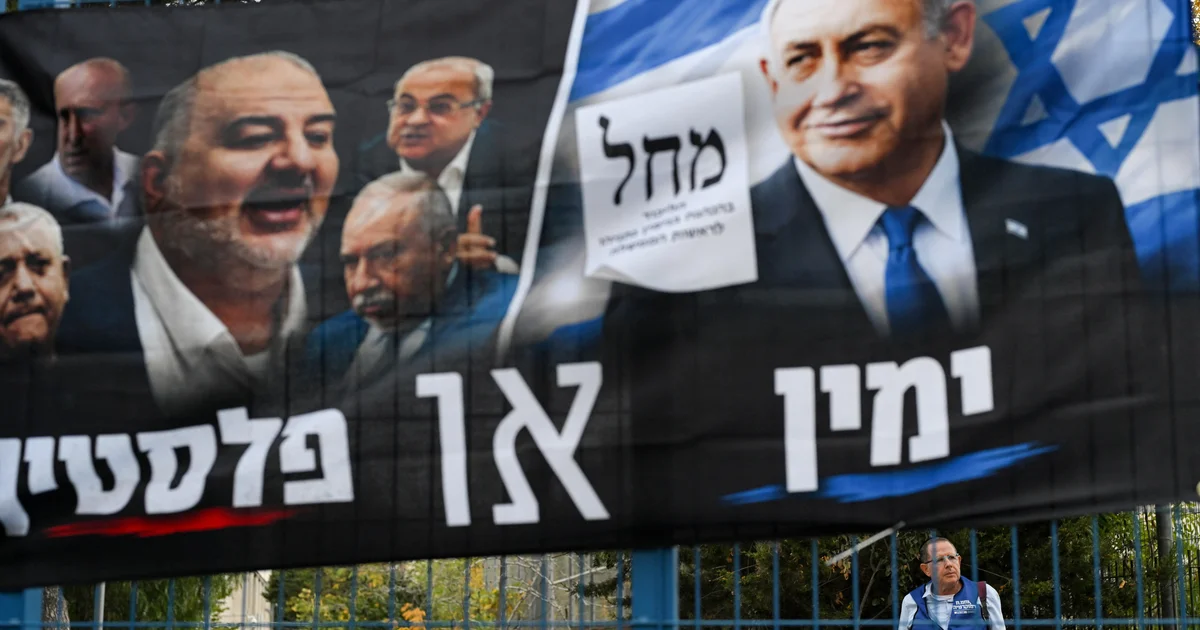

The recent elections in Israel produced no definitive victor as the preliminary vote counting remains ongoing. Prime Minister Benjamin Netanyahu‘s coalition and the opposition bloc, headed by Gadi Eisenkot, were unable to secure the necessary majority in the Knesset, the Israeli parliament. With a dynamic political landscape marked by high voter turnout, especially from Arab citizens, the election signals a critical juncture in Israeli politics amidst ongoing conflicts that have deeply impacted public sentiment.
| Article Subheadings |
|---|
| 1) Analysis of the Election Results |
| 2) The Role of Arab Voters |
| 3) Netanyahu’s Political Strategy |
| 4) Opposition Dynamics and Future Coalition Options |
| 5) Potential Outcomes of the Election Stalemate |
Analysis of the Election Results
As of Wednesday morning, with around 60% of the ballots counted, it was reported that Netanyahu‘s Likud party garnered approximately 21.4% of the votes, while the opposition, led by Eisenkot‘s Yashar party, stood at 16.2%. These figures illustrated a competitive race but reflected a lack of clarity regarding the formation of a governing coalition. The Knesset operates with a total of 120 seats, meaning a simple majority of 61 seats is needed for a party or coalition to establish governance.
During this election period, no single party or bloc emerged with a clear-cut majority. The exit polls indicated a divided electorate, leading to heightened tensions as both sides scrambled to align with smaller parties to muster the necessary support. This analysis emphasizes the critical nature of coalition-building in a fragmented political environment, as parties may need to compromise on key issues to unify under a common agenda.
The Role of Arab Voters
This election marked a notable shift as Israel’s two main Arab parties won more seats than they ever have before in parliamentary history. Their increased parliamentary presence comes after substantial voter mobilization from the Arab community, amid dissatisfaction with Netanyahu’s right-wing governance. Arab citizens, constituting around 20% of Israel’s population, participated actively, expressing their desire for representation and inclusion in the political discourse.
Concerns over discrimination and marginalization have prompted a historic turnout, described by many Arab voters as a necessary pushback against a government they perceive as oppressive.
“We must no longer accept Netanyahu’s racist division between Jewish votes and Arab votes,”
stated Yair Golan, head of Israel’s main left-wing party, underlining the urgency for cross-party collaboration to advocate for change.
Netanyahu’s Political Strategy
In the wake of these electoral results, Netanyahu is poised to promote a coalition that primarily engages right-wing and nationalist parties, eschewing any partnership with Arab voters. He firmly declared,
“We must not endanger Israel and establish a government that relies on anti-Zionist Arab parties.”
His approach indicates a continued commitment to his established political base, even amid pressure to consider alliances that include more diverse representation.
Netanyahu’s strategy hinges on building a narrative surrounding national security, particularly amidst ongoing tensions with neighboring countries, including Gaza and Lebanon. He urges that his government needs stable leadership to navigate complex conflicts that threaten Israeli safety. This rationale is significant as it is part of his larger campaign platform, which seeks to frame his leadership as essential for continued defense against perceived threats.
Opposition Dynamics and Future Coalition Options
Amidst an unpredictable electoral landscape, the opposition has several strategic paths regarding coalition formation. Should they succeed in overcoming their pre-election pledges against partnering with Arab parties, there is potential for a reformative government that could shift the political framework in Israel. The coalition led by Eisenkot, embodying diverse parties, aims to unify against Netanyahu and address issues that resonate with voters disillusioned by years of division.
Another avenue includes forming a minority government if the opposition can establish a plurality without necessarily achieving a majority. The Arab parties could bolster this effort by either supporting the formation or abstaining from voting against the coalition’s establishment, thereby creating a viable alternative to Netanyahu’s leadership.
Potential Outcomes of the Election Stalemate
If no alliance is formed and the Knesset remains deadlocked, Israel may plunge into another round of elections—a scenario that has transpired multiple times in recent years. Voter fatigue has grown following five elections held between 2019 and 2022, illustrating the compounded frustration with political stagnation. This reality underscores the importance of electoral engagement and reflective policy-making that meets the demands of the electorate.
As Israeli parties navigate negotiations, the implications of this electoral cycle could result in either prolonged uncertainty or potentially a dramatic shift toward a more inclusive governing body that reflects the nation’s diverse populace. The shifting allegiances and potential for new coalitions could fundamentally alter the political landscape that has predominated in Israel.
| No. | Key Points |
|---|---|
| 1 | The election results indicate a divided parliament with no dominant party emerging to form a majority coalition. |
| 2 | Record participation from Arab voters reflects increased demand for representation amid discontent with current governance. |
| 3 | Netanyahu plans to establish a right-wing coalition, emphasizing national security as a central theme of his campaign. |
| 4 | The opposition, led by Eisenkot, may need to break pledges and consider partnerships that include Arab parties to govern effectively. |
| 5 | Inability to form a coalition could lead to a repeat of previous electoral cycles, extending political instability in Israel. |
Summary
The recent elections in Israel illustrate an increasingly complex political environment in which neither leading faction has been able to secure a majority, underscoring deep divisions within the electorate. With a significant turnout from minority groups and the prospects for new coalitions on the horizon, the unfolding dynamics may lead to transformative or, conversely, destabilizing outcomes for the nation. As the country grapples with both internal challenges and external threats, the political strategies adopted in the coming days will be pivotal in shaping Israel’s future governance.
Frequently Asked Questions
Question: Who are the primary political figures in this election?
The main figures include Prime Minister Benjamin Netanyahu, who leads the Likud party, and Gadi Eisenkot, at the helm of the opposition Yashar party.
Question: Why was voter turnout significant among Arab citizens?
Voter turnout among Arab citizens was notably high due to growing frustration with their political marginalization and a historic effort to gain representation in the Knesset.
Question: What challenges may arise from coalition negotiations?
Coalition negotiations may face challenges, including party disagreements, the need to compromise on key issues, and the potential for certain parties to withdraw support, leading to strategic political maneuvering.
