

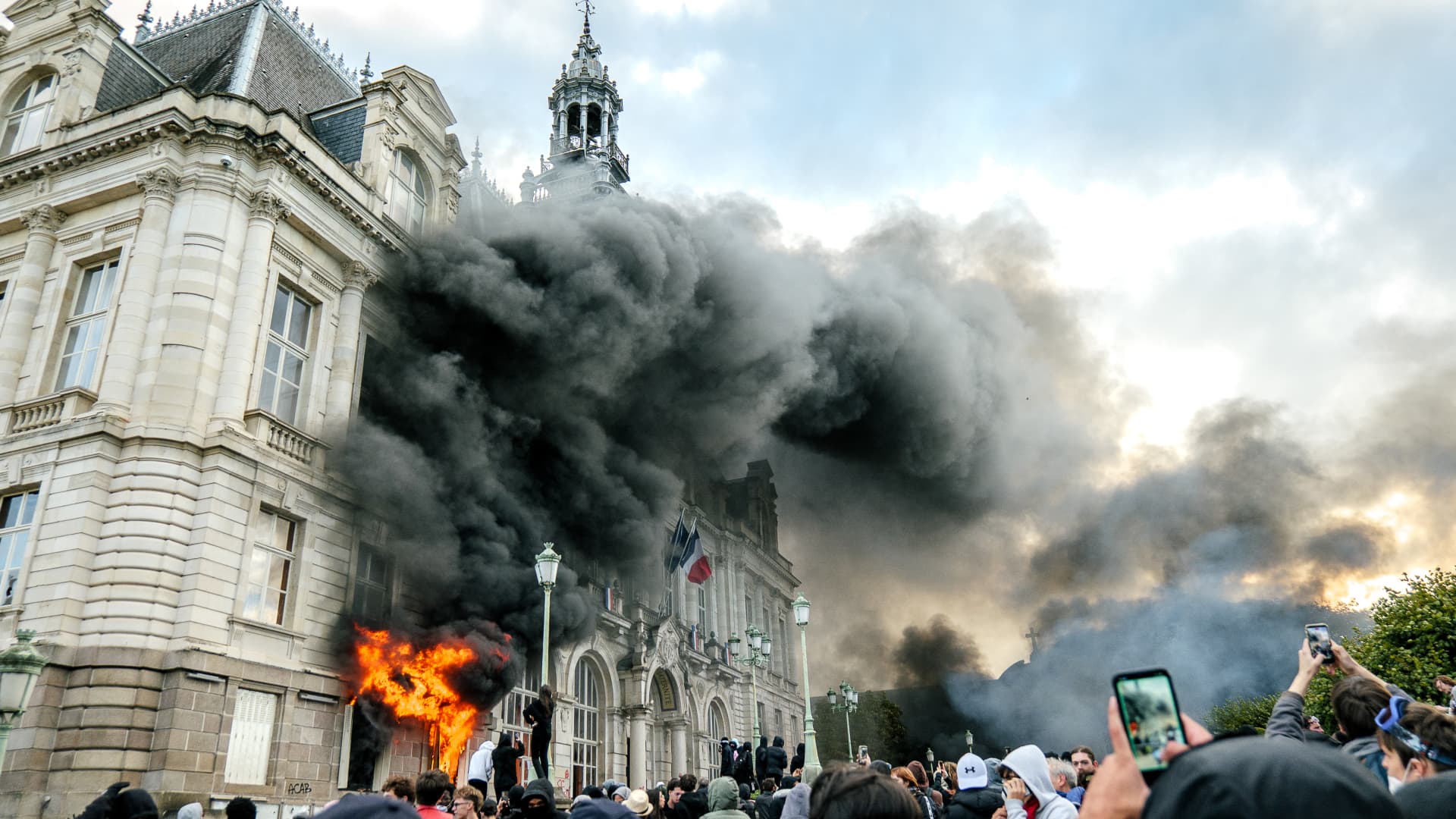

France’s Senate has taken a decisive step in addressing public unrest by passing a controversial bill known as the “Rioters Pay” legislation. This bill would hold demonstrators financially accountable for damages incurred during riots, seeking to instill a sense of responsibility among those participating in protests that escalate into violence. As opposition to the bill mounts from human rights groups and concerns arise over its implications for civil liberties, the government is balancing financial accountability with the right to protest amidst ongoing nationwide demonstrations.
| Article Subheadings |
|---|
| 1) Overview of the “Rioters Pay” Bill |
| 2) Background on Recent Protests |
| 3) Controversy and Criticism of the Bill |
| 4) Economic Impact and Government Responses |
| 5) Future Implications of the Legislation |
Overview of the “Rioters Pay” Bill
The “Rioters Pay” bill, recently passed by France’s Senate with a vote of 229 in favor and 105 opposed, proposes that individuals participating in violent protests may be held financially responsible for damages. This controversial initiative allows for penalties of up to 10,000 euros (approximately $11,140) aimed at compensating for damages caused by riots. Furthermore, the bill enables authorities to seize welfare payments to cover these costs. This legislation is part of France’s broader strategy to mitigate the financial burden of civil unrest on the state and taxpayers.
The government asserts that enabling this legislation will deter violent behavior during protests and promote accountability among demonstrators. The bill was initially introduced on September 16, 2023, and now awaits approval from the National Assembly, France’s lower house of parliament, where it must receive backing to become law. Critics argue the bill undermines the right to protest, suggesting that it may discourage lawful assembly and expression of dissent.
Background on Recent Protests
France has been facing widespread demonstrations that have evolved from student-led movements into broader public unrest. These protests originated in response to issues such as high living costs and demands for increased investment in education. The situational context escalated dramatically as demonstrations turned violent, leading to serious confrontations with police, looting, and substantial property damage.
The recent wave of unrest reached its peak earlier this month. In an interview, Roland Lescure, France’s Economy Minister, revealed that the violence has resulted in damages worth “tens or perhaps hundreds of millions” of euros, highlighting the severe economic implications of the unrest. The upcoming weekend is expected to witness additional demonstrations, raising concerns about further escalations of violence.
Controversy and Criticism of the Bill
The potential ramifications of the “Rioters Pay” bill have sparked significant controversy, particularly among human rights organizations. Critics, including Nathalie Godard, director of the action department at Amnesty International France, argue the legislation threatens to chill civil liberties. “Holding protesters responsible – and making them pay – for acts committed by others creates a risk of arbitrary punishment,” stated Godard, emphasizing that such measures could undermine France’s commitments to international human rights standards.
The legality of holding individuals accountable for actions they did not commit is another crucial issue. The bill stipulates that individuals involved in a group known for violence or remaining in a violent crowd despite police warnings could face penalties, raising ethical questions about collective punishment. Interior Minister Laurent Nunez defended the legislation in the Senate, arguing that protecting law-abiding citizens from financial fallout due to violent protests is essential to restoring societal order. The clash between defending public safety and upholding democratic freedoms is at the core of the ongoing debate.
Economic Impact and Government Responses
The government is currently grappling with fiscal challenges exacerbated by the protests and violence. France’s financial system is under strain, as it watches its bond market reflect growing apprehensions about fiscal credibility. Recent data indicates that government borrowing costs have escalated to a 24-year high, putting pressure on policymakers to rethink fiscal strategies.
In addition to addressing unrest, the government is negotiating a fiscal budget for 2027, with ambitions of implementing significant spending cuts amounting to 54 billion euros (approximately $61.8 billion). This effort aligns with European Union directives mandating a reduction in national deficits. By 2029, France is expected to align its national deficit closer to 3% of GDP, an ambitious target considering the current 5.1% in 2025.
The government’s challenges have not only prompted immediate financial accountability measures but also reflect deeper structural issues facing the French economy, which necessitates a careful balancing act between fiscal responsibility and social stability.
Future Implications of the Legislation
As discussions about the “Rioters Pay” bill evolve, its potential implications are significant not just for public protests but also for broader civil liberties in France. If passed, this bill may set a precedent for how democratic states handle civil disobedience and protests. Observers worry that this legislation could lead to a slippery slope, whereby increasingly stringent measures are enacted in reaction to dissent.
The approval of this bill may impact the public’s willingness to engage in protests, compounding existing tensions in a politically polarized environment. Political analysts suggest that effective governmental engagement with protestor demands is vital to averting further unrest. The challenge ahead remains whether lawmakers can find common ground that addresses the financial costs of civil unrest while preserving the fundamental rights to free expression and assembly.
| No. | Key Points |
|---|---|
| 1 | The “Rioters Pay” bill holds demonstrators financially accountable for damages during protests. |
| 2 | The legislation passed the Senate with significant support despite opposition from rights organizations. |
| 3 | Recent protests have escalated into violence, leading to substantial economic damage. |
| 4 | Critics argue the bill could undermine civil liberties and encourage unjust punishment. |
| 5 | The economic ramifications of unrest put pressure on the government to balance fiscal cuts with social stability. |
Summary
The passage of the “Rioters Pay” bill represents a critical juncture in France’s approach to civil unrest, balancing the need for accountability with respect for civil liberties. As France navigates the complex landscape of persistent protests and fiscal challenges, the outcome of this legislation will likely shape the future of public demonstrations and the governmental response to dissent. The ongoing discussions reflect broader societal issues that require thoughtful engagement to ensure the preservation of democratic freedoms while addressing legitimate concerns about public safety and economic stability.
Frequently Asked Questions
Question: What is the “Rioters Pay” bill?
The “Rioters Pay” bill is a proposed legislation in France that holds protesters financially accountable for damages incurred during protests that turn violent, allowing penalties of up to 10,000 euros.
Question: What are the main concerns surrounding the bill?
Critics, including rights groups, express concerns that the bill may deter lawful protests and infringe on civil liberties by holding individuals accountable for actions they did not personally commit.
Question: What is the economic context of these protests?
The protests arise amidst significant economic challenges, including high living costs and government attempts to implement spending cuts, which complicate the financial landscape in France and have led to rising borrowing costs for the government.
