

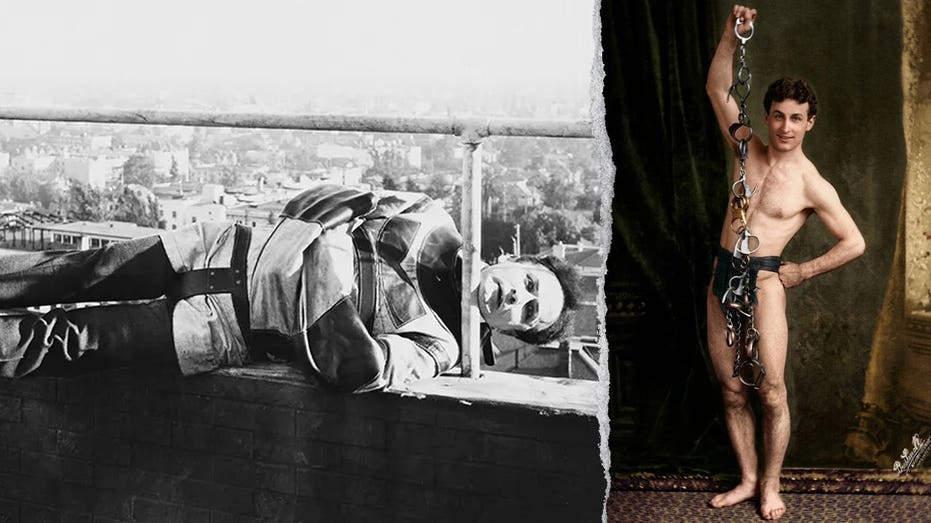

Harry Houdini died on October 31, 1926, at age 52, but questions surrounding his final days have endured for a century. His official cause of death was peritonitis, an infection caused by a ruptured appendix. Theories involving a series of punches, intestinal complications and his campaign against fraudulent mediums continue to fuel debate. Houdini’s enduring reputation as an escape artist has kept both his life and death in the public imagination.
| 1) | Houdini’s official cause of death |
| 2) | The Montreal punches and delayed treatment |
| 3) | Insurance and unanswered medical theories |
| 4) | Houdini’s battle with spiritualists |
| 5) | Why Houdini’s legacy endures |
Houdini’s official cause of death
Harry Houdini, born Erik Weisz in Hungary, immigrated to the United States with his family when he was four. He became an internationally known magician, escape artist and vaudeville performer before dying in Detroit on October 31, 1926. Medical records identified peritonitis following a ruptured appendix as the cause. At the time, a ruptured appendix and the resulting infection were frequently fatal, particularly when treatment was delayed.
The Montreal punches and delayed treatment
The most discussed event occurred on October 22, nine days before Houdini’s death, in a Montreal theater dressing room. University student J. Gordon Whitehead asked whether Houdini could withstand blows to the stomach. Houdini agreed while reclining on a couch, but accounts say he was not given enough time to prepare before Whitehead began punching him. The blows continued until another person intervened.
Historian John Cox has said the punches may have caused Houdini to overlook symptoms that were already developing. The available historical record does not prove that the blows directly caused the appendicitis. A more cautious explanation is that the pain distracted Houdini or encouraged him to postpone medical attention, allowing the appendix to rupture and the infection to spread.
Insurance and unanswered medical theories
The punching incident also affected Houdini’s estate. He reportedly carried a $25,000 life insurance policy with a double-indemnity provision for accidental death. Because the punches were viewed by some as an accident linked to his death, his family received an additional $25,000. The combined amount was described at the time as a substantial sum, roughly equivalent to nearly $500,000 in current value.
That financial outcome helped preserve suspicion around the case, although it does not establish a different medical cause. Alternative theories have included an intestinal blockage and deliberate poisoning by people angered by Houdini’s efforts to expose fraudulent spiritualists. Historians have not established evidence confirming either theory.
Houdini’s battle with spiritualists
Harry Houdini regarded claims of communication with the dead as harmful deceptions aimed at grieving families. He publicly challenged mediums and faced defamation lawsuits as a result. His opposition created enemies and later encouraged speculation that someone involved in the spiritualist movement might have wanted him dead, though no such murder theory has been proven.
Houdini and his wife, Bess Houdini, also agreed that the first to die would attempt to contact the survivor. After his death, Bess held Halloween seances for 10 years. When no convincing message emerged, she stopped, concluding that communication with the dead was not possible.
Why Houdini’s legacy endures
Houdini remains famous not only because of the mystery surrounding his death, but also because of the scale of his career. His escapes made him a cultural icon, and his name became associated with finding a way out of apparently impossible situations. His performances combined physical endurance, planning and showmanship in an era when mass entertainment was expanding rapidly.
Museum executive Roger Dreyer has described Houdini as a figure who represented ingenuity, determination and courage. One of Houdini’s best-known mottos was, “My brain is the key that sets me free.” A century after his death, historians are still examining how he performed his escapes, while audiences continue to debate what happened in his final days.
| Number | Key Point |
|---|---|
| 1 | Houdini’s official cause of death was peritonitis after a ruptured appendix. |
| 2 | Punches delivered nine days earlier may have delayed his decision to seek treatment, but a direct cause was never proven. |
| 3 | His insurance policy paid double for an accidental death, increasing speculation about the incident. |
| 4 | His campaign against fraudulent mediums inspired additional, unproven theories. |
Summary
The evidence supports the official conclusion that Houdini died from peritonitis caused by a ruptured appendix. The Montreal punches may have contributed indirectly by masking or confusing his symptoms, but historians have not demonstrated that they directly caused the illness. The unresolved questions have enhanced, rather than defined, Houdini’s legacy as a performer whose influence continues a century after his death.
Frequently Asked Questions
What was Houdini’s official cause of death?
His official cause of death was peritonitis, an infection that followed the rupture of his appendix.
Did the punches directly kill Houdini?
Historians have not proved that the punches directly caused his appendicitis. They may have contributed to delayed treatment by distracting him from his symptoms.
Why are theories about Houdini’s death still discussed?
The timing of the punches, his public disputes with spiritualists and the insurance payout created lasting speculation despite the lack of evidence for an alternative cause.
