

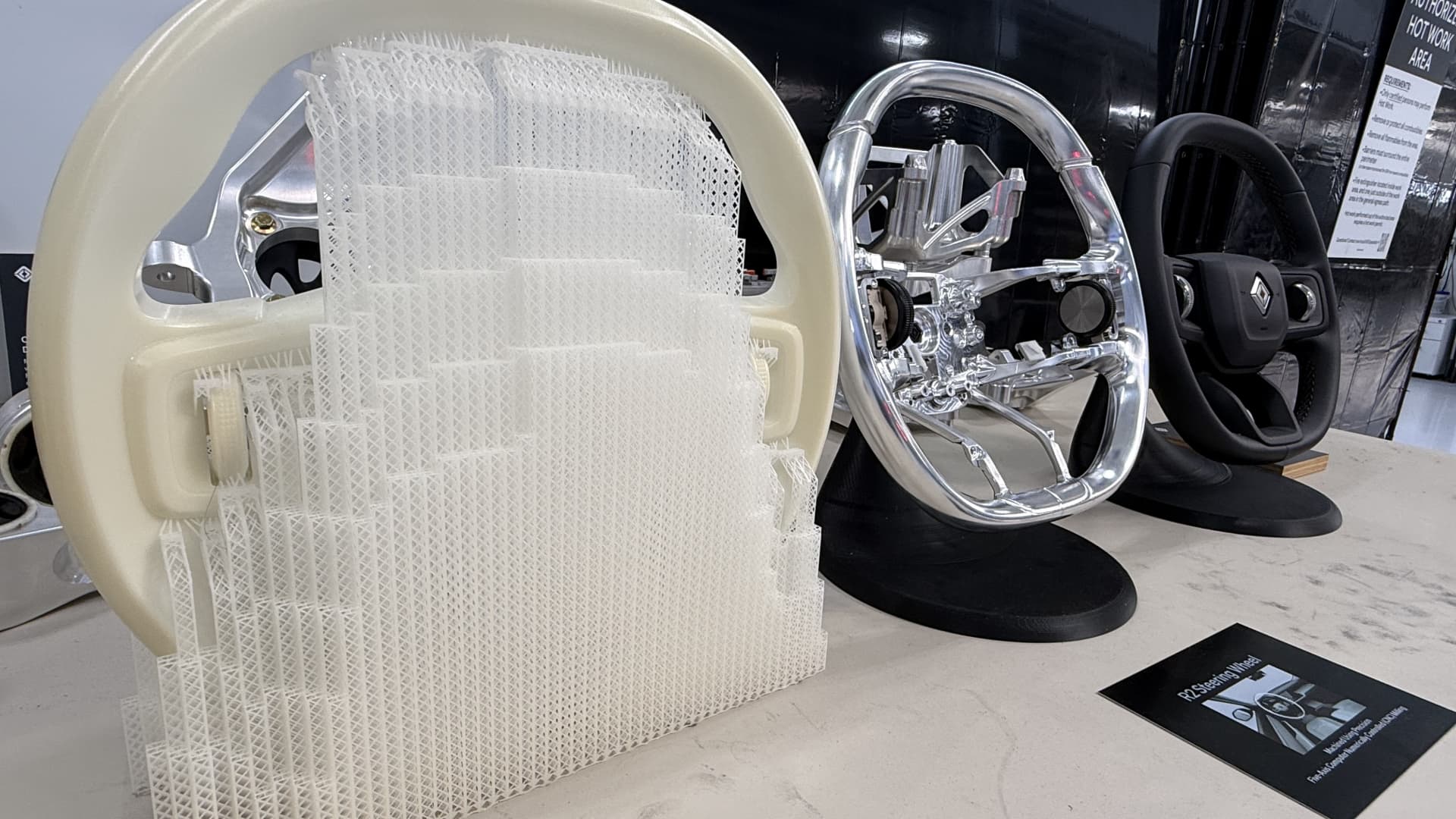

Automakers are increasingly adopting 3D printing technology to enhance their manufacturing processes, as major players like Ford Motor and Rivian Automotive emphasize efficiency and cost-effectiveness. This innovative manufacturing method allows companies to produce everything from vehicle parts and accessories to tools with greater speed and precision. As competition intensifies within the automotive sector, the implementation of additive manufacturing is rapidly gaining momentum, enabling firms to streamline operations and lower production times significantly.
| Article Subheadings |
|---|
| 1) The benefits of 3D printing |
| 2) GM and Ford’s 3D printing initiatives |
| 3) Rivian’s integration of additive manufacturing |
| 4) Cost implications and savings |
| 5) Future of 3D printing in the automotive industry |
The benefits of 3D printing
3D printing, also referred to as additive manufacturing, creates three-dimensional objects by depositing materials layer by layer based on digital designs. This method can utilize various materials, including plastics, ceramics, metals, and composites, allowing for significant versatility in the types of products manufactured. One critical advantage of this technology is that it can rapidly produce prototypes and functional components, which eliminates many traditional manufacturing bottlenecks.
By using advanced 3D printing techniques, companies can drastically reduce the time needed for part production—from weeks to just hours. Additionally, 3D printing supports customization, enabling manufacturers to create unique components tailored to specific vehicle models or customer preferences. The potential for reducing waste and optimizing material usage is another compelling reason for manufacturers to adopt this technology, as it contributes to more sustainable practices.
GM and Ford’s 3D printing initiatives
Automakers such as Ford and General Motors are furthering their efforts in the 3D printing arena by integrating this technology into their existing processes. Ford, in particular, has established additive manufacturing departments at many of its plants to produce and distribute essential parts swiftly. This enables the company to maintain continuous production while also reducing dependency on external suppliers.
Ford’s innovative approach includes a vending machine system that dispenses 3D-printed parts directly to assembly teams, allowing engineers and workers quick access to necessary components. For instance, Ford has successfully printed parts for enhancing their popular F-150 pickup assembly in a highly efficient manner. General Motors follows a similar path, leveraging 3D printing for low-volume products, research and development initiatives, and even bespoke components in higher-end models like the Cadillac Celestiq.
Rivian’s integration of additive manufacturing
Rivian is taking strides in developing additive manufacturing capabilities, with the goal of democratizing 3D printing across their organization. According to Jared Beck, the head of Rivian’s additive manufacturing, the company has significantly invested in 3D printing technology, spending over $5 million on machines and committing to annual material expenses exceeding $1.7 million. This investment enables Rivian to produce a wide array of components, including functional parts for electric motors and even fill-in trim pieces that enhance product aesthetics.
One notable feature of Rivian’s approach is the construction of dedicated spaces within their manufacturing facilities, where employees can print parts on demand. This method not only accelerates part availability but also empowers engineers with tools to innovate and iterate designs rapidly. By ensuring that 3D printing resources are readily available, Rivian aims to foster a culture of creativity and efficiency.
Cost implications and savings
Although initial investments in 3D printing technology can be substantial, Rivian’s Beck emphasizes that the savings achieved through reduced supplier costs and production time often compensate for these expenses within a year. The benefits extend beyond mere cost savings; the technology has proven impactful in optimizing logistics in the supply chain. The traditional timeline for tooling can take weeks, but 3D printing reduces this time to days or hours.
Through 3D printing, companies like Ford and GM are also capitalizing on opportunities to create tailored tools and parts that may not be practical through conventional manufacturing methods. The ability to quickly adjust design and production reduces the risk of inventory overstock and the costs associated with excess stock management.
Future of 3D printing in the automotive industry
As 3D printing technology evolves, its role in the automotive sector is expected to expand further, pushing the boundaries of manufacturing capabilities. Industry experts assert that improvements in material properties and the accessibility of printing technology will pave the way for wider adoption. Fadi Abro, a senior director at Stratasys, points out that the future could see 3D printing becoming a standard part of automotive manufacturing processes, benefitting both established and emerging companies alike.
The rise of electric vehicles is also propelling automotive manufacturers to explore innovative solutions that reduce costs and enhance production capabilities. As competition heightens, companies investing in 3D printing stand to gain a significant edge by responding swiftly to market changes and customer demands. Innovations in this space are likely to influence the industry landscape for years to come, as automakers strive to remain competitive in a rapidly evolving market.
| No. | Key Points |
|---|---|
| 1 | 3D printing technology is gaining traction among automakers for its cost-reduction and efficiency benefits. |
| 2 | Rivian is making significant investments in additive manufacturing to streamline production processes. |
| 3 | Ford employs a unique vending machine system to distribute 3D-printed components directly to teams on the assembly line. |
| 4 | Both Ford and GM have utilized 3D printing for rapid prototyping and part production, enhancing internal processes. |
| 5 | The future of 3D printing in the automotive field looks promising, with trends leaning towards wider adoption and advanced technology integration. |
Summary
The shift towards 3D printing in the automotive industry reflects a broader trend of technological integration aimed at improving efficiency and reducing costs. Companies like Rivian, Ford, and GM are leading the charge by investing in innovative manufacturing methods that not only streamline operations but also enhance the customization of vehicle components. As the automotive landscape continues to evolve, the adoption of additive manufacturing is expected to play a critical role in shaping industry practices and competitive strategies moving forward.
Frequently Asked Questions
Question: How does 3D printing work in automotive manufacturing?
3D printing works by layering materials based on digital designs to create three-dimensional objects, allowing for rapid prototyping and manufacturing of vehicle parts and tools.
Question: What are the advantages of using 3D printing in automotive production?
The advantages include reduced production time, lower costs for tooling, and the ability to quickly customize parts according to specific design needs.
Question: Are there any risks associated with adopting 3D printing?
While the technology offers many benefits, potential risks include the initial investment costs and the need for reliable material supply chains to ensure the quality and consistency of 3D-printed parts.
