

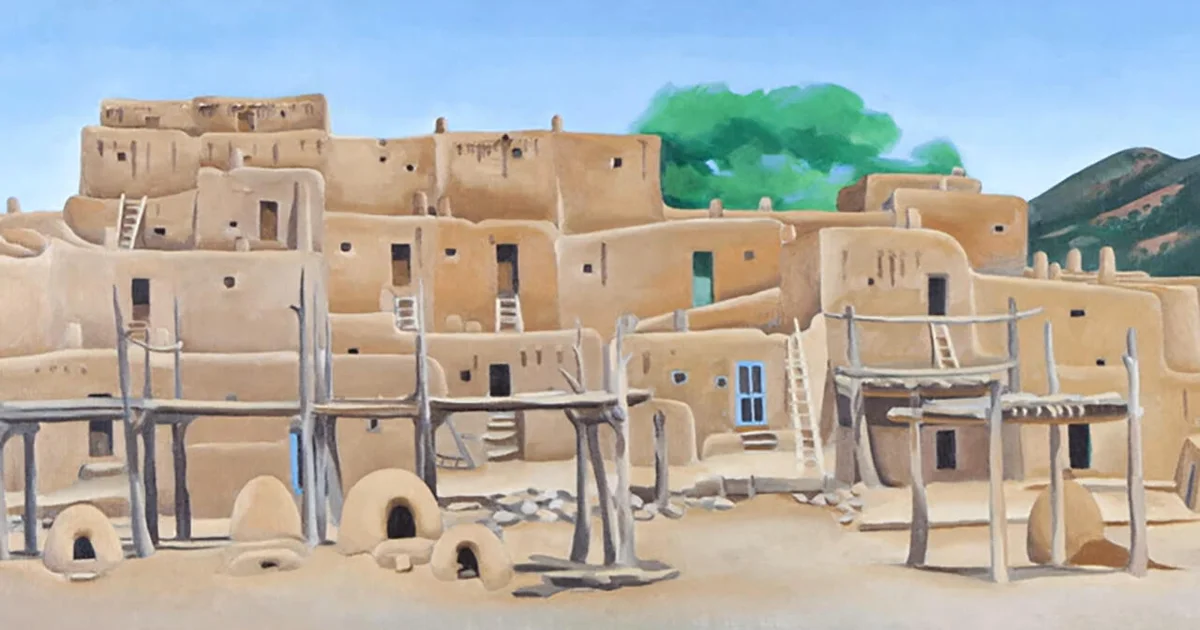

A new exhibit titled “Georgia O’Keeffe: Architecture” is currently on display at the Detroit Institute of Arts, offering a rare glimpse into the less-explored architectural elements of the renowned American artist’s oeuvre. The exhibition seeks to illuminate O’Keeffe’s connection with architecture through her unique artistic lens, showcasing how buildings and forms of infrastructure profoundly influenced her creative process. Curated by Ben Colman, this exhibition contextualizes O’Keeffe’s works within her life experiences, specifically highlighting the environments and structures that shaped her perspective as an artist.
| Article Subheadings |
|---|
| 1) A Fresh Perspective on O’Keeffe’s Art |
| 2) The Influences of Place and Space |
| 3) Architectural Themes in O’Keeffe’s Work |
| 4) Personal and Artistic Growth |
| 5) Legacy of Georgia O’Keeffe |
A Fresh Perspective on O’Keeffe’s Art
The “Georgia O’Keeffe: Architecture” exhibition diverges from traditional portrayals of the artist, often recognized primarily for her floral and landscape paintings. Ben Colman, the curator, notes that many art enthusiasts remain unaware that only about 10% of O’Keeffe’s artwork features flowers. The exhibit challenges the notion that O’Keeffe’s art resides solely in the realms of nature and traditional subjects. By presenting her architectural works, the exhibition frames her artistic journey through an autobiographical lens that invites deeper contemplation of her life experiences and influences.
This recontextualization of O’Keeffe’s works urges the audience to reconsider their understanding of her artistry. “We are looking at the places where she lived and worked, the places that were really formative to her as an individual and as a painter,” Colman elaborates. This fresh perspective offers a comprehensive view of O’Keeffe and emphasizes the complexity of her inspirations, examining how her lived experiences intertwined with her artistic output.
The Influences of Place and Space
O’Keeffe’s biography plays a vital role in understanding her artwork. Born in 1887 on a Wisconsin dairy farm, her rural upbringing significantly influenced her creative expressions. The landscapes she encountered during her formative years informed many of her paintings, including the well-known “My Shanty, Lake George”. Colman argues this piece embodies O’Keeffe’s effort to challenge societal perceptions of feminine subjects in art. “She was very conscious, and maybe self-conscious, about selecting subjects that would not be perceived as typically feminine in their composition,” Colman states.
As O’Keeffe transitioned to Manhattan, the city’s changing skyline captivated her. Just as skyscrapers began to redefine urban architecture in the 1920s, O’Keeffe began to incorporate these modern structures into her work. Curator Colman points out that she keenly observed the interplay between buildings and natural elements, noting her focus on “sky shapes” and the “negative space of sky, moon, and clouds” juxtaposed with architectural forms. This awareness of the visual dialogues between urbanization and nature marks a crucial thematic exploration in O’Keeffe’s artworks.
Architectural Themes in O’Keeffe’s Work
Throughout her prolific career, O’Keeffe completed around 140 architectural paintings, a testament to the significance of buildings within her artistic narrative. Each piece encapsulates not just the physical structure but also O’Keeffe’s inquiry into the qualities of light, atmosphere, and texture inherent within these spaces. Her work embodies a unique blend of abstraction and representation that invites viewers to engage with the essence of place.
For O’Keeffe, architecture was not merely a backdrop; it served as a critical element for introspection on her existence. Colman emphasizes that these works reveal O’Keeffe’s engagement with her environment: “These are pictures where she’s asking questions about the nature of the places where she lived.” In this way, O’Keeffe also reflects broader themes of identity and belonging, exploring how her surroundings influenced her artistic expression.
Personal and Artistic Growth
O’Keeffe’s relocation to New Mexico marked another turning point in her artistic evolution. Surrounded by the adobe structures and stunning desert landscapes, she found an environment that profoundly nourished her creativity. This vibrant new life phase allowed O’Keeffe to grow as an artist while reflecting her individuality—a theme that resonates throughout her architectural paintings.
The desert’s harsh beauty and striking colors stirred not only a sense of wonder in O’Keeffe but also a deeper understanding of space. The region’s unique light quality altered her artistic perception and style, fostering the emergence of the now iconic Southwestern motifs within her work. The exhibition at the Detroit Institute of Arts acts as an homage to this phase, urging viewers to appreciate the many layers of O’Keeffe’s artistic identity woven into the fabric of her architectural paintings.
Legacy of Georgia O’Keeffe
Georgia O’Keeffe passed away in 1986 at the age of 98, leaving behind an extensive and impactful body of work that has cemented her status as an American art icon. Her contributions transcend floral paintings, embracing diverse themes that include architectural exploration and identity through place. The current exhibition not only revives awareness of her architectural endeavors but also reminds us of her profound influence on American art history.
As curator Colman aptly sums it up, “O’Keeffe’s works present a unique understanding of her living places—inflected with her distinct artistic voice.” The challenge remains to continually engage with her life and works in a way that honors the entirety of her creative journey. The exhibit serves as a stellar reminder of her multifaceted artistic persona and the architectural nuances that played a significant role throughout her illustrious career.
| No. | Key Points |
|---|---|
| 1 | The exhibit challenges preconceived notions of Georgia O’Keeffe’s work, emphasizing her architectural contributions. |
| 2 | O’Keeffe’s childhood in Wisconsin profoundly influenced her artistic themes and subject matter. |
| 3 | Throughout her life, O’Keeffe engaged in a dialogue between nature and urban architecture. |
| 4 | Her later years in New Mexico marked a turning point that brought new themes and motifs into her work. |
| 5 | O’Keeffe’s art continues to speak to themes of identity and belonging, redefining her legacy as a pioneering artist. |
Summary
The latest exhibition at the Detroit Institute of Arts redefines how audiences perceive Georgia O’Keeffe, particularly highlighting her architectural works and the significant influences of her lived experiences. By exploring the connection between place and art, the exhibit serves as a testament to O’Keeffe’s legacy, encouraging a holistic appreciation of an artist whose contributions extend well beyond conventional representations of flowers and landscapes. As visitors engage with the intimate details of her architectural paintings, they are reminded of the profound interplay between her life, her environment, and her artistic vision.
Frequently Asked Questions
Question: What is the focus of the “Georgia O’Keeffe: Architecture” exhibition?
The exhibition emphasizes O’Keeffe’s architectural works, exploring how her lived environments significantly influenced her artistic expression beyond her well-known floral and landscape paintings.
Question: How did Georgia O’Keeffe’s upbringing influence her art?
O’Keeffe’s childhood on a Wisconsin dairy farm provided crucial inspiration for her themes and subject matter, shaping her unique artistic identity and leading her to explore the natural elements around her.
Question: What themes are prevalent in O’Keeffe’s architectural paintings?
O’Keeffe’s architectural paintings often examine the qualities of light, atmosphere, and texture, allowing her to engage thoughtfully with the nature of the places she lived and how they shaped her identity as an artist.
