

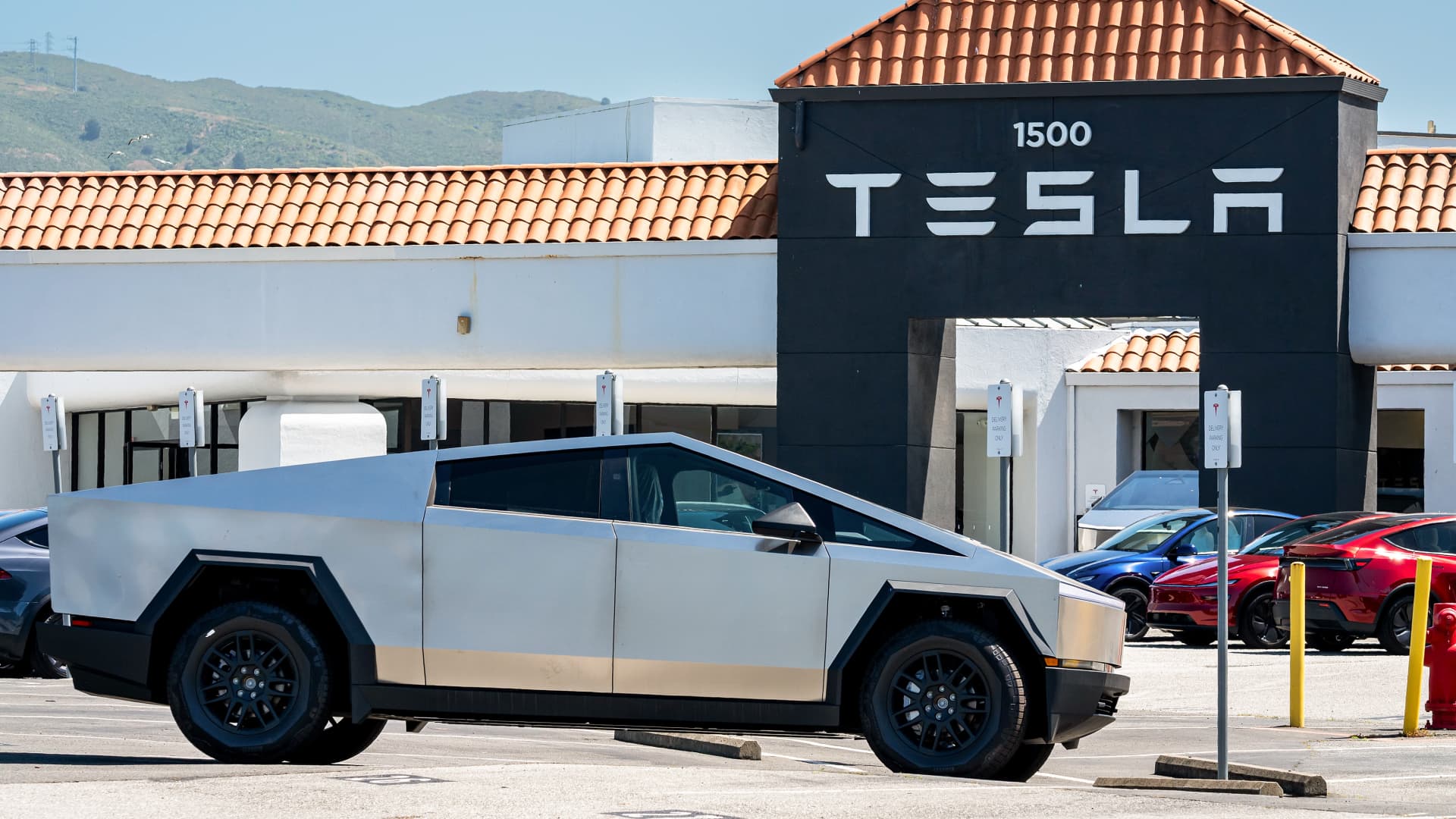

Tesla’s Cybertruck, once heralded as a revolutionary pickup, is set to cease production at the company’s Texas gigafactory in mid-2026, as announced by CEO Elon Musk. This shift is driven by the need to allocate resources for the upcoming Cybercab robotaxi, a product Musk considers pivotal for Tesla’s future. While the Cybertruck has had a mixed reception in the marketplace, with sales falling short of forecasts, it has nonetheless fostered a dedicated following, becoming a controversial symbol of modern automotive design.
| Article Subheadings |
|---|
| 1) Production Changes at Tesla |
| 2) Cybertruck’s Market Performance |
| 3) The Controversial Design |
| 4) Future of Tesla’s Electric Vehicles |
| 5) Regulatory Challenges and Recalls |
Production Changes at Tesla
Tesla plans to wind down the production of the Cybertruck at its Texas gigafactory around mid-2026. This decision aligns with CEO Elon Musk‘s vision to prioritize the production of the Cybercab robotaxi, which Musk believes is crucial for the automaker’s future growth. Musk made this announcement on social media, highlighting the need to free up resources from the existing manufacturing lines at the Texas facility, which also produces other Tesla models, including the Tesla Model Y. The cessation of Cybertruck production marks a significant shift in strategy, as Tesla aims to innovate with new offerings while addressing the evolving market for electric vehicles.
Cybertruck’s Market Performance
Since its initial deliveries in late 2023, the Cybertruck has faced challenges in securing mass-market appeal. Despite Elon Musk‘s initial projections hinting at annual sales reaching 250,000 units, actual sales figures have not reflected this optimism. According to estimates from Cox Automotive, only 20,237 Cybertrucks were sold in 2025—a stark decline of nearly 48% from the previous year. This performance indicates not only a failure to achieve targeted sales but also reveals broader consumer hesitance and market dynamics affecting electric trucks. Musk’s optimism about the truck’s market potential highlights a gap between the ambitious vision and the ground realities in automotive retail.
The Controversial Design
The Cybertruck’s unconventional design has evoked a polarized response from the public. Marketed as a revolutionary take on the traditional pickup truck, its distinctive angular aesthetic won over a niche segment of consumers but alienated many others. Ownership of a Cybertruck has even led to reports of negative social reactions, with some owners claiming they faced ridicule or aggressive behavior from fellow motorists. Such polarizing traits, compounded by the vehicle’s association with Elon Musk and his public persona, have inadvertently transformed the Cybertruck into a symbol of cultural and political identity in the U.S. market.
Future of Tesla’s Electric Vehicles
Despite the withdrawal of the Cybertruck from production, Tesla’s plans remain ambitious with the introduction of its Cybercab. This electric robotaxi is poised to redefine urban transport, signaling Tesla’s intent to diversify its product line and address growing demands for ride-sharing solutions. Elon Musk has stressed the Cybercab’s importance not just for Tesla, but for the future of sustainable transport. As the company transitions from one flagship model to another, the focus remains on innovation and meeting the evolving needs of an environmentally conscious market.
Regulatory Challenges and Recalls
Tesla’s Cybertruck has not only faced market resistance but has also encountered numerous regulatory challenges. The 2024 model was subject to 11 voluntary recalls due to significant safety concerns, ranging from acceleration pedal risks to software malfunctions. The National Highway Traffic Safety Administration (NHTSA) flagged these issues, emphasizing the stringent scrutiny electric vehicles face in safety evaluations. Such challenges compound the Cybertruck’s decline in sales, as consumer confidence has arguably been shaken by the combination of design controversy and operational flaws.
| No. | Key Points |
|---|---|
| 1 | Tesla will stop Cybertruck production around mid-2026 to focus on the Cybercab robotaxi. |
| 2 | Sales of the Cybertruck dramatically fell to 20,237 units in 2025, underperforming against expected targets. |
| 3 | The Cybertruck has sparked controversy due to its unconventional design and its cultural associations. |
| 4 | Tesla plans to innovate further with the upcoming Cybercab, aimed at addressing urban transport needs. |
| 5 | The Cybertruck has faced multiple recalls due to safety concerns, impacting consumer trust. |
Summary
The looming cessation of Cybertruck production marks a pivotal moment for Tesla as it shifts focus to its future projects, specifically the Cybercab robotaxi. Despite initial enthusiasm, the Cybertruck struggled to attain mass-market sales and has been embroiled in controversy, suggesting challenges that extend beyond mere design. As Tesla navigates these transitions, the company’s adaptations and innovations will significantly influence its trajectory within the increasingly competitive electric vehicle market.
Frequently Asked Questions
Question: Why is Tesla ending Cybertruck production?
Tesla is stopping production of the Cybertruck around mid-2026 to allocate resources for the Cybercab robotaxi, which is seen as essential for the company’s future growth.
Question: How many Cybertrucks were sold last year?
In 2025, Tesla sold approximately 20,237 Cybertrucks, marking a significant decline from the previous year’s sales of 38,965 units.
Question: What safety issues have been reported for the Cybertruck?
The Cybertruck faced 11 voluntary recalls for various safety concerns, including risks related to its acceleration pedal and software defects, which could lead to unintended driving power loss.
