

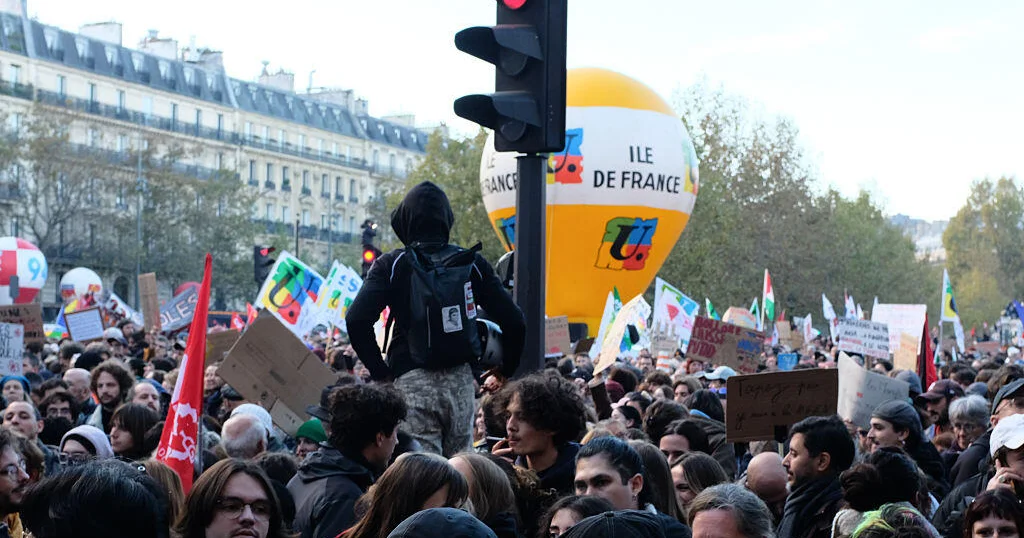

In a powerful display of discontent, tens of thousands of union workers, including government employees, teachers, and transport staff, took to the streets of France on Thursday. This demonstration was part of an ongoing series of economic protests aimed at addressing frustrations over low wages and the rising cost of living. While organizers claim that 1.6 million people participated in nearly 200 peaceful rallies nationwide, the French Interior Ministry reported a significantly lower figure of around 600,000 participants.
| Article Subheadings |
|---|
| 1) Overview of the Protests and Participants |
| 2) Voices of Discontent: Union Leaders and Protesters |
| 3) Impact of the Protests: From Eiffel Tower Closures to Violence |
| 4) Growth of the Movement: Origins and Public Support |
| 5) Future of Protests: Upcoming Events and Government Response |
Overview of the Protests and Participants
The protests that unfolded across France stemmed from mounting frustrations regarding economic hardships impacting the daily lives of citizens. These demonstrations, representing a coalition of various unions, highlighted the struggles of low-wage workers who are increasingly unable to afford basic necessities. The day of action saw crowds marching in major cities including Paris, Lyon, Marseille, and Toulouse, where the organizers claimed attendance numbers were significantly high, showcasing the scale of discontent among different workforce sectors.
During the demonstrations, workers carried banners demanding better wages and living conditions, chanting slogans that resonated with widespread grievances against rising inflation and stagnant salaries. The participation by nearly 200 different unions indicated a united front among workers, motivated by similar interests in improving their economic situations. This national mobilization underscored the growing urgency of the protesters’ demands, as many felt that their concerns were not being adequately addressed by the government.
Voices of Discontent: Union Leaders and Protesters
Among the leaders voicing the concerns of the workers was Sophie Binet, head of the General Confederation of Labour (GCL), who asserted that the current salaries are insufficient. She elucidated that many individuals are struggling to make ends meet, indicating this widespread problem as a principal impetus for the protest. In her comments, she directly called out President Emmanuel Macron, accusing him of neglecting the dire needs of working-class people while prioritizing the interests of the affluent and multinational corporations. Said
“He thinks he knows everything alone,”
she added, emphasizing a growing disconnect between the government and the populace.
Reflecting on the broader sentiment among protesters, Bally Bagayoko, the mayor of Saint-Denis, expressed disillusionment, suggesting that many attendees were fed up with systemic inequalities that seemed to benefit a small privileged class. Protesters articulated their desire for a government that would prioritize social welfare over military expenditures and police funding. As feelings of disenfranchisement escalate, these protests also remark on the need for comprehensive reforms to address the systemic issues facing France today.
Impact of the Protests: From Eiffel Tower Closures to Violence
As demonstrators marched through the streets, the protests significantly disrupted daily life in Paris, including a temporary shutdown of the Eiffel Tower, symbolizing the iconic city’s struggle under the weight of these economic issues. The demonstrations, however, did not remain entirely peaceful; in multiple locations, tensions escalated into violence, with reports of clashes between protesters and law enforcement. Police utilized tear gas in several areas to disperse crowds that had turned unruly.
Notably, disturbances were reported in cities like Lyon, where demonstrators set a car ablaze, and in Paris, where various objects were burned amid chaotic scenes. These violent occurrences heightened tensions, drawing criticism from both participants and observers who recognized the fine line between peaceful protest and civil unrest. The officials were compelled to respond to these incidents firmly, which led to numerous arrests and heightened police presence in anticipation of future unrest.
Growth of the Movement: Origins and Public Support
The origins of these protests can be traced back to late September when students and educational staff began voicing their grievances over poor school conditions, an inadequate number of teachers, and substandard infrastructure in educational facilities. What began as localized issues quickly gained a broader audience, with surveys indicating that nearly 60% of the general populace supports these protests. This substantial backing suggests a collective recognition of the failures within the economic framework that many believe disproportionately impacts the working class.
As the movement expanded, it attracted diverse participants, fostering solidarity among various societal segments. Early demonstrations sparked dialogues about necessary reforms, drawing attention to issues that extend beyond immediate economic concerns. Reports of violence may overshadow the core intentions of these protests, yet the movement has undeniably highlighted critical conversations about wealth distribution, social justice, and the need for change in government policies.
Future of Protests: Upcoming Events and Government Response
Looking ahead, the momentum behind the protests shows no signs of dwindling, with additional actions already planned for the upcoming Saturday. Prime Minister Sébastien Lecornu has called for a meeting with union representatives to address their concerns, yet skepticism among protesters prevails. Many remain unconvinced that the government is willing or able to meet their needs adequately.
With the potential for continued conflict lingering, observers speculate on how future demonstrations will unfold and what measures the government will implement in response to these demands. As civil unrest presents both a societal challenge and a political dilemma, the future of these protests may shape not only the current administration’s approach to labor issues but also future civic engagement in France. The outcome will depend on the ability of both sides to engage constructively in dialogue aimed at finding common ground.
| No. | Key Points |
|---|---|
| 1 | Tens of thousands participated in nationwide protests against low wages and high costs of living. |
| 2 | Union leader Sophie Binet criticized President Macron for not addressing workers’ concerns. |
| 3 | Protests caused significant disruptions, including the closure of the Eiffel Tower. |
| 4 | Public support for the protests is substantial, with recent surveys indicating that almost 60% of citizens back the movement. |
| 5 | Future protests are scheduled, with government officials seeking dialogue with union representatives. |
Summary
The ongoing protests in France shed light on deep-seated issues related to economic inequality and the dissatisfaction among workers concerning their financial conditions. With a significant turnout and vocal leaders expressing the collective demands for reform, the demonstrations have captured public attention and sparked discussions on critical social policies. As strikes and protests continue, the French government faces the challenge of addressing legitimate grievances while navigating the risks of escalating tensions. The unfolding situation remains a crucial indicator of society’s readiness to confront the complexities of its economic and social landscapes.
Frequently Asked Questions
Question: What are the reasons for the protests in France?
The protests are primarily fueled by frustrations regarding low wages and the high cost of living, which many workers feel are no longer sustainable for maintaining a decent quality of life. Various unions have come together to demand better compensation and social welfare reforms.
Question: Who is leading the protests?
The protests are predominantly organized by unions, with leaders such as Sophie Binet, head of the General Confederation of Labour (GCL), playing a significant role in rallying support and articulating the demands of the workers.
Question: What is the public’s response to the protests?
Public support for the protests is considerable, with surveys indicating that nearly 60% of the French population backs the demonstrators and their calls for change, illustrating a widespread acknowledgement of the issues at hand.
