

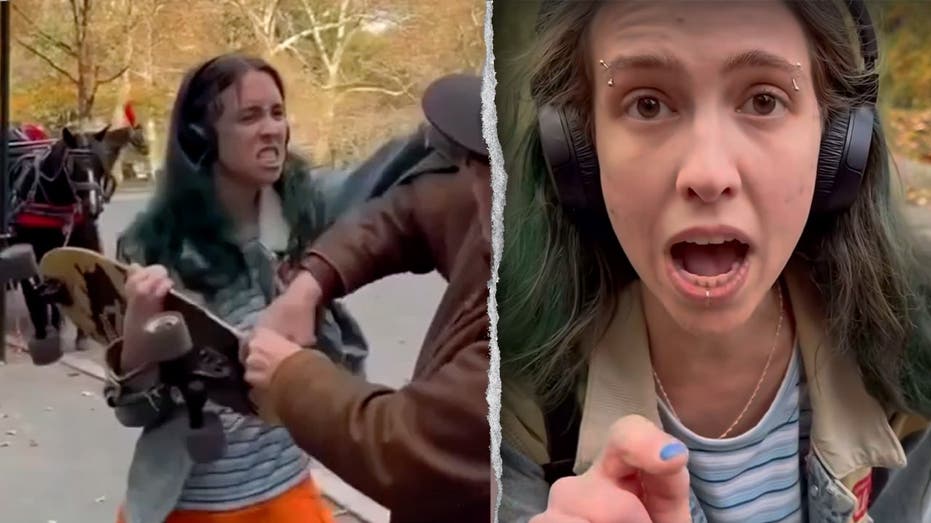

Abigail Holbrook, 27, of Philadelphia, is facing charges after police said she used a skateboard to strike a horse carriage driver and punched another man in Central Park. The incident occurred Tuesday near 59th Street and West Drive after a 911 call brought officers to the area. Video appears to show Holbrook criticizing the treatment of carriage horses before the alleged confrontation. A transportation workers’ union condemned the incident and called for stronger protections for workers in the park.
The case follows an argument involving horse carriage operations in New York City, where animal welfare and the future of the industry have become contentious public issues. Police said two men were assaulted, while Holbrook’s comments indicated that she believed the horses were being mistreated.
| 1) | Police describe the alleged Central Park assault |
|---|---|
| 2) | Video captures the dispute over horse welfare |
| 3) | Union calls for greater protection for drivers |
| 4) | Incident unfolds amid debate over carriage horses |
| 5) | Investigation and next legal steps |
Police describe the alleged Central Park assault
The New York Police Department said officers responded to the area of 59th Street and West Drive in Central Park after receiving a 911 call on Tuesday. According to police, Abigail Holbrook allegedly struck one man in the face and shoulder with a skateboard and punched a second man in the face. The two men were identified in the report as horse carriage drivers working in the park.
Holbrook, who is 27 and from Philadelphia, was arrested and is facing charges connected to the alleged attack. The available account does not specify the precise charges or provide information about injuries. The allegations have not been resolved in court, and an arrest is not a finding of guilt.
Video captures the dispute over horse welfare
Video of the confrontation appears to show Holbrook holding a skateboard while arguing with one of the drivers. She is heard criticizing the use of horses in New York City and describing the practice as abusive. Her statements focused on the animals’ sensitivity to light and noise and on the conditions in which the horses work.
The recording also appears to show the argument becoming physical. Near the end of the exchange, Holbrook addresses the person filming and asks whether that person is proud of what was taking place. The footage provides context for the dispute, while police statements identify the alleged acts that led to the arrest.
“Horses do not do well in New York City, they are sensitive to light and noise and the people that use these horses are animal abusers.”
Union calls for greater protection for drivers
The Transport Workers Union described the alleged attack as unacceptable and said carriage drivers should be able to work without being harassed or assaulted. Alexander Kemp, administrative vice president of TWU Local 100, said the union wants a more visible police presence at horse carriage stands in the park.
Kemp said the stands are workplaces and argued that people visiting the park should not be permitted to threaten workers. The union’s response reflects concern about the safety of drivers who regularly interact with members of the public while operating in a politically disputed industry.
“This is their place of work and people are coming just to harass and attack them. People deserve to be safe at work.”
Incident unfolds amid debate over carriage horses
The confrontation took place as New York City’s horse carriage industry faced continuing political debate. City lawmakers have voted to end the nearly 170-year-old carriage tradition, while supporters and opponents have disputed the effect of carriage operations on horses, drivers and public safety.
Animal rights advocates have argued that urban traffic, bright lights and noise can harm the animals. Industry supporters have challenged those claims and defended the work of carriage drivers. In this case, Holbrook’s stated objections appear to have preceded the confrontation, but the police allegations concern physical conduct against two men rather than the broader policy debate.
Investigation and next legal steps
The NYPD’s response began with the emergency call and led to Holbrook’s arrest after the alleged incident. Investigators can use the video, witness accounts and statements from the people involved to establish the sequence of events and determine the applicable charges.
The next stage will depend on court proceedings and prosecutorial decisions. The report does not provide a court date, details about bail or a statement from Holbrook. A request for comment was made, but no response was included in the available account.
| Number | Key Point |
|---|---|
| 1 | Police said a Philadelphia woman allegedly assaulted two carriage drivers in Central Park. |
| 2 | The alleged weapons and acts were a skateboard strike and a punch, according to police. |
| 3 | Video appears to show an argument over the treatment of carriage horses. |
| 4 | The Transport Workers Union called for more visible police protection. |
| 5 | The allegations remain subject to court proceedings and are not a finding of guilt. |
Summary
The arrest of Abigail Holbrook followed an alleged physical confrontation with two horse carriage drivers in Central Park. Police said a skateboard and a punch were used during the incident, while video captured Holbrook’s objections to the treatment of carriage horses. The case has drawn a workplace safety response from the drivers’ union and comes amid a broader dispute over the future of horse-drawn carriages in New York City.
Frequently Asked Questions
Who was arrested?
Abigail Holbrook, 27, of Philadelphia, was arrested and is facing charges after the alleged Central Park confrontation.
What does police say happened?
The NYPD said Holbrook allegedly struck one man in the face and shoulder with a skateboard and punched a second man in the face.
Where did the incident occur?
Police responded to 59th Street and West Drive in New York City’s Central Park after a 911 call.
Why did the confrontation begin?
Video and the reported statements indicate that Holbrook was protesting what she described as abuse of carriage horses and criticizing the conditions in which they work.
