

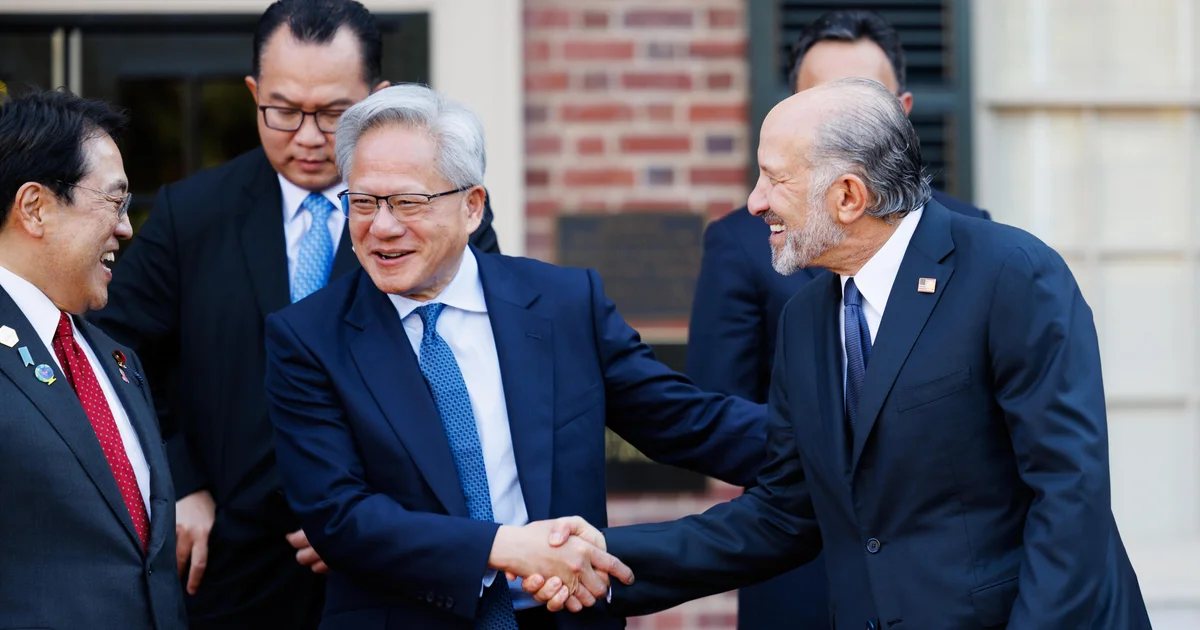

Commerce Secretary Howard Lutnick is facing significant scrutiny due to his affiliations with companies linked to China and his relationship with Jensen Huang, the recently ousted CEO of Nvidia. Critics are questioning whether these connections have led to inadequate oversight regarding the substantial sales of Nvidia’s AI chips, prompting an investigation by the Commerce Department into possible national security risks. With the backdrop of increasing tensions between the U.S. and China, this controversy highlights critical challenges in export control enforcement.
| Article Subheadings |
|---|
| 1) The Role of the Commerce Secretary |
| 2) The Investigation into Nvidia |
| 3) Questionable Ties to China |
| 4) Senate Scrutiny and Reaction |
| 5) Future Implications for U.S. Technology Policy |
The Role of the Commerce Secretary
As the head of the Department of Commerce, Howard Lutnick has a pivotal responsibility in regulating and overseeing exports of sensitive technologies, particularly to adversaries like China. His role is crucial in safeguarding U.S. national security interests. Appointed by President Trump, Lutnick previously served as the chairman and CEO of Cantor Fitzgerald, a New York investment bank that held a significant $1.2 billion in Nvidia stock at the time of his nomination. Under Lutnick’s leadership, the Commerce Department is expected to prevent sensitive technologies from falling into the wrong hands, necessitating vigilance and adherence to established protocols.
The Commerce Department maintains an Entity List which identifies foreign companies and individuals that are restricted from accessing U.S. technology products. This mechanism primarily aims to deter entities involved in activities contrary to U.S. national security interests. Lutnick’s failure to promptly address such concerns, particularly regarding companies like Megaspeed International, raises questions about the integrity of his oversight.
The Investigation into Nvidia
In early 2024, under the Biden administration, the Bureau of Industry and Security within the Commerce Department initiated an investigation focusing on Nvidia’s sales to Megaspeed. Analysts sought to ascertain whether the chips were being redirected to China, a potential violation of U.S. export laws. However, the investigation was abruptly reassigned to the Department of Justice, causing concern over the transparency and effectiveness of the inquiry into Nvidia’s operations.
Since the onset of this investigation, the Commerce Department has not added any new entities to its Entity List, with the most recent addition occurring in October 2025. Critics have interpreted this pause in regulatory action as a troubling indication of the department’s commitment to enforcing export controls. Experts, including Chris McGuire from the Council on Foreign Relations, have articulated that the lack of enforcement in this area constitutes a significant scandal, one that jeopardizes U.S. technology integrity.
Questionable Ties to China
Lutnick’s connections to Chinese companies come under intense examination, particularly with respect to the firm BGC Group, which had a substantial stake in a joint venture with China Credit Trust, a state-owned entity. This relationship raises alarming concerns regarding potential conflicts of interest as Lutnick navigates policy decisions affecting U.S. technology. Questions have been posed as to how these ties might influence his judgment in matters related to national security.
Additionally, Lutnick’s past leadership role in Cantor Fitzgerald has surfaced earlier dealings with Chinese firms seeking to go public in the U.S. This further complicates his position, as concerns over his ability to prioritize U.S. interests grow. Officials previously questioned Lutnick during his Senate confirmation hearing about the implications of his investments and how they might affect his regulatory responsibilities. The interactions he has had with Jensen Huang, Nvidia’s former CEO, also raise eyebrows amid the ongoing investigations, as allegations of Huang’s connections to espionage add a layer of complexity to the situation.
Senate Scrutiny and Reaction
Last week, Treasury Secretary Scott Bessent confronted Lutnick regarding the lack of action taken against Megaspeed despite the mounting evidence linking it to espionage activities. This confrontation signals a growing apprehension among lawmakers who are fearful of national security vulnerabilities resulting from inaction. The scrutiny intensified following the resignation of Jensen Huang, which prompted Senator Elizabeth Warren to demand answers from Lutnick and his deputy, Jeffrey Kessler.
Senator Warren emphasized that prompt measures needed to be taken to address loopholes that could allow advanced technology to bolster China’s military capabilities. The frustration expressed by various senators reflects a bipartisan concern about Lutnick’s performance and the consequences of his affiliations with Chinese entities, ultimately calling for increased accountability within the Commerce Department.
Future Implications for U.S. Technology Policy
The unfolding situation surrounding Lutnick and Nvidia could have lasting ramifications for U.S. technology policy, heightening scrutiny over how the government navigates relationships with foreign entities, particularly those linked to adversaries like China. As the U.S. seeks to protect its technological edge, the rising concerns over potential espionage must be critically addressed.
Lutnick has previously vowed to maintain a robust stance against the threats posed by China. However, ongoing developments will test the effectiveness of his approach in safeguarding American interests. The ramifications of these proceedings extend beyond Nvidia, placing a spotlight on the broader dynamics of U.S.-China relations in the tech sector. The potential for enhanced regulatory measures may surface, altering the landscape of international trade and technology within this critical field.
| No. | Key Points |
|---|---|
| 1 | Commerce Secretary Howard Lutnick is under fire for inadequate oversight of Nvidia’s AI chip sales linked to China. |
| 2 | The Commerce Department has not updated its Entity List since 2025, raising concerns over enforcement of export controls. |
| 3 | Lutnick’s ties to Chinese companies complicate his position as the head of a regulatory agency tasked with safeguarding U.S. technology. |
| 4 | Senator Elizabeth Warren and others are demanding clarification on Lutnick’s failure to act against potentially espionage-related entities. |
| 5 | The outcome of the scrutiny surrounding Lutnick and Nvidia could shape future U.S. technology policy and its relations with China. |
Summary
The controversy surrounding Commerce Secretary Howard Lutnick and Nvidia underscores crucial issues regarding U.S. export control policies, particularly in relation to adversarial nations like China. Lutnick’s connections to Chinese entities, paired with the ongoing investigation into Nvidia, raise significant concerns about national security and corporate governance. As pressure mounts from lawmakers and national security experts, the outcome of this situation could lead to reevaluations of current policies and practices, ultimately influencing America’s strategic posture in global technology markets.
Frequently Asked Questions
Question: Who is Howard Lutnick?
Howard Lutnick is the U.S. Secretary of Commerce and former CEO of Cantor Fitzgerald, with significant financial interests in Nvidia.
Question: What is Megaspeed International?
Megaspeed International is a Singapore-based company that has become one of Nvidia’s biggest customers for AI chips and is under investigation for potential connections to espionage activities.
Question: Why are Nvidia’s chip sales significant?
Nvidia’s chip sales are significant due to the advanced technology involved, which is integral to AI development and can impact national security if misappropriated by adversarial nations like China.
