

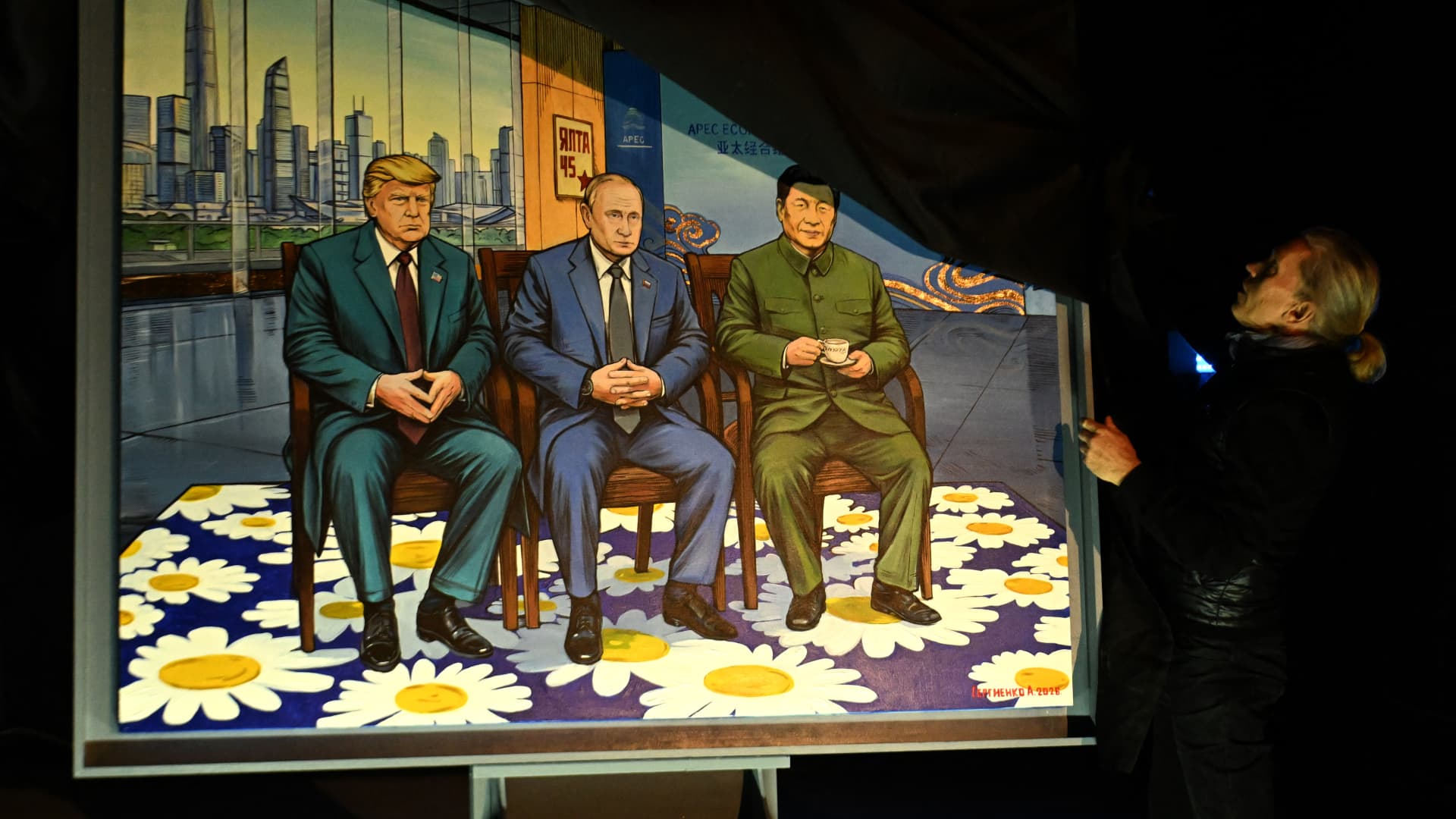

In a historic first, Chinese President Xi Jinping is set to host both Russian President Vladimir Putin and U.S. President Donald Trump for a summit in Shenzhen, scheduled for Thursday, amidst the looming challenges of international tensions and ongoing military conflicts. The meeting, which takes place on the sidelines of the APEC summit, represents an unprecedented gathering of the three leaders, marking a significant moment in diplomacy. The agendas are still emerging, with key issues likely to include nuclear proliferation, Middle Eastern conflicts, and the war in Ukraine, although substantial agreements may prove elusive.
| Article Subheadings |
|---|
| 1) High-Stakes Diplomacy Unfolds in Shenzhen |
| 2) Diverging Agendas: U.S. and Russian Perspectives |
| 3) The Complex Road Ahead for Peace Negotiations |
| 4) The Impact of Political Dynamics on Global Diplomacy |
| 5) Future Trade Relations and Economic Considerations |
High-Stakes Diplomacy Unfolds in Shenzhen
The upcoming summit in Shenzhen marks a pivotal moment in global politics, bringing together three of the world’s most influential leaders: Xi Jinping, Vladimir Putin, and Donald Trump. This unprecedented meeting is being held on November 12, 2026, and is a significant diplomatic endeavor that could reshape international relations. China’s Foreign Ministry confirms that this summit is set against the backdrop of the APEC meeting, amplifying its relevance given the ongoing geopolitical tensions that dominate the current climate.
Previous meetings have occurred between these leaders bilaterally, but the three-way dialogue is entirely new territory. Each leader’s attendance signals their desire to navigate the complex global challenges they face, particularly regarding military engagement and diplomatic relations. As noted by analysts, Xi Jinping’s ability to orchestrate such a summit elevates his political stature on the world stage.
Historically, the trio has interacted through multiple high-level exchanges; Xi has met Trump on several occasions and has engaged with Putin over 40 times since taking office in 2013. The formal confluence of these three powerful figures may lead to critical dialogues about international stability and collaborative governance.
Diverging Agendas: U.S. and Russian Perspectives
One major challenge hindering effective communication at the summit is the vastly differing agendas of the three leaders, especially between the U.S. and Russia. The White House has clearly indicated that discussions will prioritize nuclear non-proliferation issues and the ongoing conflicts in the Middle East, particularly focusing on the U.S.-Israeli confrontation with Iran. Meanwhile, the Kremlin appears intent on steering the conversation towards addressing the war in Ukraine.
“He [Trump] will discuss the reduction of nuclear weapons in the world, whose proliferation President Trump believes is very dangerous,”
said Olivia Wales, a White House spokeswoman, during a briefing.
While the U.S. seeks to emphasize nuclear disarmament, Russia is likely to push for dialogue on the Ukrainian conflict, which remains a top priority for Putin. David Roche, a strategist, suggests that China, while hosting the summit, is waiting to achieve equal footing with the U.S. before engaging in meaningful nuclear discussions.
The Complex Road Ahead for Peace Negotiations
The road to any fruitful negotiations surrounding the ongoing war in Ukraine seems fraught with challenges. Recently, during talks with U.S. envoys in Moscow, Putin stated that Europe had to decide between peace and war, emphasizing his inflexible stance on the current conflict. This hardline approach implies that any discussions to be held in Shenzhen may yield little more than optics rather than substantial agreements.
Yuri Ushakov, a presidential aide, reiterated that the primary goal for the discussions in Shenzhen is to reignite diplomatic engagement aimed at resolving the conflict in Ukraine. However, analysts remain skeptical that meaningful outcomes will emerge from these complicated interactions.
The historical tension surrounding the Russia-Ukraine conflict casts a long shadow on the summit. Observers anticipate that the discussions may focus more on public relations and demonstrating diplomatic engagement than on establishing peace. With experts such as Robert Kagan expressing concerns that both China and Russia might escalate their military ambitions in the near future, it remains unclear how these variables intersect during the summit.
The Impact of Political Dynamics on Global Diplomacy
The political landscape in the United States also plays a crucial role in shaping the dynamics of the upcoming summit. Following the dramatic setbacks faced by Trump’s party in the recent midterm elections, his weakened political standing could influence his approach to international negotiations. Analysts suggest that Trump may avoid contentious issues that could lead to criticism or failure, particularly focusing on his domestic political recovery.
Moreover, the summit’s significance extends beyond fundamental diplomatic discussions. It serves as an opportunity for China to fortify its position as a global leader. With Xi Jinping‘s willingness to facilitate this meeting, he positions China as a key mediator in a complex web of international relationships.
Experts are particularly wary about the implications of China and Russia operating under a perceived weakness of Trump. Should they interpret his political troubles as an opportunity, escalated tensions in various regions could become more pronounced.
Future Trade Relations and Economic Considerations
Amidst these complex diplomatic discussions, trade issues are likely to enter the spotlight, particularly the U.S.-China trade relationship. Analysts note that the bilateral trade truce is set to expire soon, and negotiations for its extension could serve as an important point of discussion at the summit.
Despite ongoing tensions, the expectation remains that an extension will be pursued. Observers believe that the meeting provides a platform for leaders to evaluate the future trajectory of U.S.-China trade relations. Carlos Casanova, a senior economist, emphasized the importance of addressing the substantial U.S. trade deficit with China, which has become a key component of Washington’s expectations.
The growth of Chinese exports to the U.S. indicates a central challenge for the Trump administration, as narrowing this deficit is crucial in advocating for more equitable trade practices. The integration of economic discussions during the summit may yield potential long-term agreements that transcend mere political gestures.
| No. | Key Points |
|---|---|
| 1 | Historic summit to unite Xi, Putin, and Trump in Shenzhen. |
| 2 | Diverging agendas complicate meaningful discussions. |
| 3 | Peacemaking attempts overshadowed by entrenched positions. |
| 4 | U.S. political dynamics influence international negotiations. |
| 5 | Future trade relations to play a crucial role in discussions. |
Summary
The impending summit in Shenzhen stands as a defining moment in contemporary diplomacy, presenting a rare occasion for dialogue amongst the leaders of China, Russia, and the United States. While the meeting embodies the potential for collaboration on pressing global issues, the diverging priorities and entrenched positions of each leader may limit the outcomes to mere performative gestures. Observers are closely watching how this new phase of diplomacy unfolds, particularly within the broader context of ongoing geopolitical tensions and trade relations.
Frequently Asked Questions
Question: Why is the summit in Shenzhen historically significant?
The summit is historically significant as it represents the first time that the leaders of China, Russia, and the United States will convene together. This unprecedented gathering may impact global diplomacy and international relations considerably.
Question: What are the main topics expected to be discussed during the summit?
Key topics include nuclear non-proliferation, the war in Ukraine, and Middle East conflict, particularly the U.S.-Israeli confrontations with Iran. However, substantial agreements may be difficult to reach given the differing priorities of the leaders.
Question: How might U.S. domestic politics influence the summit’s outcomes?
U.S. domestic politics could possibly limit President Trump’s engagement in contentious issues, as his weakened political standing following the midterm elections may encourage a focus on less controversial topics to avoid potential backlash.
