

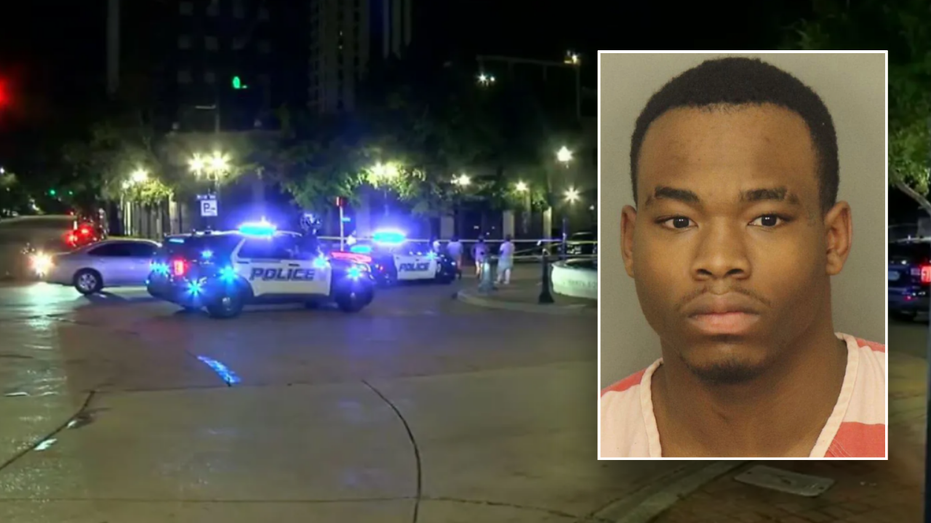

Alabama Circuit Court Judge David Carpenter is facing renewed scrutiny over decisions involving defendants accused of serious crimes after criticizing the state’s expanded bail restrictions. Carpenter described Aniah’s Law as a direct assault on the constitutional presumption of innocence. The law permits courts to deny bail to defendants charged with certain violent offenses.
The scrutiny includes Carpenter’s 2023 approval of a plea deal for Damien McDaniel, who was arrested as a teenager after a shooting involving two people. Birmingham police later linked McDaniel to more than a dozen killings and an alleged 14-month shooting spree that left 18 people dead and more than 30 injured. Other disputed cases involve bond decisions and the handling of charges against defendants later connected to serious offenses.
| 1) | Carpenter challenges Alabama’s expanded bail restrictions |
| 2) | McDaniel plea deal intensifies scrutiny of the judge |
| 3) | Other bond and dismissal decisions draw criticism |
| 4) | Aniah’s Law expansion adds several violent offenses |
| 5) | The debate pits public safety against due process |
Carpenter challenges Alabama’s expanded bail restrictions
Carpenter, a Democratic circuit court judge in Alabama, criticized Aniah’s Law in a social media post. He argued that defendants should not be held indefinitely simply because they have been charged, emphasizing that the Constitution presumes people innocent until proven guilty.
“These laws, like Alabama’s Aniah’s Law, are a direct assault on the Constitutional guarantee of the presumption of innocence.”
Carpenter compared concerns about pretrial detention with public debate over license plate camera systems. He questioned why some people view roadside surveillance as government overreach but do not object to laws expanding the government’s ability to hold accused people in jail.
McDaniel plea deal intensifies scrutiny of the judge
The most prominent case cited by critics involves Damien McDaniel. He was arrested in 2019 at age 17 after being accused of shooting two people in a vehicle. In April 2023, Carpenter approved a plea agreement in the case.
After McDaniel was released, Birmingham police connected him to more than a dozen murders beginning in July 2023. Authorities allege that he carried out a shooting spree lasting 14 months, resulting in 18 deaths and more than 30 injuries. The later allegations have fueled questions about whether the plea agreement and release decision adequately addressed the risk posed by the defendant, although the allegations do not by themselves establish responsibility for every death.
Other bond and dismissal decisions draw criticism
Critics have also pointed to Carpenter’s decision to grant bond to Raukeem Cunningham in a case involving the 2022 shooting death of a teenage girl. Cunningham was later arrested and charged with fatally shooting three people at a Bessemer gas station in 2024 while out on bond. His original bond was subsequently revoked.
Another case concerns Fredrick Terrenda Hampton, whose 2015 rape charge was reportedly dismissed in 2019. The dismissal occurred two days before Hampton met Paighton Houston, who later disappeared. Houston’s body was found buried behind a home after her death from an accidental overdose. Hampton pleaded guilty to abuse of a corpse and received a 20-year split sentence, with three years to be served in custody, according to reports cited in the controversy.
Aniah’s Law expansion adds several violent offenses
Alabama first enacted Aniah’s Law in 2022. In 2026, voters approved a constitutional amendment expanding the measure to cover additional offenses. The added crimes include attempted murder, solicitation or conspiracy to commit murder, and firing a gun or explosives into an occupied dwelling, building or vehicle.
The expanded law gives prosecutors and courts broader authority to seek or impose detention without bail in qualifying cases. Supporters view the change as a public safety measure, while Carpenter argues that detention based only on an accusation can violate fundamental rights.
The debate pits public safety against due process
Carpenter has faced criticism over his judicial record and previously described himself online as a far-left, liberal, progressive democratic socialist. During his campaign for judicial office, he said he wanted to reform Alabama’s criminal justice system, reduce repeat offending and address prison overcrowding.
Opponents of expanded bail restrictions say pretrial detention can punish people who have not been convicted and place too much power in the hands of the state. Supporters argue that judges must be able to keep defendants accused of violent crimes away from potential victims and communities while cases proceed. Carpenter’s statements have brought the constitutional debate into sharper focus as his prior decisions remain under examination.
| Number | Key Point |
|---|---|
| 1 | Judge David Carpenter called Aniah’s Law a direct assault on the presumption of innocence. |
| 2 | The law was expanded by Alabama voters in 2026 to cover additional violent offenses. |
| 3 | Carpenter approved a 2023 plea deal involving Damien McDaniel before later alleged killings. |
| 4 | Critics have cited bond and dismissal decisions involving Raukeem Cunningham and Fredrick Terrenda Hampton. |
| 5 | The controversy highlights the tension between public safety and constitutional due process. |
Summary
Judge David Carpenter’s criticism of Alabama’s expanded bail law has drawn renewed attention to his prior decisions involving defendants later accused or convicted in serious cases. The controversy underscores the difficult balance between preventing further violence and preserving the presumption of innocence for people awaiting trial.
Frequently Asked Questions
What is Aniah’s Law?
Aniah’s Law is an Alabama measure governing bail and pretrial detention in cases involving specified violent offenses. It was enacted in 2022 and expanded by voters in 2026.
Why is Judge David Carpenter facing criticism?
Critics have cited his approval of a plea deal for Damien McDaniel and bond or dismissal decisions involving other defendants later connected to serious crimes.
What offenses were added to the law in 2026?
The expansion added attempted murder, solicitation or conspiracy to commit murder, and discharging a firearm or explosives into an occupied dwelling, building or vehicle.
What is Carpenter’s objection to the law?
Carpenter argues that holding people indefinitely based only on criminal charges conflicts with the constitutional presumption of innocence and due process.
