

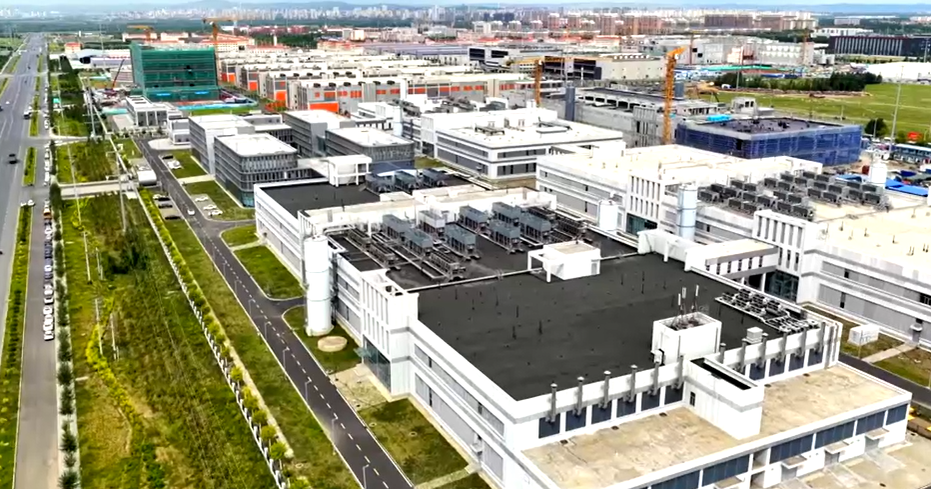

In the scenic landscape of Ulanqab, Inner Mongolia, China, a significant transformation is underway as the region shifts from traditional agriculture to a burgeoning hub for artificial intelligence (AI). Large-scale construction of data centers is in full swing, driven by a combination of renewable and fossil fuel energy sources. This ambitious project aims to solidify China’s aspirations to outpace the United States in the global AI leadership race, while also providing much-needed employment amidst economic challenges.
| Article Subheadings |
|---|
| 1) Shifting Agricultural Landscape |
| 2) The Power of Renewable Energy |
| 3) Economic Impact and Job Creation |
| 4) Government Support and Local Sentiments |
| 5) The Global AI Race |
Shifting Agricultural Landscape
Located on the outskirts of Ulanqab, Hereford cows once populated the region, known for its potato cultivation for generations. Now, the landscape is evolving as these fields make way for monumental data centers. The shift represents a significant departure from the traditional farming methods that defined the area for over four decades. The AI data center project, which is quickly becoming a vital infrastructure initiative, not only reflects a broader national strategy but also reconceptualizes the agricultural identity of Inner Mongolia. The changes have been met with cautious optimism by local farmers, such as Baletu, who has witnessed this radical transformation first-hand. He expressed his thoughts regarding the development, stating the process has not impacted his farmland adversely and is generally viewed as beneficial for the region’s future.
The Power of Renewable Energy
Ulanqab’s strategic geographical advantages play an integral role in its transformation into an AI hub. The region is known for its consistent winds, making it one of the ideal locations for harnessing wind energy. Complemented by solar energy initiatives, the combined energy sources facilitate a cost-effective and efficient power supply for the upcoming data centers. Observers note that the development leverages not only fossil fuels but also incorporates significant renewable components, thereby presenting an environmentally friendly approach to meeting energy demands. The data centers will tap into the plentiful energy resources, further driving China’s ambitions for AI leadership while ensuring sustainability. As the construction progresses, the integration of innovative energy solutions remains pivotal to its success.
Economic Impact and Job Creation
The potential economic benefits of the AI data center boom are substantial, particularly in a country facing economic setbacks like high youth unemployment. Approximately 30,000 workers have been drawn to Ulanqab from various regions in China to assist with the construction efforts, marking this initiative as a significant undertaking for both local and national economies. Business owners in the area, such as food vendors, express confidence in the project, seeing it as a catalyst for job creation and economic revitalization. The widespread development of data centers creates immediate job opportunities while also promising long-term economic stability. The presence of foreign investments from major tech companies is likely to further enhance job prospects and skill-building within the local workforce.
Government Support and Local Sentiments
The Chinese government has underscored its commitment to AI development as a strategic priority under the leadership of President Xi Jinping. There is broad local support for the construction of data centers, partly due to the strong messaging from the government promoting the benefits of AI technology. Unlike in many Western nations where community opposition often complicates infrastructure projects, developers in China face little resistance. A UN survey indicated that up to 80% of the population supports these constructions, indicating widespread acceptance and enthusiasm. Commentators point out that the lack of public dissent allows for streamlined development processes, thus positioning Ulanqab as a focal point for investments in high-tech infrastructure.
The Global AI Race
As nations worldwide ramp up their AI capabilities, China is strategically positioning itself to emerge as a leader in this technology sector. While experts have noted that Chinese AI firms currently trail their American counterparts by a few months, there is optimism regarding the nation’s rapid advancements. The issue of energy supply serves as a critical competitive factor in this race, with many experts suggesting that access to abundant power may overshadow the semiconductor advantages enjoyed by the United States. As the data centers in Ulanqab take shape, they may well provide the necessary infrastructure for companies like Huawei, Alibaba, and other tech giants to expedite their AI development and innovation efforts. The vast power capacity available in China, coupled with the government’s emphasis on this technology, positions the region favorably in the quest for global AI dominance.
| No. | Key Points |
|---|---|
| 1 | Ulanqab is transitioning from traditional agriculture to a significant AI data center hub. |
| 2 | The region offers abundant renewable energy resources, essential for powering data centers. |
| 3 | The AI data center construction provides thousands of jobs, aiding local economic recovery. |
| 4 | Strong government support and local enthusiasm facilitate rapid infrastructure development. |
| 5 | China aims for global AI dominance, leveraging its energy resources and technological investments. |
Summary
The transformation of Ulanqab into a burgeoning AI hub signals a pivotal moment in China’s technological strategy. By shifting from agriculture to advanced data center construction, the region not only aims to boost its local economy but also seeks to position China as a leader in the burgeoning AI industry. The emphasis on renewable energy sources to power these facilities furthers the initiative’s sustainability goals, embodying a model for the future of AI infrastructure development.
Frequently Asked Questions
Question: What is driving the construction of data centers in Ulanqab?
The construction is primarily driven by the region’s strategic advantages, including abundant renewable energy sources, economic opportunities for job creation, and government support for AI development as a national priority.
Question: How does local sentiment towards the data centers compare to other countries?
In China, local support for data center construction is considerably high, with surveys indicating up to 80% approval, contrasting with significant opposition faced in some countries like the United States.
Question: What potential benefits does the AI hub offer to the local economy?
The AI hub is expected to create thousands of jobs, stimulate economic activity, and facilitate skill development among the local workforce, thereby aiding in the region’s economic recovery and growth.
