

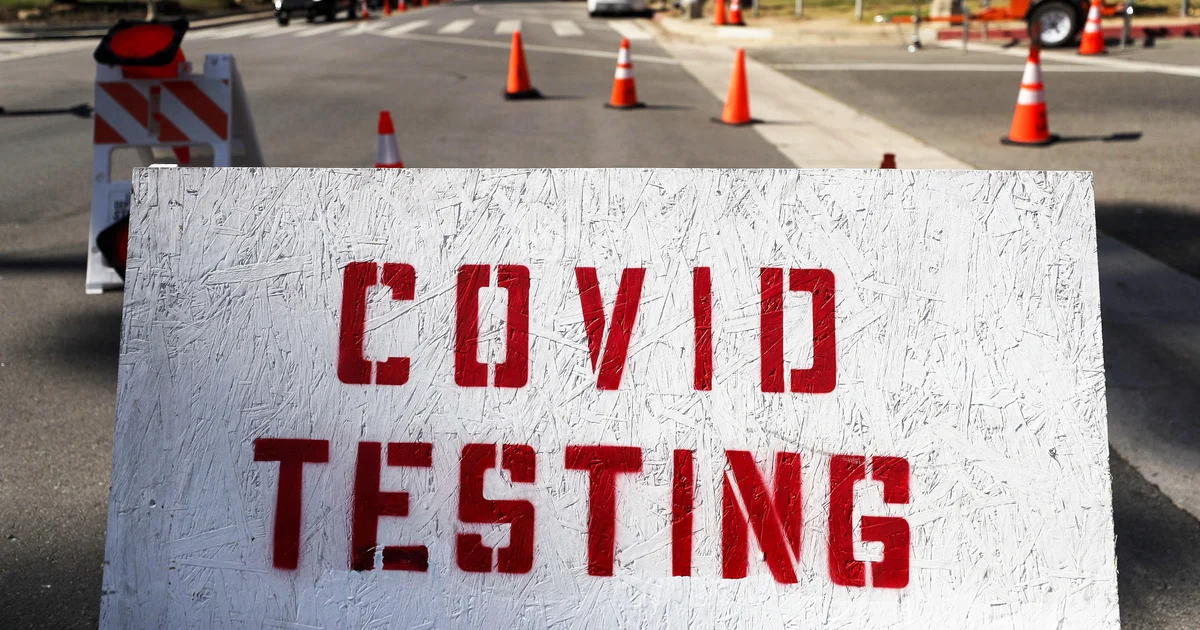

Recent surveys indicate an alarming sentiment among Americans regarding the COVID-19 pandemic, revealing a significant dip in optimism and trust in government actions. A record number of citizens now believe that pandemic containment efforts are faltering, with President Trump’s approval ratings falling to their lowest point since the onset of the crisis. As summer approaches, concerns about the virus are intensifying, with many fearing an imminent escalation of cases rather than improvement.
| Article Subheadings |
|---|
| 1) Americans’ Perception of Pandemic Response |
| 2) Regional Variations in Pandemic Views |
| 3) The Importance and Views on Testing |
| 4) Public Attitudes Toward Reopening |
| 5) Mask-Wearing and Political Divide |
Americans’ Perception of Pandemic Response
The latest findings show that a significant portion of the American public now feels that efforts to contain the COVID-19 outbreak are not only failing but are also deteriorating. This sentiment marks a stark increase in skepticism, with many voicing concerns that measures enacted to curtail the virus’s spread are not effective. For instance, recent statistics reveal that a growing percentage of Americans – more than half – believe that the government’s response has not met the challenges posed by the pandemic. These sentiments are echoed across party lines, though they are particularly pronounced among Democrats and independents, who are more likely to express dissatisfaction with President Trump’s handling of the crisis. In fact, polling data shows that his approval ratings have fallen to their nadir regarding pandemic management.
Regional Variations in Pandemic Views
As the pandemic continues, there are notable differences in how various regions of the United States perceive the crisis. In the Southern states, for instance, an increasing number of residents express that circumstances are worsening. This contrasts with earlier sentiments reported just a month prior, suggesting that as case numbers rise, so too does the public’s unease. Many in the South now believe that their states have reopened too quickly, which is contributing to rising anxiety about the virus’s impact and the potential for further restrictions. Moreover, there is a demographic divide visible in these responses. While many Southerners feel their situation is deteriorating, this perception is often connected to personal experience; those who know someone affected by COVID-19 are more likely to express concern about state policies surrounding reopening.
The Importance and Views on Testing
Testing remains a central topic in discussions about controlling the virus. Over 80% of Americans concur that widespread testing is crucial to mitigating the spread of COVID-19, with a substantial proportion deeming it “very important.” Nevertheless, a significant gap persists between public sentiment and perceived government action: only 34% believe the Trump administration is adequately facilitating testing for all Americans. Many instead suspect that the government is deliberately limiting testing efforts, revealing a disconnection between public health needs and governmental initiatives. Interestingly, partisan differences emerge here as well, with Republicans showing less concern about the importance of testing overall. This divergence can be partially attributed to how people interpret their own experiences and the virus’s impact within their communities.
Public Attitudes Toward Reopening
Public sentiment surrounding the pace of state reopenings highlights a growing anxiety. While about 40% of respondents believe their states have reopened at an appropriate rate, a considerable number express the belief that reopening has occurred too quickly. This viewpoint is particularly prevalent in Southern regions where the percentage of individuals feeling their states moved too swiftly is steeply rising. The correlation between personal experiences—as individuals who know someone affected by COVID-19 are more likely to think the state reopened too soon—underscores how personal connections can shape public perception. Furthermore, these concerns highlight a party-line divide, with Democrats being significantly more likely to voice apprehension regarding the pace of reopening compared to their Republican counterparts.
Mask-Wearing and Political Divide
Mask-wearing practices in America have become intricately tied to political identity. Evidence suggests that women tend to wear masks more consistently than men, and political affiliation significantly influences mask utilization. While Democrats and independents are more likely to view mask-wearing as a public health duty, a larger number of Republicans regard it as a personal choice. About half of mask wearers express that they perceive non-mask wearers as unconcerned about health risks, which reflects an emerging divide informed by both political leanings and personal beliefs. In communities where mask usage is less prevalent, individuals often associate non-wearers with a political stance regarding the current administration, ultimately complicating public health messaging amidst the pandemic.
| No. | Key Points |
|---|---|
| 1 | Public sentiment surrounding the COVID-19 pandemic is increasingly negative. |
| 2 | Perceptions of how well the government is handling the pandemic have declined significantly. |
| 3 | There are stark regional differences in attitudes toward pandemic response and reopening policies. |
| 4 | Most Americans view testing as vital, although many doubt government efforts to expand access. |
| 5 | Mask usage is influenced by political affiliation and gender, further complicating public health communications. |
Summary
The prevailing sense of dissatisfaction among Americans regarding the response to the COVID-19 pandemic underscores the pressing need for effective communication and solid actions from government officials. With a large segment of the population showing concern over the adequacy of testing and reopening measures, there is a critical imperative for leaders to address these fears transparently. Furthermore, the intertwining of political identity with public health practices such as mask-wearing suggests an urgent need for a united front in tackling the public health crisis that continues to unfold.
Frequently Asked Questions
Question: What has contributed to the decline in President Trump’s ratings regarding pandemic management?
The decline can be attributed to rising COVID-19 cases, public dissatisfaction with testing efforts, and perceptions that the administration is not effectively managing the pandemic response.
Question: How do regional differences affect views on the pandemic?
Regional differences manifest in varying opinions on the safety and speed of state reopenings, with the South showing heightened concern about the pace of reopening and rising COVID-19 cases.
Question: What is the public’s stance on mask-wearing during the pandemic?
The public is divided on mask-wearing; many view it as a civic duty while others consider it a personal choice, resulting in a strong political divide regarding its importance.
