

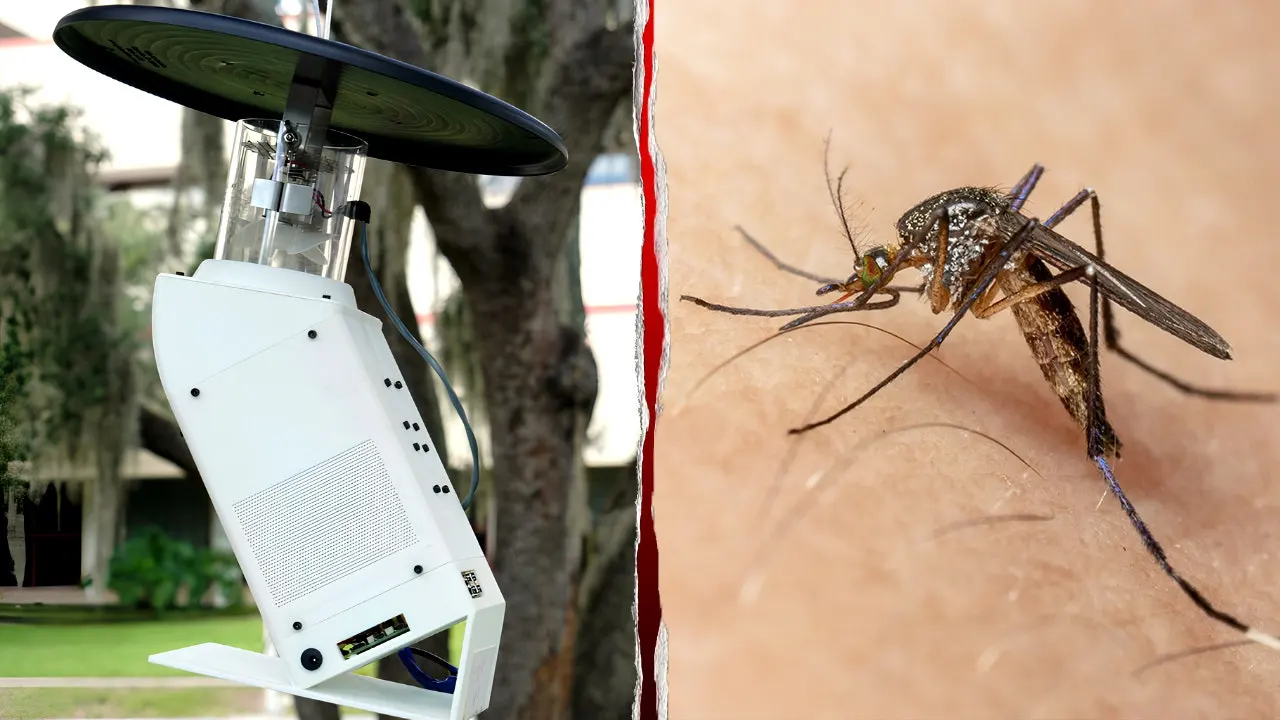

The state of Florida is grappling with its most significant outbreak of dengue fever in decades, with over 290 locally acquired cases reported. This surge of infections has prompted health officials to take urgent measures, including aerial spraying in the affected regions, particularly in Hillsborough County, where the outbreak has been most severe. As the situation unfolds, researchers at the University of South Florida have introduced an innovative AI-driven mosquito trap that promises to enhance the identification of dangerous mosquito species with remarkable accuracy—important technology during this ongoing public health concern.
| Article Subheadings |
|---|
| 1) The Current Dengue Fever Crisis in Florida |
| 2) Mechanisms of the New AI Mosquito Trap |
| 3) Importance of Rapid Mosquito Identification |
| 4) Future Implementation of Smart Traps |
| 5) Preventive Measures Against Dengue Fever |
The Current Dengue Fever Crisis in Florida
As the summer months fade into fall, the state of Florida finds itself entrenched in a health crisis, characterized by one of the most significant dengue fever outbreaks in years. According to the Florida Department of Health, Hillsborough County alone has tallied 407 locally acquired dengue cases this year, representing the largest outbreak on record for the region. Across the state, officials have confirmed over 524 locally acquired cases up to the end of October, meaning these individuals contracted the virus from local mosquito populations rather than through international travel.
The dengue virus, transmitted primarily by the Aedes aegypti mosquito, manifests with symptoms such as severe headaches, high fever, and intense muscle pain. In severe instances, it can lead to life-threatening complications, urging health officials to rapidly pivot their focus toward mosquito control and public health education. Public health authorities have continuously broadcasted a call for community readiness, urging people to take measures against mosquito bites.
On November 13, the Hillsborough County government extended its state of local emergency through November 19, sanctioning increased aerial and ground mosquito control efforts in response to the ongoing outbreak. As surveillance measures remain active, residents are witnessing firsthand the proactive approach adopted by health officials to curb the rise of infections.
Florida’s dengue fever situation underscores the critical reality that mosquitoes in warmer regions remain a year-round threat, even as tens of millions in colder parts of the nation assume mosquito season is confined to summer. The state’s experience, coupled with the emerging technology of AI-driven mosquito traps, presents a unique opportunity to effectively respond to mosquito-borne illness outbreaks.
Mechanisms of the New AI Mosquito Trap
Developed by Digitomy, a startup rooted in the University of South Florida, the state-of-the-art AI mosquito trap emerges as a promising solution in the fight against mosquito-borne diseases. The conception of this trap stems from extensive research led by Associate Professor Ryan Carney and Professor Sriram Chellappan dating back to 2018, focusing on expediting mosquito identification. Essentially, the trap integrates several functionalities unparalleled in traditional mosquito monitoring technology.
The design of the trapping device is both practical and efficient. Mosquitoes are drawn in by light or bait, and a small fan subsequently pulls them inside. Immediately upon landing on a sticky pad, two integrated cameras capture their images. Following this, the embedded AI intelligently analyses those images, comparing them against an extensive database of mosquito species, delivering species identification with more than 98% accuracy in laboratory settings.
Moreover, the technology enables differentiation between male and female mosquitoes, as well as determining whether the females have fed on blood—critical indicators since only female mosquitoes partake in biting and transmitting diseases. The comprehensive data generated from each trap paves the way for a deeper understanding of mosquito populations and potential disease threats.
Importance of Rapid Mosquito Identification
A significant challenge faced by mosquito surveillance teams is the time-consuming manual examination of captured specimens, often taking two to three days to yield results. This slow pace can hinder timely public health responses to burgeoning outbreaks and inevitably delay effective action against disease spread. The innovation presented by Digitomy aims to tackle this stalling issue, providing rapid identification within a single day. Such immediate data can help direct mosquito control measures more precisely.
Understanding which mosquito species are prevalent is crucial, especially concerning the Aedes aegypti species, which is known to be the primary vector for dengue fever in Florida. While the world boasts some 3,500 mosquito species, only a select few are responsible for the propagation of specific diseases. With real-time species identification, health officials can target interventions and allocate resources more efficiently, minimizing the public health risks posed by these vectors.
However, it is essential to clarify that while the mosquito trap identifies species potentially linked to disease transmission, it does not confirm that any captured insect bears the disease itself. Further testing is necessary to ascertain the presence of the dengue virus, which remains a crucial step in the public health response.
Future Implementation of Smart Traps
With the preliminary tests completed at the University of South Florida, Digitomy is now pivoting towards applying its technology in field settings. In collaboration with the Anastasia Mosquito Control District in St. Johns County and Hillsborough County, the startup is preparing for vital field validation where dengue’s impact has been markedly extensive this year. The ambition is to license this AI technology to established manufacturers of mosquito traps, facilitating its mainstream adoption.
Currently, the timeline for consumer access to these AI-driven traps remains undeclared, yet ongoing discussions are underway to ensure a smooth transition for manufacturers looking to incorporate this advanced technology. Furthermore, Digitomy has secured a $25,000 grant from the USF Research Foundation aimed at accelerating the commercialization of this technology while simultaneously developing educational platforms that utilize the AI system for public and professional mosquito identification training purposes.
Preventive Measures Against Dengue Fever
While sophisticated technology like the AI mosquito trap heralds a new approach to mosquito control, maintaining traditional preventive strategies remains paramount for residents, particularly as the pandemic of dengue fever surges. Public health officials continuously advise individuals living in affected regions to stay vigilant against mosquito bites. Effective preventive measures include eliminating standing water from yards, treating outdoor spaces with EPA-registered insect repellents, and wearing protective clothing when ventures into mosquito-populated areas.
The health community also encourages individuals to stay informed about the prevalence of dengue fever in their areas and engage in community-wide mosquito control initiatives. Concerted efforts towards awareness, education, and technological innovation come together as significant components in combating outbreaks of mosquito-borne diseases.
| No. | Key Points |
|---|---|
| 1 | Florida is experiencing its largest dengue fever outbreak in decades, with hundreds of cases reported. |
| 2 | The new AI mosquito trap developed by Digitomy can identify mosquito species with over 98% accuracy. |
| 3 | Rapid mosquito identification is crucial in containment efforts during outbreaks. |
| 4 | Field validation of the traps is ongoing in collaboration with local health departments. |
| 5 | Preventive measures advised by health officials remain essential for communities. |
Summary
The unfolding dengue fever outbreak in Florida not only emphasizes the persistent challenge posed by mosquito-borne diseases but also highlights the necessity for innovative solutions such as the AI mosquito trap developed by Digitomy. As Florida health officials manage the current crisis with rapid responses and community engagement, the potential for this cutting-edge technology to transform mosquito surveillance and control strategies is considerable. Evolving these methods can significantly enhance public health readiness and reduce the incidence of diseases like dengue fever, thereby ensuring community safety and health in the future.
Frequently Asked Questions
Question: What is dengue fever?
Dengue fever is a mosquito-borne viral infection causing flu-like illness, and it can escalate to severe complications if not managed properly.
Question: How does the AI mosquito trap work?
The AI mosquito trap attracts mosquitoes using bait or light and employs cameras and AI algorithms to identify captured species, providing quick analysis that can inform health officials.
Question: What measures can individuals take to prevent dengue fever?
Individuals can reduce their risk of dengue by eliminating standing water, using insect repellent, wearing protective clothing, and staying informed about local mosquito activity.
