

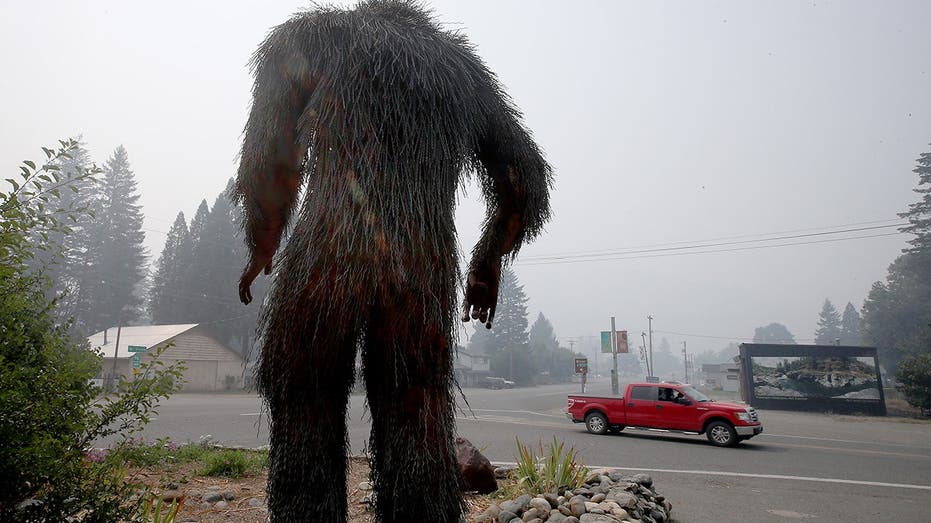

Federal agencies have released three files documenting decades of reported Bigfoot activity in the Pacific Northwest and elsewhere. The records include a 1982 investigation of unusual footprints in Washington state, a historical Montana account from the 1940s and a Forest Service forum about local sightings in California. The documents preserve field measurements, photographs, plaster casts and accounts of reported encounters, but do not establish that Bigfoot exists.
| 1) | Federal release brings older Bigfoot records into view |
| 2) | 1982 investigation examined footprints in Washington |
| 3) | Montana files preserve reports from the 1940s and 2003 |
| 4) | California forum reflected official uncertainty |
| 5) | Records add context without confirming the creature |
Federal release brings older Bigfoot records into view
The U.S. Department of Agriculture released three files from its Bigfoot and Sasquatch records on October 15, 2026. The material covers reports collected or preserved by federal personnel over several decades. Its release places administrative records about a widely known American folklore figure in the public domain, while offering no official conclusion that the reported creature has been identified.
Bigfoot, also known as Sasquatch, is traditionally described as a large, hair-covered figure living in remote forests. The newly available documents show how reports were handled by government employees, including the collection of physical evidence and the recording of witness accounts.
1982 investigation examined footprints in Washington
The most detailed file concerns a U.S. Forest Service investigation conducted in June 1982 in the Mill Creek Watershed of Washington state’s Umatilla National Forest. Investigators responded to reports of large, unusual footprints found across several field sites in the forest.
The team documented track measurements, took color photographs and produced plaster casts. These methods were intended to preserve the physical evidence for later review. The file records what investigators observed and how they processed it, but it does not identify the tracks as belonging to Bigfoot or another specific animal.
Montana files preserve reports from the 1940s and 2003
Another document, written in 1980, recounts a report from Petty Creek, Montana, dating to the 1940s. Leo Kinney said he and three hunters saw a large set of tracks. The account describes an uneasy reaction among the group and their decision not to pursue whatever had made the tracks.
The released material also includes details of a reported sighting in Sanders County, Montana, from 2003. Together, the accounts show that Bigfoot reports continued to appear in the region across multiple generations, although the documents present them as allegations and recollections rather than verified findings.
California forum reflected official uncertainty
Forest Service staff also hosted a public event titled Bigfoot in Your Backyard in California’s Stanislaus National Forest. The forum addressed local sightings and community interest in the Pacific Northwest cryptid.
The agency’s position at the time was that it could neither confirm nor deny Bigfoot’s existence. That approach allowed officials to discuss reports and public concerns without treating the creature as an established biological fact. The event illustrates how folklore intersected with public land management and visitor engagement.
Records add context without confirming the creature
The files are significant because they show that federal employees documented Bigfoot claims rather than ignoring them. They also demonstrate the range of material associated with the reports, including witness narratives, photographs, measurements and casts.
Interest in the disclosures has prompted questions about why the records were released now. However, the documents themselves do not contain evidence that resolves the longstanding debate. Bigfoot remains a subject of folklore, public fascination and reported sightings, with no confirmed capture or scientific identification described in the files.
| Number | Key Point |
|---|---|
| 1 | Three federal files were released on October 15, 2026. |
| 2 | A 1982 Forest Service inquiry documented footprints in Washington’s Umatilla National Forest. |
| 3 | The records include Montana reports from the 1940s and 2003. |
| 4 | A California Forest Service forum discussed sightings while maintaining an official position of uncertainty. |
Summary
The newly released records provide a historical account of how federal personnel documented Bigfoot reports in Washington, Montana and California. Their contents preserve evidence collection methods and witness accounts, but they do not verify the existence of the creature. The files primarily add insight into the government’s handling of a persistent cultural mystery.
Frequently Asked Questions
What records were released?
The release included three files from federal Bigfoot and Sasquatch records, including a 1982 footprint investigation, historical Montana reports and material related to a California forum.
Where did the 1982 investigation take place?
It took place in June 1982 in the Mill Creek Watershed of Washington state’s Umatilla National Forest.
Do the files confirm Bigfoot exists?
No. The files document reported sightings and physical evidence, but they do not provide a confirmed identification or establish that Bigfoot is a real species.
