

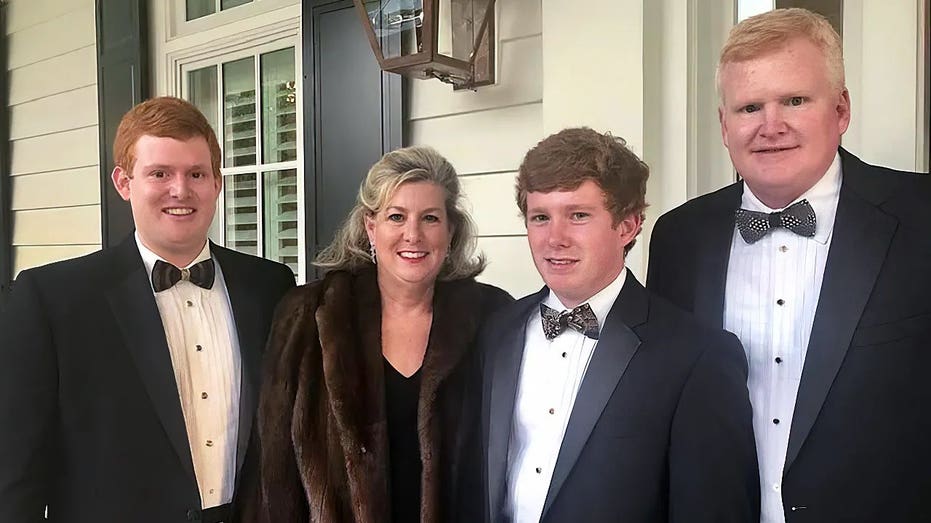

Alex Murdaugh will face a retrial in the killings of his wife and son after a South Carolina judge rejected his request to dismiss the murder indictment. The defense argued that investigator David Owen misled the grand jury about blood-spatter evidence and shotgun ammunition. Judge Debra R. McCaslin found significant errors in the state’s presentation but ruled that other evidence overwhelmingly supported probable cause. Murdaugh’s retrial is scheduled to begin April 5, 2027.
| 1) | Judge preserves indictment ahead of retrial |
| 2) | Defense challenges blood-spatter testimony |
| 3) | Ammunition evidence becomes another disputed issue |
| 4) | Court directs disputes toward trial examination |
| 5) | Retrial follows overturned 2023 convictions |
Judge preserves indictment ahead of retrial
Judge Debra R. McCaslin ruled on November 20, 2026, that the indictment against Alex Murdaugh should remain in place. The decision followed a November 13 pretrial hearing in South Carolina, where Murdaugh’s attorneys asked the court to dismiss the charges before the planned retrial.
The case concerns the June 7, 2021, shootings of Murdaugh’s wife, Maggie, and son, Paul, at the family’s Moselle property in Colleton County. McCaslin acknowledged that some evidence presented to the grand jury contained serious problems, but concluded that the unchallenged evidence still established probable cause to support the indictment.
“Even if the challenged testimony concerning the blood spatter on the T-shirt and shotgun ammunition were excluded from consideration by the grand jury, the remaining unchallenged evidence overwhelmingly established probable cause,” McCaslin wrote.
Defense challenges blood-spatter testimony
Murdaugh’s defense, led in this proceeding by attorney Jim Griffin, argued that investigator David Owen gave the grand jury a misleading account of blood-spatter evidence on a shirt Murdaugh wore on the day of the killings. Owen had testified that the material linked Murdaugh to the deaths.
The defense pointed to earlier laboratory testing that did not detect human blood in samples taken from the shirt. Prosecutors responded that negative results did not necessarily disprove the blood-spatter conclusions because chemical treatment could have produced false negatives. They also said the state’s expert continued to support the underlying findings.
Owen previously said he did not intend to mislead the grand jury and had not seen the final laboratory report until after the indictment was issued. McCaslin criticized his failure to recognize and account for a report addressed directly to him, saying such oversights can damage public confidence in the justice system.
Ammunition evidence becomes another disputed issue
The defense also challenged Owen’s testimony about shotgun ammunition found on the Murdaugh property. Owen told grand jurors that shotguns recovered there contained the same combination of ammunition used to kill Paul.
Murdaugh’s attorneys argued that none of the recovered shotguns contained the precise combination of shells identified at the crime scene. Prosecutors acknowledged that Owen’s description may have been imprecise, but denied that he intentionally misled the grand jury.
“This was not overtly false. This was what the agent understood at the time,” lead prosecutor Creighton Waters said during the hearing.
McCaslin found that the ammunition testimony was inaccurate but said the record did not establish intentional fabrication or prosecutorial misconduct.
Court directs disputes toward trial examination
The ruling allows Murdaugh’s defense to challenge the disputed testimony and forensic conclusions during the retrial rather than through a pretrial dismissal motion. The judge said inconsistencies in investigative statements and laboratory interpretations are issues for cross-examination and impeachment.
That approach means jurors at the April trial may hear competing explanations about the shirt, laboratory testing, chemical treatment and ammunition. The court’s decision does not resolve the factual disputes; it determines only that they do not invalidate the indictment at this stage.
Retrial follows overturned 2023 convictions
Alex Murdaugh was convicted in 2023 of killing Maggie and Paul. The South Carolina Supreme Court later overturned those convictions after determining that former Colleton County Clerk of Court Becky Hill improperly influenced the jury.
The retrial is scheduled to start April 5, 2027. Following the judge’s ruling, the South Carolina Attorney General’s Office said it would continue preparing for the proceeding. The defense can present its allegations about the grand jury testimony and the forensic evidence before the new jury.
| No. | Key Point |
|---|---|
| 1 | The judge refused to dismiss Murdaugh’s murder indictment. |
| 2 | The court found errors involving blood-spatter and ammunition testimony. |
| 3 | The ruling found no established intentional fabrication or prosecutorial misconduct. |
| 4 | Murdaugh’s defense may challenge the evidence at trial. |
| 5 | The retrial is scheduled for April 5, 2027. |
Summary
The court preserved the indictment because the remaining evidence was sufficient to establish probable cause, despite acknowledged problems in the grand jury presentation. The disputed testimony will now be tested before a trial jury, where the defense can pursue cross-examination and impeachment. The ruling keeps the double-murder case on track for a 2027 retrial.
Frequently Asked Questions
What did the judge decide?
Judge Debra R. McCaslin refused to dismiss the murder indictment against Alex Murdaugh, finding that other evidence sufficiently supported probable cause.
What evidence did the defense challenge?
The defense challenged testimony about alleged blood spatter on Murdaugh’s shirt and claims concerning shotgun ammunition found on his property.
When is the retrial scheduled?
Murdaugh’s retrial is scheduled to begin April 5, 2027, in South Carolina.
