

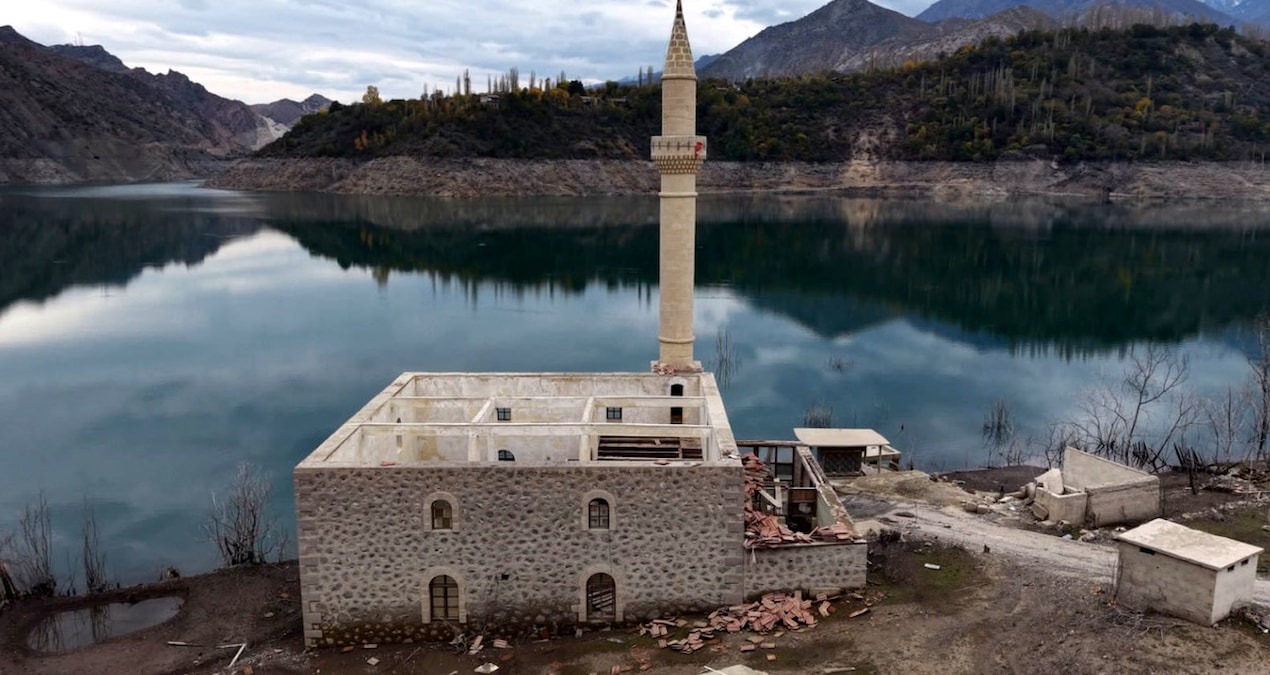

The Yusufeli Dam, the highest dam in Turkey, has revealed long-submerged areas as its water levels decreased by approximately 80 meters. Villagers of Çeltikdüzü, one of the seven communities impacted by the dam’s construction, have returned to witness their former homes and neighborhoods exposed after years underwater. The emotional reunion with their past has led to many heartfelt moments as the villagers rediscover the local structures that once held significant meaning in their lives.
| Article Subheadings |
|---|
| 1) Emotional Returns to Old Settlements |
| 2) A Glimpse into History of the Region |
| 3) Overview of the Yusufeli Dam’s Construction |
| 4) Environmental and Economic Impact |
| 5) Reconnection with Roots and Community |
Emotional Returns to Old Settlements
As waters recede at the Yusufeli Dam, villagers from the area have begun to revisit their former homes. The dramatic decrease in water level has revealed the remnants of long-lost structures such as mosques, schools, and residential houses that were submerged during the dam’s operational phase. For many, this return is both a journey into nostalgia and a poignant reminder of what was once a vibrant community. Villagers have expressed deep emotional connections to the places they once called home, sharing stories of their childhood and family life that occurred in those very structures.
Among them, Barış Pehlivan articulated his feelings upon visiting the mosque where he used to pray: “As the dam waters receded, old settlements, mosques, schools, and houses came back to view. I came to my village and relieved my longing. We relieve our longing and remember our memories,” he shared. Such sentiments are mirrored by many who have returned to experience the emotional waves of nostalgia that accompany their visit to the once-hidden village.
A Glimpse into History of the Region
The revelation of Çeltikdüzü and other villages highlights a significant chapter in the history of the region, which has been shaped by both human development and natural resources. The construction of the Yusufeli Dam not only submerged these communities but also transformed the local geography and the lives of its residents. Over the years, as the area became part of the dam’s reservoir, villagers were relocated to newly built settlements, leaving behind their ancestral homes. Murat Kundakçı, another villager, noted the emotional resonance of witnessing their grandparent’s living spaces, stating, “We get emotional when we see the living spaces of our grandfathers and grandmothers here.” This historical context underscores the significance of the dam, as the newly exposed structures tell the story of life before their disappearance in the waters.
Overview of the Yusufeli Dam’s Construction
The Yusufeli Dam, situated on the Çoruh River, was officially inaugurated in 2013 after long-anticipated construction. Standing at 275 meters, it claims the title of the highest dam in Turkey and ranks fifth worldwide. Since its filling began in 2022, the dam’s reservoir has dramatically reshaped not only the landscape but also the social fabric of the area. With a power generation capacity of 558 megawatts, the dam presents significant potential for renewable energy, producing nearly 1.9 billion kilowatt hours annually. This modern engineering marvel has understandably become a source of pride; however, it has come at a steep cost to local communities who lost their homes.
Environmental and Economic Impact
While the Yusufeli Dam represents vital advancements in Turkey’s energy infrastructure, it also poses challenges to local ecosystems and communities. The advent of the dam flooded vital agricultural land, impacting livelihoods for those dependent on farming and livestock. The submerged villages serve as a stark reminder of the trade-offs inherent in large-scale infrastructure projects. Officials suggest that while the dam’s economic benefits are substantial — providing electricity and bolstering local economy through construction jobs — the long-term psychological impact on relocated families remains less quantifiable.
Moreover, local wildlife has undoubtedly been affected by the drastic alteration of their natural habitat. The reservoir has changed local water flow dynamics, which can impact fish populations and other fauna that thrived in the area prior to the dam’s construction. As these complex interactions unfold, the community grapples with the consequences of development versus conservation.
Reconnection with Roots and Community
Despite the dam’s negative implications, the recent exposure of the submerged areas has provided an opportunity for community reconnection. Villagers who now reside elsewhere frequently return to the revealed sites in a search for a sense of belonging. This journey back to their roots not only reinforces individual connections to their past but also strengthens communal bonds as they exchange stories and memories. The act of revisiting old haunts fosters a unique collective identity among the residents that transcends physical displacement.
Through these emotional reunions, the community finds strength in shared history and memories, reminding them of the resilience that characterizes their identities. Such moments of connection, while tinged with melancholy, also inspire hope for the future of the relocated communities, as they aspire to preserve their heritage even amidst the changes wrought by modern development.
| No. | Key Points |
|---|---|
| 1 | The Yusufeli Dam’s water level has decreased by about 80 meters, revealing submerged areas. |
| 2 | Villagers have returned to visit their former homes and reflect on their pasts. |
| 3 | The dam, completed in 2013, is the highest in Turkey, significantly impacting local geography and communities. |
| 4 | While providing economic benefits through energy, the dam has submerged vital agricultural areas. |
| 5 | Revisiting submerged sites offers villagers a chance to reconnect with their roots and community heritage. |
Summary
The revelations brought forth by the Yusufeli Dam’s decreased water level illustrate the juxtaposition of progress and nostalgia. As villagers return to revisit the remnants of their past, the emotional resonance showcases their deep kinship with the land that once housed their homes and memories. While the dam promises to provide energy benefits for Turkey, it also serves as a poignant symbol of the sacrifices made by local communities, leading to a complex dialogue about development and its costs.
Frequently Asked Questions
Question: What is the significance of the Yusufeli Dam?
The Yusufeli Dam is significant as it is the highest dam in Turkey and the fifth highest globally, providing substantial renewable energy generation while impacting local communities by submerging their homes.
Question: How has the community responded to the dam’s construction?
The community has experienced a mix of emotions, with many villagers returning to exposed areas that were once submerged, reflecting on their past and expressing both nostalgia and sadness.
Question: What economic benefits does the Yusufeli Dam provide?
Economically, the Yusufeli Dam generates approximately 1.9 billion kilowatt hours of electricity annually, contributing significantly to Turkey’s energy supply and offering job opportunities during its construction.
