

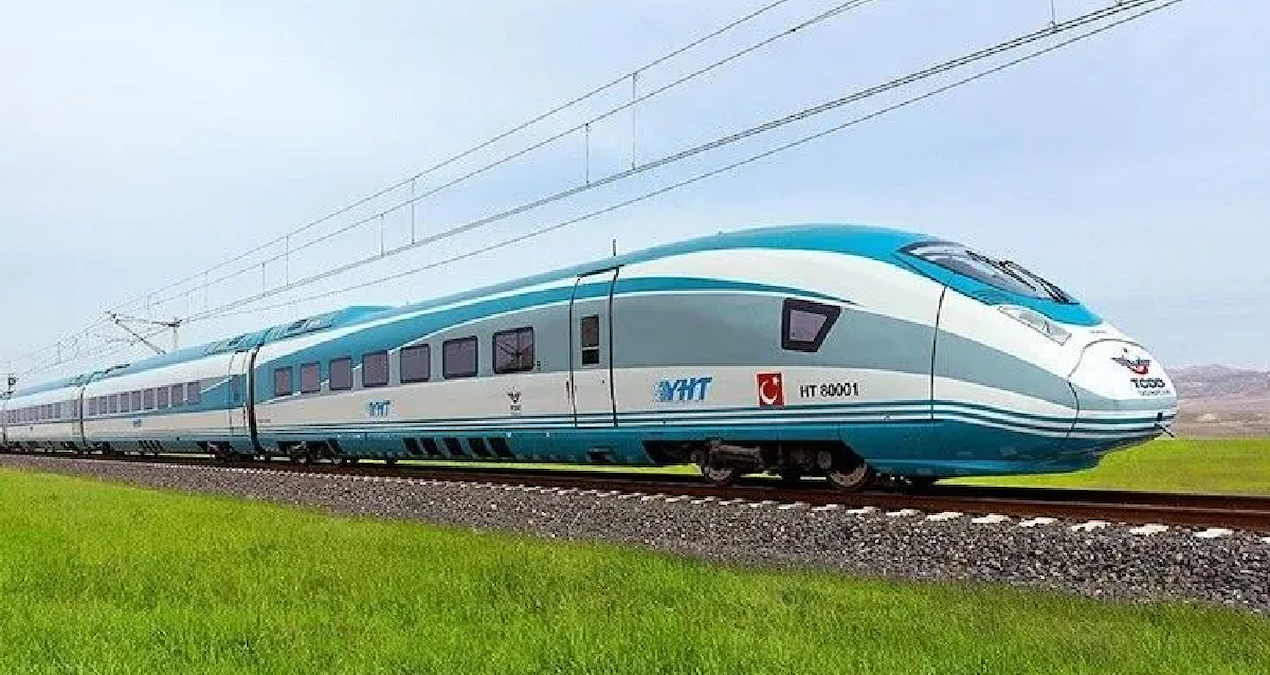

A significant advancement in Türkiye’s transportation infrastructure is underway with the expansion of its high-speed train network. The Bandırma–Bursa–Yenişehir–Osmaneli High-Speed Train Project has reached a key milestone, as testing has commenced on the Bursa to Osmaneli line. Once completed, this line is projected to drastically reduce travel time between the two metropolitan cities to approximately two hours, enhancing connectivity and mobility in the region.
| Article Subheadings |
|---|
| 1) Overview of the High-Speed Train Project |
| 2) Current Status of Infrastructure Development |
| 3) Technical Testing Phases Explained |
| 4) Future Plans for Signaling and Safety Tests |
| 5) Implications for Regional Transportation |
Overview of the High-Speed Train Project
The Bandırma–Bursa–Yenişehir–Osmaneli High-Speed Train Project represents a major investment in Türkiye’s transport sector, focusing on creating efficient rail links between key urban centers. This initiative aims not just to provide faster travel options, but also to promote economic growth and environmental sustainability by encouraging more people to use trains over cars. The Minister of Transport and Infrastructure, Abdulkadir Uraloğlu, highlighted the government’s commitment to enhancing the rail network, asserting that a modern, integrated rail system is vital for Türkiye’s future.
The project has been in progress for several years, involving many phases that include planning, infrastructure development, and the implementation of advanced technologies. The new line reinforces the government’s vision of connecting regions across Türkiye, thus providing a quicker and more reliable mode of transportation. With a target of reducing travel duration to around two hours, the proposed high-speed train line is expected to have far-reaching effects on the region’s social and economic fabric.
Current Status of Infrastructure Development
As of now, significant phases of the infrastructure and superstructure works have been wrapped up in the Osmaneli-Bursa segment. In a recent statement, Minister Uraloğlu confirmed, “We have completed the infrastructure and superstructure works in the Osmaneli-Bursa section and started the testing process on our line.” This announcement marks a critical juncture in the project, where the groundwork has been meticulously laid out, paving the way for subsequent testing and operational readiness.
Moreover, the completion of these preliminary constructions means that the focus has shifted towards ensuring the safety and reliability of the line through extensive testing. It is a critical step in guaranteeing that the high-speed train can operate efficiently once it opens to the public. The effects of optimized rail connectivity will not only streamline transportation but also support local economies affected by delayed travel times.
Technical Testing Phases Explained
In line with the project timeline, various technical tests have commenced to ensure the safe operation of the high-speed train. Significant milestones include road geometry measurements and static catenary measurements, which were completed in the months of September and October. Following those steps, signaling power system tests kicked off in October. As Minister Uraloğlu noted, catenary hot running tests were also executed in November, with dynamic acceleration tests and dynamic catenary measurements in the pipeline for December.
The testing process is a thorough evaluation intended to confirm that all systems function correctly before the train officially begins operation. These tests involve evaluating the technical integrity of various components, ensuring that every aspect is operational. This rigorous approach is vital to managing risks associated with high-speed rail travel, where safety concerns are paramount.
Future Plans for Signaling and Safety Tests
Going forward, additional technical tests are planned to further ensure the line’s operational readiness. The Minister emphasized that the testing phase will encompass signaling concordance tests alongside checks for the European Train Control System (ETCS) and the railway mobile communication system (GSM-R). All of these tests are essential to ensure that the rail network not only connects different regions but does so with the utmost safety and efficiency.
Uraloğlu remarked on the importance of integrating the new line with existing high-speed rail systems, stating that integration tests will be carried out between the Osmaneli-Bursa line and the Ankara-Istanbul High-Speed Train line. This integration is expected to enhance the overall capacity and reach of Türkiye’s rail network, reinforcing the government’s vision of a comprehensive, efficient transportation infrastructure.
Implications for Regional Transportation
The completion of the Bandırma–Bursa–Yenişehir–Osmaneli High-Speed Train line is set to have significant implications for regional transportation overall. By improving travel times and expanding access to major urban centers, this initiative aims to facilitate not only personal travel but also commercial activities and tourism. Enhanced rail connectivity is likely to encourage economic growth in the connected cities, fostering partnerships, tourism, and real estate development.
Additionally, the new high-speed train line aligns with broader efforts to promote sustainability within the transportation sector. By providing a viable alternative to car travel, the rail system aims to reduce traffic congestion and the environmental impact associated with vehicular emissions. The government’s commitment to investing in public transport infrastructure reflects a strategic move towards long-term sustainability and efficiency in Türkiye’s transport network.
| No. | Key Points |
|---|---|
| 1 | New high-speed train line between Bursa and Osmaneli is progressing. |
| 2 | Infrastructure and superstructure work is now complete on the Osmaneli-Bursa section. |
| 3 | Technical testing for signaling and safety is currently ongoing. |
| 4 | Integration with existing high-speed rail systems is planned for operational efficiency. |
| 5 | The project aims to reduce travel time to two hours, enhancing connectivity. |
Summary
The ongoing development of the Bandırma–Bursa–Yenişehir–Osmaneli High-Speed Train Project marks a significant stride towards improving Türkiye’s transportation infrastructure. The line’s completion promises not only reduced travel times between major cities but also enhanced economic prospects and environmental benefits. With rigorous technical testing on the horizon and plans for future integration with existing rail systems, Türkiye is poised to transform its public transport landscape, setting a benchmark for future projects in the region.
Frequently Asked Questions
Question: What benefits will the new high-speed train line provide?
The new high-speed train line aims to reduce travel time between Bursa and Osmaneli to approximately two hours, promoting faster connectivity and potentially boosting economic activities in the region.
Question: What testing processes are being implemented?
A series of testing processes are being implemented, including geometric measurements, signaling power system checks, and dynamic tests to ensure the operational readiness and safety of the train line.
Question: How does this project impact environmental sustainability?
By encouraging the use of trains as a primary mode of transportation, the project aims to reduce reliance on cars, leading to lower traffic congestion and decreased vehicular emissions, ultimately promoting a more sustainable transportation network.
