

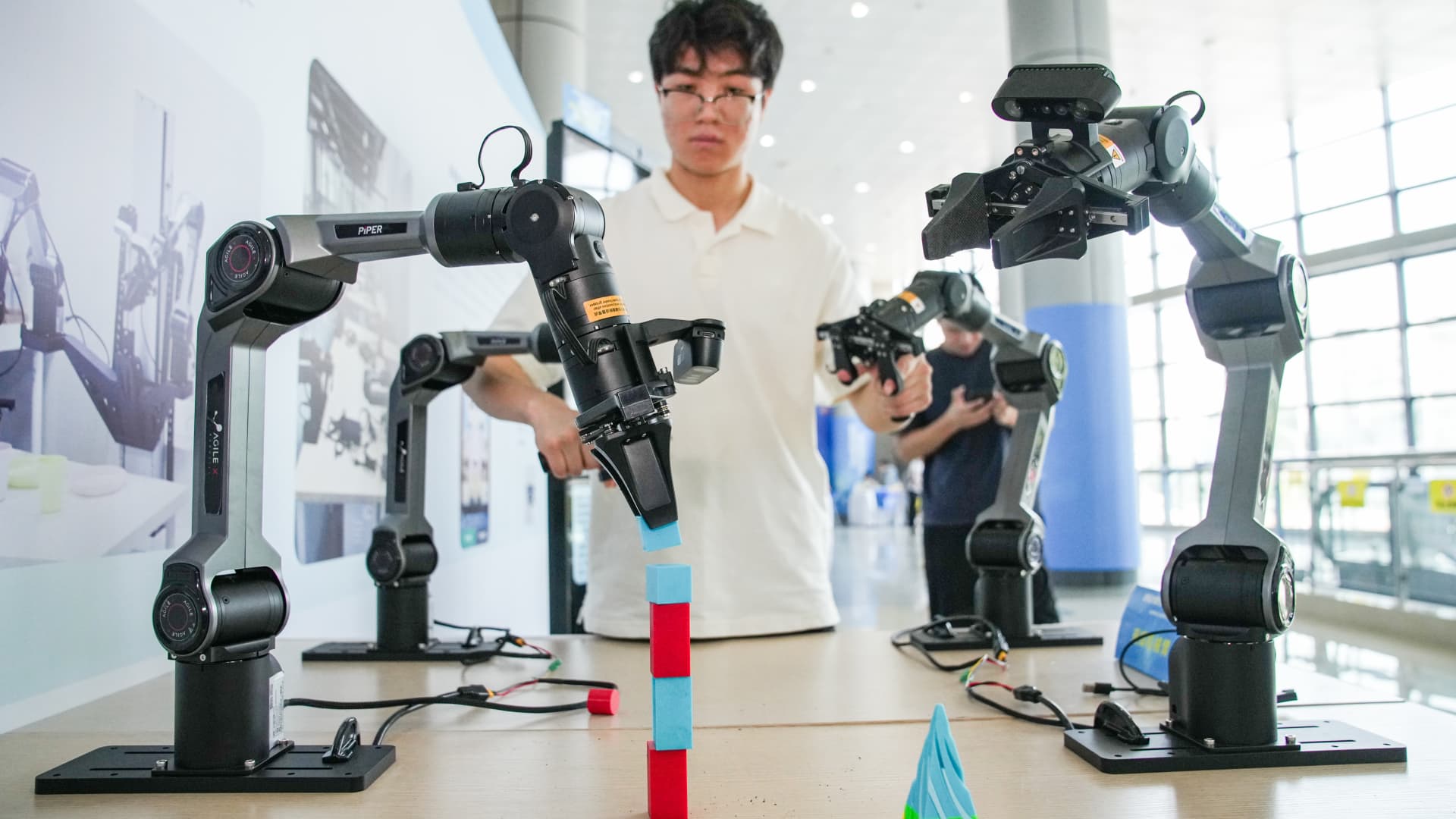

In a significant development, Jensen Huang has recently returned to his position as CEO of Nvidia, igniting discussions about the intense competition in the artificial intelligence (AI) sector between the United States and China. This came on the heels of a tumultuous period marked by Huang’s resignation amid personal scandal and concerns regarding the retention of tech talent. The situation highlights the evolving landscape of global AI development, especially as Chinese companies are rapidly closing the talent gap with their U.S. counterparts. Analysts indicate that the pursuit of top-tier engineers is becoming increasingly competitive, with implications for the future of AI innovation.
| Article Subheadings |
|---|
| 1) The Significance of Huang’s Return to Nvidia |
| 2) Talent Retention in the U.S.-China AI Race |
| 3) Disparity in Compensation: U.S. vs. China |
| 4) The Expanding Landscape of AI Talent |
| 5) Future Implications for Global AI Innovation |
The Significance of Huang’s Return to Nvidia
The recent reinstatement of Jensen Huang as head of Nvidia was marked by swift movements on Wall Street, as shares surged following the announcement. His resignation had created ripples in the tech industry, raising concerns about the leadership stability of a company pivotal to the AI landscape. Officials emphasized the gravity of this moment, as Huang’s expertise and vision are crucial in the ongoing race to dominate AI technology. His departure, even temporarily, had many fearing for Nvidia’s competitive edge amidst challenges from Chinese tech firms.
In discussions surrounding his resignation, it was revealed that Huang allegedly faced issues linked to an extramarital affair, which reportedly prompted the intervention of U.S. officials concerned about his potential migration to China. A statement from influential political figures suggested that his departure could have detrimental effects on U.S. technological advancements. Huang’s quick return has been interpreted as a strategic move to stabilize the company and mitigate concerns about losing talent to foreign rivals in an increasingly competitive market.
Talent Retention in the U.S.-China AI Race
The competition between the U.S. and China in the realm of artificial intelligence is not merely a clash of technologies but a battle for the smartest minds in the industry. Analysts noted that in less than three years, Chinese companies have dramatically increased their share of global AI talent, narrowing the gap traditionally maintained by the U.S. According to research from the Carnegie Endowment, the trend indicates a more aggressive recruitment strategy from Chinese firms, who are actively seeking top-tier engineers worldwide.
The case of Huang serves as a persuasive argument for the U.S. to prioritize the retention of its intellectual prowess. Experts suggest that neglecting the ongoing talent flight could lead to a significant setback in technological leadership. Recruitment strategies are evolving, with many companies offering lucrative salaries and benefits to attract and retain engineers, further fueling the competition between the two nations.
Disparity in Compensation: U.S. vs. China
The financial incentives offered by U.S. companies have created a vast salary gap between U.S. tech engineers and their Chinese counterparts. Reports indicate that U.S. engineers receive compensation that can be two to three times greater than that in China. This disparity is attributed not only to the differences in market valuations but also to the enhanced demand for AI talent in a region where the cost of recruiting and retaining such talent is steep.
Alex Lu, a consultant in the tech industry, emphasized that competition for skilled engineers is fierce, and companies are feeling the fiscal pressure to offer higher salaries. In some cases, recruitment from China has become a viable alternative for U.S. companies looking to balance costs while still acquiring top talent.
The ongoing challenge underscores a crucial question for U.S. companies: How can they maintain leadership in AI innovation while confronting economic realities that push engineers towards better-paying opportunities elsewhere?
The Expanding Landscape of AI Talent
As the AI landscape evolves, the pool of talent is also expanding beyond traditional hubs. Rachel Wu, a partner in a recruiting agency, highlighted that Chinese firms are increasingly targeting U.S.-trained engineers, drastically changing the global dynamics of tech talent distribution. Furthermore, many former employees from major U.S. firms are now exploring opportunities within Chinese startups, lured by competitive salaries and stock options that offer significant financial benefits.
Moreover, a recent trend indicates that with growing local talent in China, the dependency on foreign engineers is reducing. Damien Ma, director of Carnegie China, pointed out that the increasing supply of trained professionals within China could shift the balance of AI development as the market continues to mature. With demand for skilled AI engineers soaring, many candidates are fielding multiple job offers, further inflating salary expectations across the industry.
Future Implications for Global AI Innovation
The implications of Huang’s return, combined with the rising talent pool in China, raise significant questions about the future of global AI innovation. The current landscape shows a shift where Chinese firms are not only enhancing their technological capabilities but doing so at a rapid pace due to strategic hiring practices. Industry insiders note that if the U.S. does not adapt its strategies regarding talent retention and compensation, it may risk losing its technological edge.
Looking forward, both U.S. and Chinese companies recognize that innovation will critically depend on who can attract and retain the best engineers. As competition stiffens, observers are left to wonder how the international regulatory environment will adapt, considering recent tensions over trade and technology transfer, particularly in the sphere of AI development.
| No. | Key Points |
|---|---|
| 1 | Jensen Huang’s return as Nvidia CEO is linked to the U.S.-China tech rivalry. |
| 2 | The U.S. is facing challenges in retaining AI talent amid increasing competition from China. |
| 3 | A significant pay disparity exists between U.S. and Chinese engineers, affecting recruitment strategies. |
| 4 | Chinese firms are ramping up their efforts to attract top-tier talent globally. |
| 5 | The future of global AI innovation will heavily depend on effective talent retention strategies. |
Summary
The return of Jensen Huang to Nvidia highlights the complexities of the global AI landscape, where the balance of power is shifting as both the U.S. and China vie for technological supremacy. Huang’s situation reflects broader concerns about talent retention within the industry, particularly as companies tussle to secure the brightest minds to drive innovation. The significant salary disparities and evolving recruitment strategies suggest a pivotal moment for AI development that could reshape the competition between superpowers for years to come.
Frequently Asked Questions
Question: Why is Jensen Huang’s return to Nvidia important?
Huang’s return signals stability for Nvidia at a time when talent retention is crucial in the U.S.-China AI race, which has significant implications for global technology leadership.
Question: How is the competition for AI talent evolving between the U.S. and China?
Chinese companies are aggressively recruiting AI talent, increasingly narrowing the gap that has historically favored the U.S. As local talent pools grow, the competition intensifies.
Question: What impact does salary disparity have on recruiting efforts?
The vast salary gap between U.S. and Chinese engineers affects recruiting strategies, with U.S. companies facing challenges in retaining skilled talent due to more attractive compensation offers from Chinese firms.
