

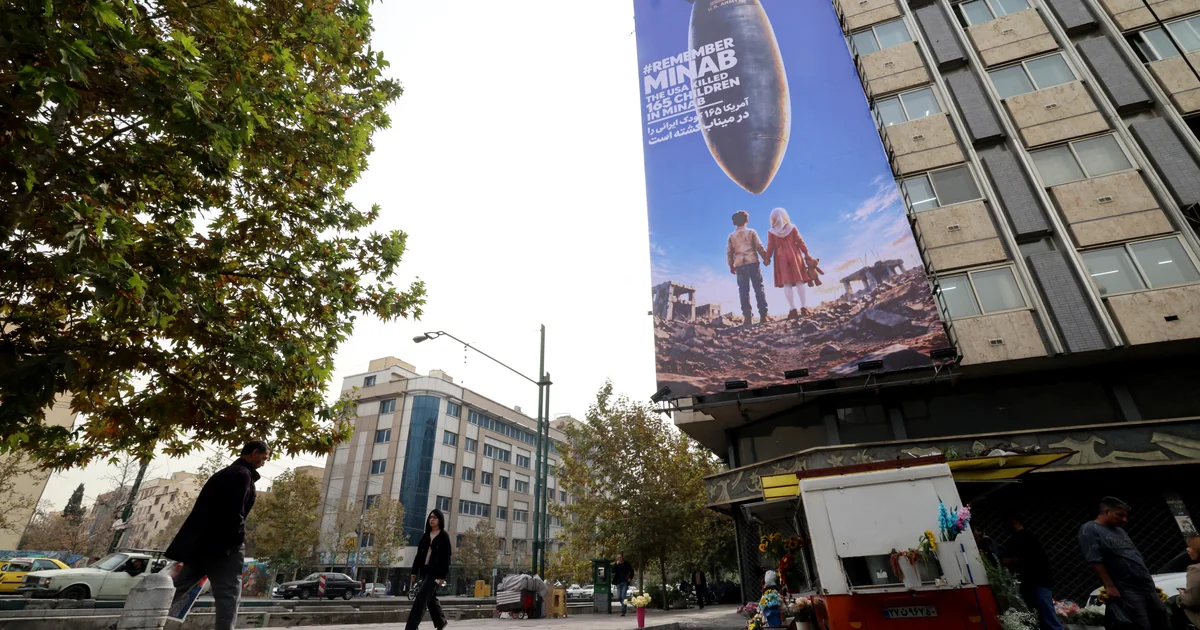

In recent developments, tensions between Iran and the United States have escalated over various military and diplomatic actions. Iran has publicly criticized the U.S. for utilizing artificial intelligence in military operations, an issue raised during a U.N. Security Council meeting. Meanwhile, Iranian-backed Houthis have intensified their attacks against Saudi targets, and Israeli officials have expressed concerns regarding Iran’s potential development of chemical weapons. Complicating matters further, a U.S. jury has convicted Chinese tech giant Huawei over its business dealings with Iran and related conspiracy charges, raising questions about international sanctions and trade practices.
| Article Subheadings |
|---|
| 1) Iran’s Condemnation of U.S. Military AI Usage |
| 2) Escalating Attacks by Iran-Backed Houthis |
| 3) Israel’s Warning on Iranian Chemical Weapons |
| 4) Huawei’s Conviction and Its Implications |
| 5) The Broader Context of U.S.-Iran Relations |
Iran’s Condemnation of U.S. Military AI Usage
During a recent session of the U.N. Security Council, Iranian Ambassador Gholamhossein Darzi voiced strong objections to the U.S. military’s integration of artificial intelligence (AI) in combat operations. He highlighted the increasing use of AI in planning and executing military strikes, which he described as an alarming trend that raises severe ethical and legal concerns. Darzi revealed details regarding the operational efficiency of these AI technologies, stating that U.S. forces had deployed over 2,000 munitions against multiple targets within a spectacular time frame of just 96 hours.
Reports indicate that the U.S. employed tools from AI firms such as Palantir and Anthropic, including their systems, Maven and Claude, to analyze intelligence data effectively, prioritize targets, and generate precise strike coordinates. Ambassador Darzi emphasized that regardless of technological advancements or the involvement of private sectors, the U.S. and its allies would not be shielded from accountability regarding violations of international law. He reiterated that those accountable for what he termed “atrocious crimes” against Iranian civilians must be held responsible for their actions.
Escalating Attacks by Iran-Backed Houthis
The military activities in the region intensified when Yemen’s Iran-supported Houthi rebels orchestrated attacks against key infrastructures in Saudi Arabia. On a recent Wednesday, the Houthis claimed responsibility for targeting the financial district of Riyadh as well as the notable Ras Tanura oil refinery in the eastern part of the kingdom. These strikes are touted as direct retaliations against perceived aggressions on their territory.
Houthi military spokesperson Yahya Saree characterized the refinery attack as “accurate and direct,” asserting that the assault resulted in significant damage, including fires within the facility. Furthermore, he disclosed that the assault on Riyadh was executed in a coordinated three-phased approach, executing precise strikes on intended targets. As the hostilities escalated, Saudi forces retaliated, reportedly striking the city of Hodeida, shortly after the Houthis declared intentions to respond if such an offensive occurred.
The ongoing civil conflict in Yemen, now over a decade long, has seen the Houthis engaged in a struggle against the internationally recognized Yemen government, which continues to receive backing from Saudi Arabia. The situation remains fluid, particularly with the recent strategic advances made by the Houthis, who have consolidated their hold over critical maritime routes, significantly affecting Saudi oil exports in the region.
Israel’s Warning on Iranian Chemical Weapons
In a related context, Israeli Defense Minister Israel Katz has brought attention to Iran’s alleged efforts to develop chemical weapons, vowing that Israel will not allow such capabilities to be attained by Tehran. In a briefing made to Israeli journalists, Katz claimed, “Iran is in the process of developing chemical weapons” and affirmed Israel’s commitment to thwart this initiative.
Moreover, Katz suggested that Israel might consider a preemptive strike against Iran, particularly if there is credible intelligence indicating an impending threat. He questioned whether it would be prudent to wait for a first attack from Iranian forces, highlighting the criticality of preemptive measures in safeguarding national security.
Simultaneously, Iranian Foreign Minister Abbas Araghchi criticized the U.S. for its withdrawal of funding from the Organisation for the Prohibition of Chemical Weapons (OPCW), an essential entity in monitoring global chemical weapon usage. He contended that by cutting financial support, the U.S. has jeopardized the organization’s capability to operate effectively, likening its actions to a deliberate endangerment of global peace and security.
The OPCW, recognized with the Nobel Peace Prize in 2013 for its significant contributions, has faced increased challenges and budgetary strains in the current political landscape, raising alarms about the future of chemical weapons monitoring worldwide.
Huawei’s Conviction and Its Implications
Meanwhile, the tension between the U.S. and China was exemplified by a recent verdict delivered by a Brooklyn federal court, which resulted in the conviction of Chinese tech giant Huawei Technologies. The company was found guilty of conspiring to steal trade secrets and conducting business with nations subject to U.S. sanctions, including Iran. The jury’s decision, reflecting a widespread concern regarding corporate compliance with international sanctions, resulted in Huawei being convicted on 10 of 12 charges presented against it.
Though no individual representatives were tried in this case, the company faces the possibility of paying substantial penalties when sentencing occurs in September. The U.S. Department of Justice unveiled allegations that Huawei had been a crucial enabler of the Iranian intelligence community, reportedly providing technology for monitoring and censorship of internet access within the country.
The DOJ further indicated that Huawei misled global banking institutions, media channels, and government officials regarding its operations in Iran. Such assertions indicate a paradigmatic crisis regarding corporate ethics and compliance in international trade, particularly when both national security and diplomatic relations are at risk due to alleged corporate malfeasance.
The Broader Context of U.S.-Iran Relations
The multifaceted conflicts and accusations illustrate a broader tug-of-war between the United States and Iran, which has significant implications for regional stability in the Middle East. The use of advanced technologies in warfare, ongoing power struggles within Yemen, and the shadow of chemical weapon development add layers of complexity to an already tense geopolitical environment.
The Iranian regime continues to advocate for its interests while undergoing scrutiny from U.S. officials, especially regarding its military capabilities. It remains uncertain how these events will influence future negotiations or potential conflicts, especially given the intersecting narratives of military escalation and diplomatic rigidity. The involvement of companies like Huawei in international relations also reflects the impact of commerce on diplomacy and national interests.
| No. | Key Points |
|---|---|
| 1 | Iran has condemned the U.S. for using AI in military operations. |
| 2 | Houthis increased attacks on Saudi Arabia in response to airstrikes. |
| 3 | Israel warns against Iran’s potential development of chemical weapons. |
| 4 | Huawei was convicted for conspiracy and business with Iran under U.S. sanctions. |
| 5 | Overall U.S.-Iran relations continue to be strained amidst these developments. |
Summary
The recent slew of events surrounding U.S.-Iran relations highlights the delicate balance of power and the intricate web of international diplomacy. As tensions continue to mount through military actions and legal proceedings, the global community watches closely. The implications of these developments extend beyond national borders affecting trade, security, and international law, thereby challenging established protocols in various geopolitical contexts.
Frequently Asked Questions
Question: What are the implications of Iran’s critique of U.S. AI usage in military operations?
Iran’s critique underscores concerns about the ethical use of technology in warfare and potential accountability for military actions taken through AI, possibly reviving debates within international law on the use of advanced technologies.
Question: How might the conviction of Huawei affect U.S.-China relations?
Huawei’s conviction further complicates U.S.-China relations by highlighting disputes over trade compliance, corporate governance, and national security issues, which could lead to increased tensions and competitive posturing between the two nations.
Question: What has been the impact of Houthi attacks on Saudi infrastructure?
Houthi attacks on Saudi infrastructure have led to heightened security concerns within Saudi Arabia, increasing the likelihood of retaliatory measures and further escalation of the conflict, affecting regional stability and oil supply chains.
