

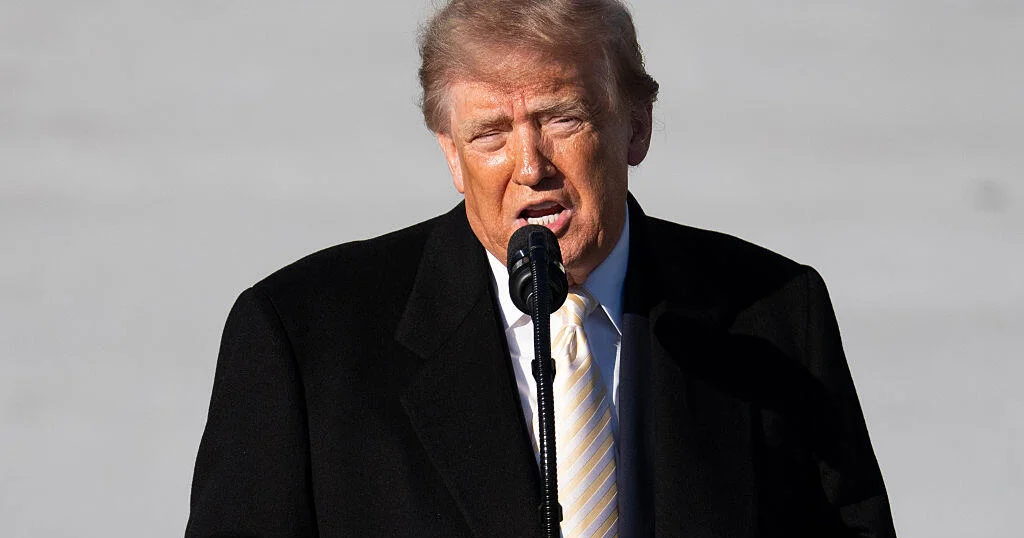

In a significant ruling, U.S. District Judge Loren AliKhan determined that the Democratic National Committee (DNC) failed to convincingly argue against the government’s taxpayer-funded advertisements promoting partisan messages associated with President Trump. This decision came ahead of the midterm elections and was based on allegations that the ads constituted government-sponsored propaganda. Despite the DNC’s claims of potential harm in the political landscape, the court ruled to maintain the ads, marking a setback for Democratic efforts to halt what they deemed inappropriate government messaging ahead of elections.
| Article Subheadings |
|---|
| 1) Overview of the Case and Ruling |
| 2) Legal Arguments from the Parties |
| 3) Background on the Advertisements |
| 4) Reactions from Political Entities |
| 5) Implications for Future Elections |
Overview of the Case and Ruling
The ruling by Judge Loren AliKhan, which was issued on a Wednesday, addressed the DNC’s request to extend a temporary ban on federal government advertisements. The DNC argued these advertisements promoted partisan messages just weeks before crucial elections, asserting that they represented illegal propaganda supporting President Trump and his administration during the election season. In her judgment, Judge AliKhan pointed out that a previous restraining order had taken place shortly before an earlier election cycle, yet the most recent midterm elections had already concluded, as had the immediate threat of harm claimed by the DNC.
“But the November 2026 midterm elections have come and gone,” she stated. This pivotal remark illustrates her view that the DNC’s legal recourse came too late in the electoral process, given the absence of imminent elections that would have necessitated a prohibition on the advertising.
Legal Arguments from the Parties
In response to the advertisements, the DNC presented claims rooted in both legal precedent and public sentiment, arguing that the ads were merely government-funded vehicles designed to bolster a political figure’s popularity just before the elections. Officials from the DNC underscored that such deployment of taxpayer funds rated as a misuse of public resources in the interest of partisan politics, hence their legal action against the Trump administration. Their legal strategy highlighted a focus on the integrity of the electoral process and argued for a governmental obligation to remain neutral in political matters, particularly during election periods.
Conversing with the Justice Department’s stance, the government maintained that the ads did not directly solicit political action from the public, distinguishing them from standard political advertisements. They emphasized that the messages conveyed by these ads were more in line with public service announcements traditionally issued by prior administrations, possibly misleading the DNC’s attempts to categorize them as electioneering propaganda. The Justice Department reiterated that there was no prohibition on educating citizens about government initiatives.
Background on the Advertisements
The advertisements funded under a $20 million contract by the Department of Homeland Security became widely broadcasted on numerous media platforms, including major cable and broadcasting networks. The content of these ads predominantly featured messaging favorable to President Trump, highlighting achievements claimed by his administration while prominently displaying the disclaimer that they were “Paid for by the U.S. Government.” The contention fueled by the DNC arose from the timing and the nature of the messaging, asserting that the ads ventured beyond standard public education efforts and instead flirted dangerously close to advancing a political agenda.
The controversy surrounding these ads caught fire in late September, shortly before the midterms. As highlighting government operations and policies typically occurs in advance of electoral events, these particular ads raised eyebrows due to their overtly partisan content, prompting public outcry and legal pushback from various quarters, chiefly among Democrats wary of losing ground in critical elections.
Reactions from Political Entities
In the wake of the ruling, responses from Democratic leadership were predictably disheartened, with spokesperson Angelo Fernández Hernández expressing clear disappointment over the court’s decision and promising continued efforts to challenge the Trump administration on grounds of undermining electoral credibility. Such a stance indicates a broader unease within the DNC regarding potential future implications of similar government messaging operations.
Conversely, the White House has asserted steadfast backing for the advertisements, articulating the belief that such initiatives serve important public service objectives rather than strictly political ones. By framing these ads in a narrative of patriotic promotion, the administration attempts to shift the conversation surrounding the legality and appropriateness of their content. This political maneuvering encapsulates the ongoing rivalry between the two parties, especially in an atmosphere charged with election-related urgency.
Implications for Future Elections
As it stands, the ruling of Judge AliKhan may set a precedent for how government-sponsored messaging will be evaluated in future electoral cycles. The decision to dismiss the DNC’s appeal not only underscores the judiciary’s inclination to interpret governmental actions through a lens favoring long-standing practices of public communication but also reflects a broader tolerance perhaps for advertising that intertwines political messaging under the veil of public interest.
The outcome may embolden future administrations to pursue similar messaging strategic advancements, as it suggests that the judiciary may be hesitant to intervene pending the absence of clearly defined electoral candidate promotion. As such, both major political parties may prepare for upcoming elections with a keen awareness of the ramifications linked to governmental communication and campaigning, potentially complicating the delineation of public service announcements versus political propaganda.
| No. | Key Points |
|---|---|
| 1 | Judge Loren AliKhan ruled against the DNC’s request to extend a ban on federal ads. |
| 2 | The DNC argued the ads were illegal propaganda promoting President Trump. |
| 3 | The ads were funded by a $20 million Department of Homeland Security contract. |
| 4 | The White House defended the ads as public service announcements. |
| 5 | The ruling may influence future government messaging around elections. |
Summary
The ruling by Judge Loren AliKhan highlights a critical intersection between government communication and political electioneering, suggesting that the courts may refrain from intervening in government-funded messaging that lacks an explicit connection to election outcomes. This decision could potentially redefine how future administrations approach public service announcements during election seasons, raising questions about the ethical boundaries of government involvement in political messaging. As political skirmishes continue to evolve, the ramifications of this ruling could start a conversation on the validity and ethics of using taxpayer money for communications that could be perceived as partisan.
Frequently Asked Questions
Question: What was the main issue in the court case regarding the advertisements?
The main issue centered around whether the taxpayer-funded advertisements were considered illegal propaganda supporting President Trump during the election season, as alleged by the DNC.
Question: How did the court justify its ruling to not extend the ban on the ads?
Judge Loren AliKhan ruled that the DNC did not demonstrate a sufficient likelihood of success on the merits of their case and noted that the midterm elections had already taken place, diminishing the legitimacy of their claims.
Question: What are the potential implications of this ruling for future political advertising?
This ruling could signal that courts may be hesitant to interfere with government messaging that does not directly target election results, thus potentially allowing future administrations to utilize similar messaging strategies under the premise of public service.
