

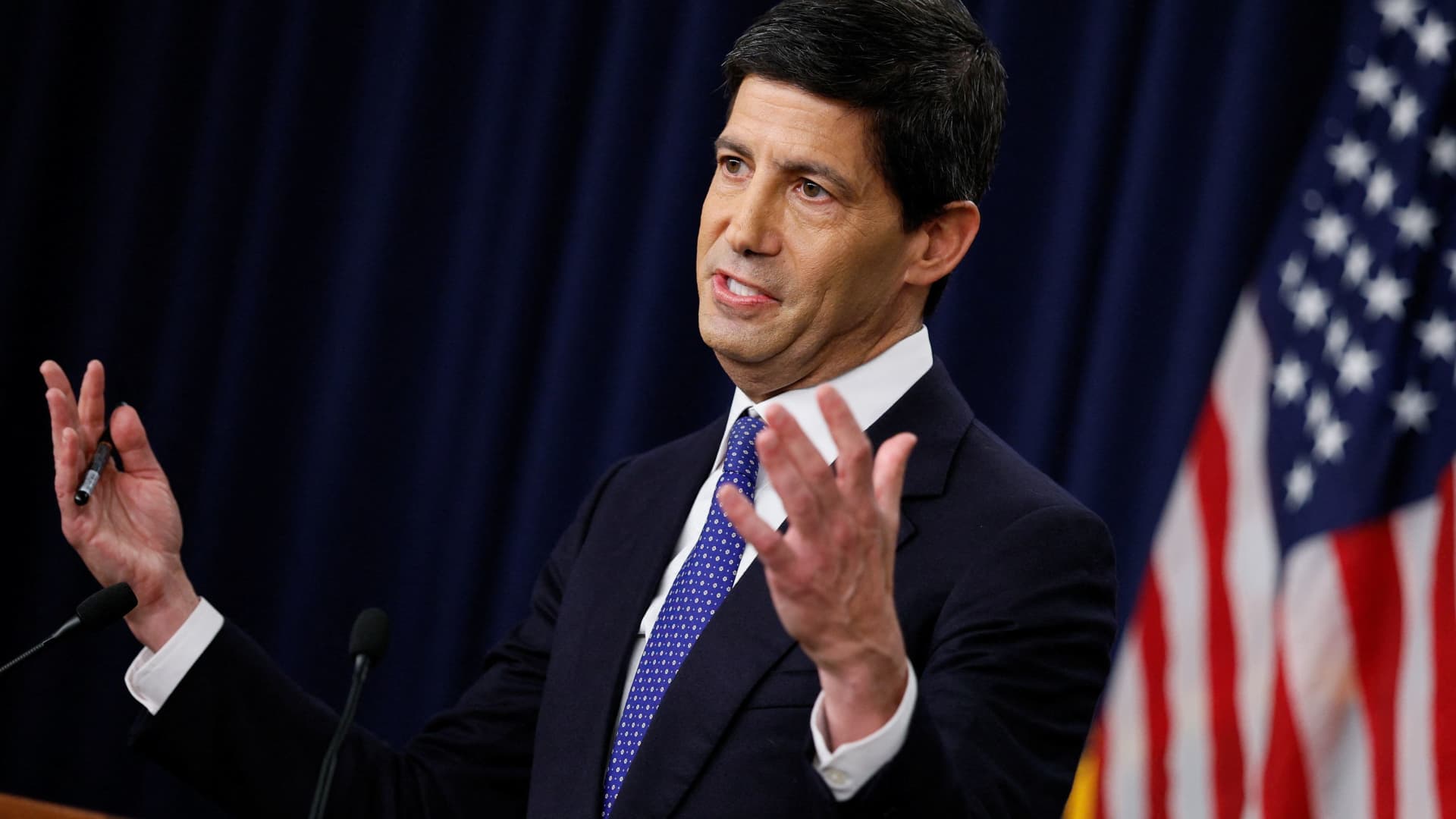

The recent fluctuations in the stock market, particularly concerning Nvidia, have underscored the challenges faced by Federal Reserve Chairman Kevin Warsh as he navigates monetary policy amid volatility. As stocks experienced a downturn, market-based expectations for interest rate hikes shifted considerably. However, shortly after, a rally sparked renewed confidence in potential rate increases. Warsh’s focus appears to be on assessing broader economic signals rather than reacting to short-term market movements, emphasizing the significance of comprehensive analysis in policymaking.
| Article Subheadings |
|---|
| 1) The Recent Market Dynamics |
| 2) Warsh’s Vision for Monetary Policy |
| 3) Focus on Artificial Intelligence |
| 4) The Challenges of Economic Forecasting |
| 5) A Dual-Edged Sword: Economic Signals |
The Recent Market Dynamics
The fluctuations in the stock market, particularly the notable volatility surrounding Nvidia, have highlighted a significant dilemma for Federal Reserve Chairman Kevin Warsh. Over the course of last week, stock prices saw a dramatic decline, causing market-based expectations regarding interest rate hikes to diminish significantly. Market participants reacted strongly to the initial downturn, suggesting a growing uncertainty about the Fed’s future monetary policy direction.
On a positive note, the onset of a market rally, coinciding with the return of Nvidia’s CEO, Jensen Huang, restored investor confidence. This shift in investor sentiment raises anticipation that further interest rate hikes by the Fed might be on the horizon again. Such rapid changes in market dynamics illustrate how susceptible financial markets can be to perceptions and sentiments, often swinging quickly from one extreme to another.
These oscillations reflect the broader challenges faced by the Fed in gauging economic conditions accurately. Higher rates typically aim to curb inflation and stabilize the economy, yet the very signals that indicate rate hikes may also provoke instability, leading to wavering confidence among investors. Warsh’s challenge is to stay focused on long-term economic indicators that transcend short-term market jitters.
Warsh’s Vision for Monetary Policy
Chairman Warsh has articulated a keen desire to reform monetary policy to adapt to contemporary economic challenges. One of his primary goals is to shift the Fed’s approach from reacting to transient market trends to focusing on more sustainable, long-term economic fundamentals. During a recent conference, Warsh indicated that his objective involves “broadening the Fed’s thinking” by inviting discussions that delve deeper than short-lived data trends or market fluctuations.
He has emphasized the importance of utilizing comprehensive market indicators to guide monetary policy rather than relying solely on traditional economic forecasts. Despite this, he acknowledges that markets can be subject to extreme volatility, leading to unpredictable outcomes. His strategy is to lean more toward market-defined expectations derived from inflation measures, credit spreads, and stock indexes, rather than built purely upon forecasts generated from economic models that often fail to capture the complexities of the current economy.
At the heart of Warsh’s vision is a recognition that many current economic forecasts and models may lead policymakers astray. He has implied that relying too heavily on often outdated and flawed models can lock forecasters into preconceived outcomes, which can detrimentally influence economic decisions. Instead, he advocates for a more measured and reflective approach in policymaking that prioritizes thoughtful analysis over reactive measures.
Focus on Artificial Intelligence
Warsh’s interest in the potential of artificial intelligence (AI) underscores his ambition to better understand the transformations occurring in the economy. During a recent meeting in San Francisco, he convened experts from various fields to discuss the implications of AI on economic growth and inflation. This task force is one of five established to delve into different aspects of Fed policymaking, underscoring the centrality of technological advancements in shaping economic policy.
The rapid evolution of AI poses a quandary for policymakers, as the technology’s adoption and its economic repercussions remain uncertain. For instance, while AI could potentially enhance productivity and drive growth, it may also contribute to inflationary pressures that could compel the Federal Reserve to consider interest rate adjustments. Warsh has shown particular concern about the repercussions on the labor market, drawing parallels to historic instances where economic shifts caused widespread unemployment.
He has raised the prospect of a “China Shock” reverberating through the U.S. job market, akin to the impact of Chinese imports on the manufacturing sector in the early 2000s. Such conditions could prompt a reevaluation of the Fed’s approaches to accommodate the complex landscape driven by technological advances versus traditional economic challenges.
The Challenges of Economic Forecasting
The inherent challenges of economic forecasting are a persistent theme in monetary policy discussions. Many traditional approaches depend heavily on models that can be outdated and laden with inaccuracies pertaining to crucial data points, including inflation metrics and consumer spending behaviors. Warsh’s critiques of conventional forecasting emphasize how these methodologies can lead to misguided policy decisions, advocating instead for a more nuanced understanding of economic conditions.
The Fed grapples with the reality that the implications of current rate levels often manifest with significant delays. This temporal lag complicates the task of predicting the impact of today’s policy settings on future economic conditions. Warsh’s position is that the Fed must focus on forecasting where the economy is headed, rather than fixating on immediate market conditions.
Moreover, the wide error bands that often accompany economic forecasts complicate decision-making, as do the unpredictable natures of market signals. Not only are models unreliable, but market pricing can also shift rapidly, leading to divergent signals about the state of the economy. This brings forth the question of the validity and reliability of which market indicators the Fed should monitor closely.
A Dual-Edged Sword: Economic Signals
The recent events surrounding Nvidia exemplify the dual-edged nature of market signals that inform economic policymaking. On one hand, the rapid changes in stock prices and market perceptions can provide valuable insights into investor confidence and business expectations. However, the flipside is that such signals may also reflect short-term sentiment rather than substantive shifts in economic conditions.
Warsh’s struggle is to discern which signals are robust enough to warrant attention and can legitimately guide policy without succumbing to the noise of daily market fluctuations. In recognizing that the same economic developments can yield vastly different readings, he seeks to navigate the complexities involved in translating market signals into actionable insights for the Federal Reserve.
Despite these challenges, Warsh remains optimistic that a more comprehensive understanding of economic dynamics will ultimately inform better policymaking. By focusing on the long-term implications of both market movements and economic developments, he believes the Fed can effectively recalibrate its approach to foster economic stability while managing inflationary pressures.
| No. | Key Points |
|---|---|
| 1 | The volatility in Nvidia’s stock has illustrated the complexities facing the Fed’s interest rate policies. |
| 2 | Chairman Warsh aims to evolve Fed policy to focus more on long-term economic fundamentals rather than short-term market whims. |
| 3 | The potential of AI will play a significant role in shaping future monetary policy and economic forecasting. |
| 4 | Traditional economic models often fail to deliver accurate forecasts, which Warsh views as detrimental to policymaking. |
| 5 | Warsh emphasizes the need for careful analysis of market signals to better inform monetary policy decisions. |
Summary
The current dynamics in market volatility, particularly regarding Nvidia, reveal the significant challenges that the Federal Reserve faces in shaping monetary policy. With a focus on both short-term reactions and long-term economic trends, Chairman Kevin Warsh aims to refine a policy approach that emphasizes broader economic insights. As he grapples with evolving factors such as technology and global market influences, the Fed’s direction under his leadership will likely play a crucial role in the economic landscape in the months and years ahead.
Frequently Asked Questions
Question: What is the significance of Nvidia in the current market scenario?
Nvidia’s stock movements are being closely watched as they symbolize broader market sentiment about technology and potential inflationary pressures, impacting Federal Reserve decisions on interest rates.
Question: How does Warsh plan to guide Fed policy?
Chairman Warsh intends to utilize market-derived indicators and insights to inform monetary policy, striving for a long-term perspective rather than immediate market reactions.
Question: Why are traditional economic forecasts often criticized?
Traditional economic forecasts are often criticized for being reliant on outdated models and low-quality data, which can lead to misguided policy decisions and ineffective responses to current economic challenges.
